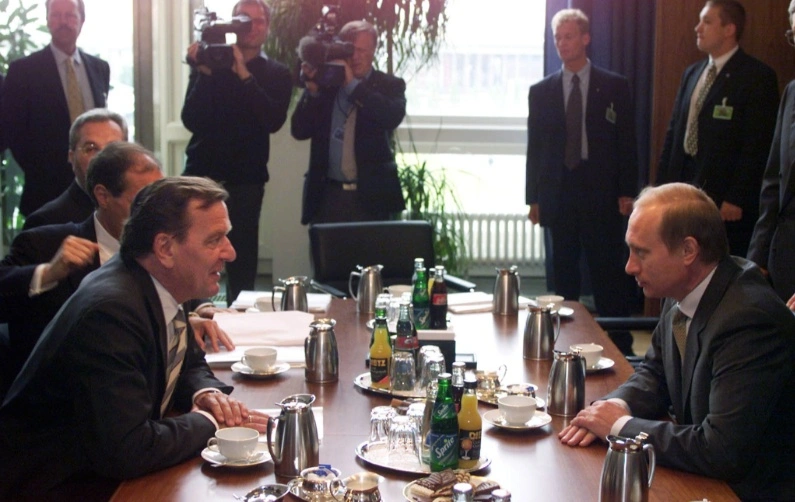
Former German Chancellor Schröder criticised for attending Putin's birthday
Section: News
The Austrian Green Party has expressed strong concerns over the current government's approach to both fiscal policy and defense reform, highlighting a perceived lack of coherent strategy and fairness in recent legislative actions. The focus of their criticism is directed at the NEOS party, whose recent public statements and stances on key government initiatives have prompted accusations of abandoning their reformist agenda.
The debate was sparked by comments from NEOS parliamentary group leader Yannick Shetty, who defended the coalition government's recent double budget, characterizing its unpopular measures as necessary and appropriate. In response, the Green Party asserted that merely implementing unpopular decisions does not guarantee sound policy, and argued that the budget fails to serve the broader interests of society or future generations.
According to the Green Party, the approved budget disproportionately impacts the middle class, while the wealthiest segments of society are largely unaffected. They further contend that funding for environmental protection and conservation initiatives remains inadequate, even as substantial public resources continue to be allocated to large-scale infrastructure projects, such as new highways, which are criticized as environmentally unsustainable.
The Green Party maintains that Austria has the potential to adopt a more just and forward-looking fiscal policy. They advocate for governance that emphasizes responsibility and a commitment to shaping the country's future, rather than policies that may exacerbate existing inequalities or undermine progress on climate issues.
In addition to budgetary criticism, the Green Party has raised concerns about the ongoing debate over military service reform. The government has been engaged in protracted discussions regarding the scope and nature of reforms to Austria's mandatory military service, but the Greens argue that these talks have become bogged down in disputes over statistics and technicalities. In their view, the core questions--such as the future role of the armed forces, strategies for making military service more appealing to young people, and the societal requirements for successful reform--have not been adequately addressed.
The Green Party asserts that the lack of substantive progress on defense reform is indicative of a broader governmental inability to provide decisive leadership. Delays and internal disagreements have, according to the Greens, prevented the administration from advancing meaningful solutions to pressing national issues.
Amid these developments, the Green Party has also pointed to internal conflicts within the NEOS party as further evidence of governmental instability. They argue that ongoing disputes within NEOS, combined with the party's perceived failure to influence major reforms, reflect a broader trend of political disengagement. The Greens suggest that NEOS, once positioned as a driving force for change, has become increasingly passive in coalition negotiations, particularly in the context of healthcare policy and interactions with regional leadership.
Overall, the Green Party's statements underscore a sense of frustration with both the current government's direction and the role of NEOS within it. They contend that the administration has yet to deliver on core promises related to social equity, fiscal responsibility, and sustainability, and call for renewed commitment to comprehensive and forward-thinking reforms.
Section: News

Section: Science

Section: Business

Section: Business

Section: Science

Section: News

Section: Politics

Section: News

Section: Fashion
Section: Arts
Both private Health Insurance in Germany and public insurance, is often complicated to navigate, not to mention expensive. As an expat, you are required to navigate this landscape within weeks of arriving, so check our FAQ on PKV. For our guide on resources and access to agents who can give you a competitive quote, try our PKV Calculator.
Germany is famous for its medical expertise and extensive number of hospitals and clinics. See this comprehensive directory of hospitals and clinics across the country, complete with links to their websites, addresses, contact info, and specializations/services.
Didn't manage to get a ticket for Linkin Park? Or still not enough after the concert? Join us at CRASH on June 12th for our "IN THE END" Linkin Park Special + CORE NIGHT.All night long, we'll be playing Linkin Park's music, along with Nu Metal, Metalcore, and Alternative Rock from bands such as Limp...



No comments yet. Be the first to comment!