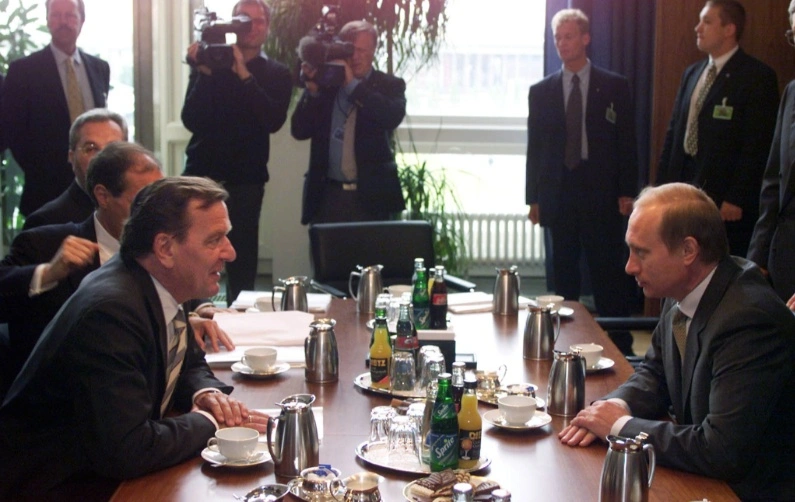
Former German Chancellor Schröder criticised for attending Putin's birthday
Section: News
The Austrian Parliament recently held an extensive debate on the government's proposed budget, with significant criticism from opposition parties regarding the distribution of financial resources. Lawmakers from the Freedom Party (FPÖ) expressed concerns that the budget favors select organizations and entities while imposing additional burdens on certain segments of the population.
Opposition Critique of Budget PrioritiesDuring the parliamentary session, FPÖ members stated that the current budget disproportionately benefits national institutions such as the Austrian Broadcasting Corporation (ORF), professional chambers, and external entities including the European Union and international organizations. The opposition argued that these allocations come at the expense of working individuals, pensioners, families, and other groups who are experiencing increased financial pressure due to recent policy changes.
A primary point of contention involved the impact of budget measures on part-time workers, particularly women. According to the FPÖ, estimates indicate that approximately 1.5 million part-time workers, the majority of whom are female, are likely to see a noticeable reduction in net income as a result of new tax and social contribution policies. The party cited calculations indicating an average annual net loss of over 700 euros for many in this demographic, raising concerns about the long-term effects on household finances and gender equity in the workforce.
Concerns Regarding Social and Economic ImpactFPÖ representatives further criticized the government's approach to social policy and economic reform, expressing that recent changes do not sufficiently address the needs of vulnerable groups. They highlighted that older employees, pensioners, and families are particularly affected by increased contributions and adjustments to maximum contribution rates. The opposition claims that these measures may exacerbate existing financial challenges faced by these groups, especially for those who rely on public healthcare and social services.
Additionally, the FPÖ questioned the commitment of other major parties to social welfare, suggesting that proposed reforms such as raising the retirement age and altering family benefits could undermine social stability. They stated that the silence of some parties on targeted social policies leaves many affected citizens without clear advocates in the legislative process.
Allocation of Budgetary GainsAccording to the opposition, while many citizens face higher costs, the main beneficiaries of the new budget include not only public broadcasters and professional chambers, but also financial institutions and international bodies such as the European Union and the United Nations. The FPÖ also pointed to increased support for migration-related expenses, arguing that resources are being diverted from domestic priorities.
Debate participants emphasized the importance of transparent budgetary processes and the need for a balanced approach to fiscal planning. They called for future discussions to focus more closely on the everyday challenges faced by Austrian citizens, especially in light of ongoing economic uncertainties and demographic changes.
Government ResponseIn response to these criticisms, government representatives defended the budget, stating that the current allocations are designed to support economic growth, maintain stability in public services, and fulfill Austria's international obligations. They emphasized that additional support measures are in place for those most affected by recent economic shifts, and that ongoing evaluations will ensure that resources are distributed fairly and effectively.
The debate underscores the ongoing tension between differing political perspectives on fiscal policy and public spending. As the budget moves through the legislative process, further discussion and negotiation are expected, with all sides seeking to influence the final outcome in favor of their constituents.
Section: News

Section: Science

Section: Business

Section: Business

Section: Science

Section: News
Section: Politics
Section: News

Section: Fashion
Section: Arts
Both private Health Insurance in Germany and public insurance, is often complicated to navigate, not to mention expensive. As an expat, you are required to navigate this landscape within weeks of arriving, so check our FAQ on PKV. For our guide on resources and access to agents who can give you a competitive quote, try our PKV Calculator.
Germany is famous for its medical expertise and extensive number of hospitals and clinics. See this comprehensive directory of hospitals and clinics across the country, complete with links to their websites, addresses, contact info, and specializations/services.
Didn't manage to get a ticket for Linkin Park? Or still not enough after the concert? Join us at CRASH on June 12th for our "IN THE END" Linkin Park Special + CORE NIGHT.All night long, we'll be playing Linkin Park's music, along with Nu Metal, Metalcore, and Alternative Rock from bands such as Limp...



No comments yet. Be the first to comment!