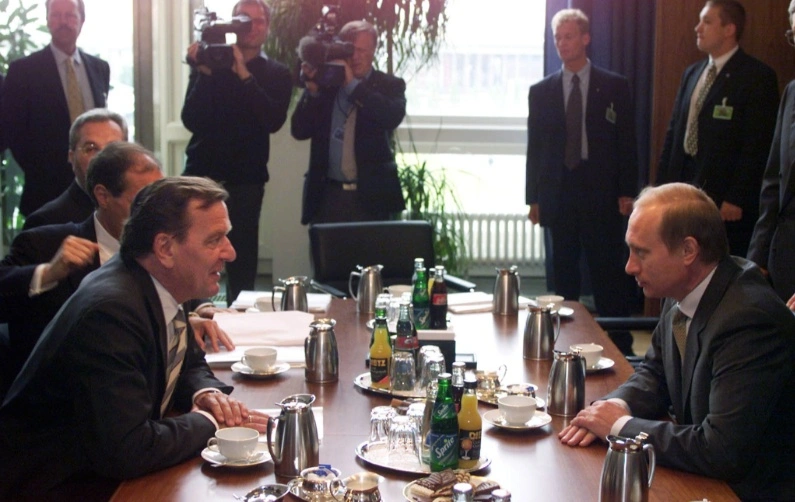
Former German Chancellor Schröder criticised for attending Putin's birthday
Section: News
The Austrian National Council has approved an increase to the nation's social budget, ensuring additional resources for pension schemes, healthcare services, and labour market initiatives. Despite facing fiscal pressures and the need for budget consolidation, policymakers have secured new funding to reinforce the stability and sustainability of Austria's core social systems.
During recent budget negotiations, legislators encountered the challenge of balancing fiscal discipline with the necessity to maintain and enhance essential social services. The outcome of these discussions is a rise in social spending, which will see an additional 1.7 billion euros allocated to Austria's welfare infrastructure.
This augmented funding is designed to bolster the financial health of key institutions such as the Austrian Health Insurance Fund (Österreichische Gesundheitskasse) and the accident insurance system. By strengthening these pillars, the government aims to guarantee the long-term viability of social insurance providers, even as demographic changes and economic pressures place new demands on the system.
One of the central objectives of the revised budget is to restore and maintain public confidence in the state's ability to deliver reliable pensions, quality care for the elderly and infirm, robust healthcare services, and effective labour market support. The increased allocations are intended to address public concerns regarding the stability of pension payments and the adequacy of long-term care facilities, as well as to ensure that healthcare coverage remains accessible and comprehensive.
Labour market policies are also set to benefit from the new resources, with funding earmarked for job placement initiatives, retraining programs, and other measures aimed at reducing unemployment and facilitating workforce adaptation to economic shifts. The government has emphasised that these investments are intended not only to address current needs but also to enable future-oriented projects that can respond to evolving social and economic conditions.
According to government representatives, the 2026 budget process was marked by a commitment to avoiding cuts to critical social services. Instead, the strategy focused on identifying additional sources of revenue and making targeted investments that reinforce the foundations of the Austrian welfare state. The increased social budget reflects both the urgency of addressing immediate fiscal realities and the long-term goal of safeguarding key public services.
With the passage of the new budget, Austria's social security systems are expected to benefit from improved financial stability, enabling them to meet both present demands and future challenges. The additional funding supports not only pensioners and individuals in need of care but also the broader workforce and healthcare recipients, ensuring that the country's social safety net remains robust.
The authorities have expressed appreciation for the collaborative efforts of all participants in the budget negotiations, highlighting the collective commitment to securing a sustainable and future-proof framework for Austria's social protection systems.
Section: News

Section: Science

Section: Business

Section: Business

Section: Science

Section: News
Section: Politics
Section: News

Section: Fashion
Section: Arts
Both private Health Insurance in Germany and public insurance, is often complicated to navigate, not to mention expensive. As an expat, you are required to navigate this landscape within weeks of arriving, so check our FAQ on PKV. For our guide on resources and access to agents who can give you a competitive quote, try our PKV Calculator.
Germany is famous for its medical expertise and extensive number of hospitals and clinics. See this comprehensive directory of hospitals and clinics across the country, complete with links to their websites, addresses, contact info, and specializations/services.
Didn't manage to get a ticket for Linkin Park? Or still not enough after the concert? Join us at CRASH on June 12th for our "IN THE END" Linkin Park Special + CORE NIGHT.All night long, we'll be playing Linkin Park's music, along with Nu Metal, Metalcore, and Alternative Rock from bands such as Limp...



No comments yet. Be the first to comment!