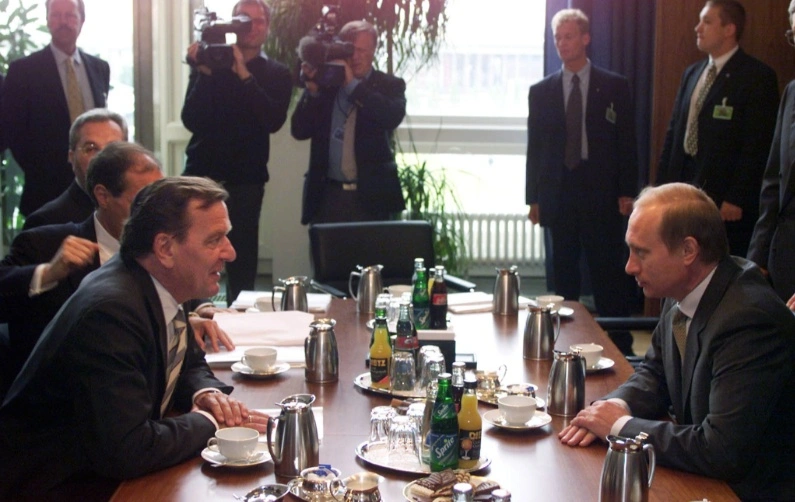
Former German Chancellor Schröder criticised for attending Putin's birthday
Section: News
Recent parliamentary discussions have brought Austria's financial commitments to Ukraine into sharp focus, with questions raised regarding the transparency and accuracy of government disclosures. During a budget debate, concerns were voiced about the total amount pledged and disbursed by Austria in support of Ukraine since 2022, and whether these figures are adequately reflected in the national budget.
According to data referenced from the Kiel Institute for the World Economy, Austria has provided significant financial assistance to Ukraine, both bilaterally and through European Union channels. The figures cited suggest that Austria has allocated approximately 2.68 billion euros to Ukraine over the past several years. Of this amount, 260 million euros were transferred directly, while an estimated 2.42 billion euros were contributed indirectly via EU mechanisms based in Brussels. These contributions are part of wider European and international efforts to support Ukraine amidst ongoing conflict and humanitarian needs.
In addition to funds already paid, further financial commitments have been made. The data indicates that Austria has pledged an additional 5.8 billion euros in support, incorporating both direct and indirect contributions. This commitment brings the overall financial exposure to about 8.5 billion euros, when future obligations are considered alongside funds already disbursed.
The discussion also included reference to Austria's participation in guarantees for a 90-billion-euro European loan facility for Ukraine. While these guarantees do not represent immediate cash outflows, they could have future fiscal implications depending on the repayment of these loans. Parliamentary debate has highlighted differing opinions on the likelihood of recovering these funds and the potential impact on Austria's financial position.
Some members of parliament have expressed concern that these significant sums are not transparently represented in the national budget documents. Critics argue that the Austrian public should be fully informed about the scale and structure of foreign aid commitments, especially in light of domestic budgetary pressures affecting pensions, family support, and social programs. The call for greater clarity in government accounting and public communication has become a central theme in the ongoing discussion.
Government representatives have maintained that Austria's support for Ukraine is consistent with international obligations and coordinated efforts within the European Union. The official position emphasizes solidarity with Ukraine and the necessity of providing assistance as part of a collective European response. However, the precise accounting of these contributions--whether direct or routed through EU frameworks--remains a point of debate among policymakers.
Further scrutiny has been directed at statements made by various political factions regarding the flow of Austrian funds to Ukraine. Discrepancies between public statements and documented financial transactions have fueled calls for an independent audit or a more detailed breakdown of Austria's role within broader EU financial assistance mechanisms. These developments reflect a broader trend in European politics, where transparency and public accountability in foreign aid are increasingly demanded by both lawmakers and citizens.
The Kiel Institute for the World Economy, cited as a source for the financial data, is recognized as a reputable economic research institution in Germany, providing independent analysis on international economic relations. Its findings have been used to inform parliamentary debate and are considered credible by a range of stakeholders in Austrian politics. Nevertheless, the interpretation and presentation of these figures continue to be contested within the legislative process.
As Austria continues to navigate its fiscal responsibilities at home and abroad, the conversation about the scale and transparency of financial support for Ukraine is expected to persist. The issue underscores the challenges faced by governments in balancing domestic needs with international commitments, particularly during periods of heightened geopolitical tension and economic uncertainty across Europe.
Section: News

Section: Science
Section: Business

Section: Business
Section: Science

Section: News
Section: Politics
Section: News

Section: Fashion

Section: Arts
Both private Health Insurance in Germany and public insurance, is often complicated to navigate, not to mention expensive. As an expat, you are required to navigate this landscape within weeks of arriving, so check our FAQ on PKV. For our guide on resources and access to agents who can give you a competitive quote, try our PKV Calculator.
Germany is famous for its medical expertise and extensive number of hospitals and clinics. See this comprehensive directory of hospitals and clinics across the country, complete with links to their websites, addresses, contact info, and specializations/services.
Didn't manage to get a ticket for Linkin Park? Or still not enough after the concert? Join us at CRASH on June 12th for our "IN THE END" Linkin Park Special + CORE NIGHT.All night long, we'll be playing Linkin Park's music, along with Nu Metal, Metalcore, and Alternative Rock from bands such as Limp...



No comments yet. Be the first to comment!