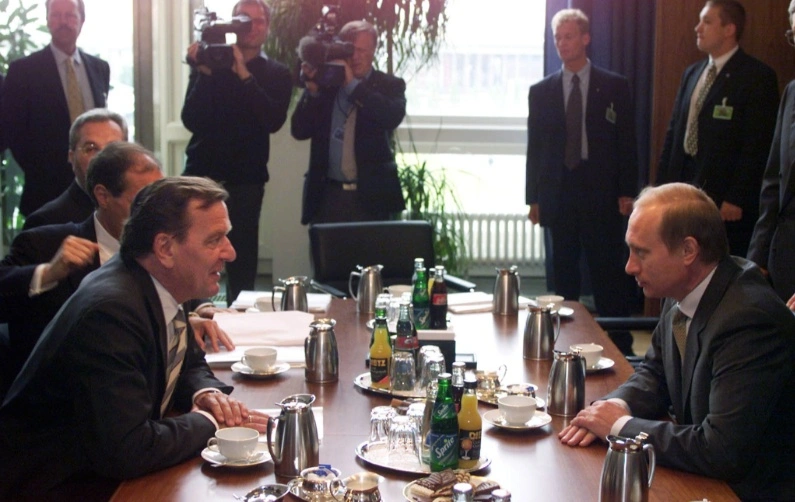
Former German Chancellor Schröder criticised for attending Putin's birthday
Section: News
The Lower Austrian state parliament convened to deliberate on the proposed state budget for 2027 and 2028, focusing on allocations for municipalities, public administration, and regional development. The session addressed budgetary frameworks, municipal funding, public sector reforms, EU relations, and several resolutions impacting local governance and services.
Municipal Funding and AutonomyMunicipalities were highlighted as essential for community cohesion and service provision, with investments totaling approximately 750 euros per resident for areas such as education, infrastructure, and cultural amenities. The state government reaffirmed its commitment to supporting local authorities, noting that a significant portion of the budget would be allocated to aid municipalities in fiscal consolidation and infrastructure projects. In 2025, around 1.5 billion euros in combined direct and indirect financial support were provided to towns and municipal associations.
Debate covered the need for sustainable financial planning and increased predictability for municipalities. Various lawmakers proposed resolutions to enhance funding models, with some advocating for restructuring financial flows and reconsidering the number of individual municipalities to improve efficiency. The importance of municipal autonomy and local decision-making was emphasized amidst calls for fairer distribution of resources, particularly for community facilities such as swimming infrastructure.
Public Administration and CooperationThe discussion turned to public sector efficiency and the modernization of administrative structures. Lawmakers stressed the benefits of inter-municipal cooperation to achieve cost savings and streamline services. Proposals included tax relief for collaborative municipal initiatives and measures to reduce redundant administrative processes, especially between the state and its subsidiaries. Digital transformation was cited as a tool for making government procedures more efficient and reducing bureaucratic overhead.
European Union Relations and Regional ImpactSeveral speakers addressed the significance of EU membership for Lower Austria, pointing to substantial financial inflows and the advantages of the single market for local businesses. It was noted that for every euro the region contributes to the EU, it receives three euros in return, benefiting sectors such as agriculture and manufacturing. However, concerns were raised about regulatory burdens and the need for the EU to focus on its core responsibilities to avoid competitive disadvantages for member regions.
Parliamentarians reflected on the challenges and benefits of EU policies, particularly those affecting regional economies and agricultural practices. Some called for reduced redistribution policies and streamlined regulations, while others highlighted the economic growth and job creation resulting from European funding and integration.
Budgetary Oversight and Reform ProposalsMultiple resolutions were introduced to address party financing, administrative spending, and the evaluation of state-run entities. Suggestions included reducing party subsidies, eliminating automatic annual adjustments, and thoroughly reviewing all state funding programs to ensure they remain effective and aligned with policy objectives. Calls for greater transparency in civil service staffing and clearer reporting on personnel allocation were also made, with the aim of improving accountability and budgetary control.
Justice Services and Regional AccessThe maintenance of district courts was another topic of debate. Advocates argued that these courts guarantee accessible justice and support local economies by providing jobs and retaining value within the regions. Others contended that modernizing the judiciary and consolidating locations could enhance efficiency without sacrificing service quality, emphasizing the need for reforms that adapt to changing population mobility and administrative complexity.
Personnel Management and Social PolicyPersonnel planning within the state administration featured prominently, with discussions surrounding the proposed reduction of one in three vacant public service positions by 2028. Lawmakers debated the clarity and transparency of personnel plans, especially regarding their implementation in key sectors such as healthcare. Attention was also given to social policy measures, such as introducing tiered maternity protections following miscarriages and ensuring robust support for regional animal welfare initiatives.
Resolutions and OutcomesThe parliament adopted several resolutions, including measures to promote municipal cooperation and enhance maternity protections. However, proposals relating to party financing and external consulting expenditures did not achieve majority support. The discussion on transparency in staffing plans was postponed for further debate alongside future personnel planning deliberations.
Section: News

Section: Science

Section: Business

Section: Business

Section: Science

Section: News

Section: Politics

Section: News

Section: Fashion
Section: Arts
Both private Health Insurance in Germany and public insurance, is often complicated to navigate, not to mention expensive. As an expat, you are required to navigate this landscape within weeks of arriving, so check our FAQ on PKV. For our guide on resources and access to agents who can give you a competitive quote, try our PKV Calculator.
Germany is famous for its medical expertise and extensive number of hospitals and clinics. See this comprehensive directory of hospitals and clinics across the country, complete with links to their websites, addresses, contact info, and specializations/services.
Didn't manage to get a ticket for Linkin Park? Or still not enough after the concert? Join us at CRASH on June 12th for our "IN THE END" Linkin Park Special + CORE NIGHT.All night long, we'll be playing Linkin Park's music, along with Nu Metal, Metalcore, and Alternative Rock from bands such as Limp...



No comments yet. Be the first to comment!