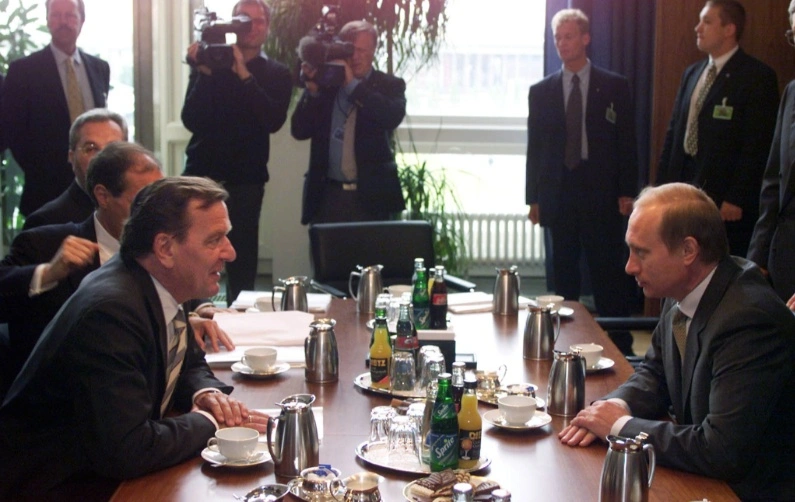
Former German Chancellor Schröder criticised for attending Putin's birthday
Section: News
Recent developments within the Vienna Chamber of Commerce and Industry (WKW) have led to calls for the resignation of its president, Walter Ruck. The demand follows the release of a leaked transcript that allegedly documents internal discussions involving questionable practices relating to appointments and decision-making within the organization.
The transcript, reported by multiple Austrian media outlets, is said to reveal exchanges about the allocation of positions and political negotiations. Particularly concerning are details suggesting intervention in staffing decisions, including allegations of influence exerted to benefit family members, as well as references to politically motivated appointments. The revelations have raised significant concerns about adherence to transparency and meritocratic principles within the WKW.
Among the issues highlighted in the transcript are reported discussions regarding the selection of candidates for public roles, where considerations such as personal connections, party affiliations, and loyalty may have taken precedence over qualifications. These practices, if confirmed, could undermine public trust in the integrity of procedures at the Chamber of Commerce and damage confidence in related political institutions.
Additionally, the leaked document reportedly contains statements described as sexist and exclusionary towards women. Such language and attitudes, if accurately portrayed, have prompted further criticism of the leadership's commitment to fostering an environment of respect, equality, and inclusivity within the organization. Stakeholders have emphasized that senior officials hold a special responsibility to uphold fair and transparent processes, as well as to promote diversity at all levels.
The response from political figures and civic organizations has been swift. Demands have intensified for a thorough investigation into the circumstances surrounding the transcript and for the implementation of stricter guidelines to prevent favoritism in appointments. Calls have also been made for the introduction of more transparent mechanisms governing recruitment and promotion within the WKW and similar public institutions.
Advocates for reform argue that only through clear, standardized processes can trust be restored in the appointment of public officials. They are urging for the separation of personal networks and political considerations from the selection criteria for leadership roles. The incident has revived longstanding debates in Austria about the need for reforms in governance structures and the elimination of so-called 'Freunderlwirtschaft,' or cronyism, particularly within influential economic and political bodies.
As the situation develops, attention is focused on the WKW's response and on potential policy measures from governmental authorities. Key stakeholders continue to watch for concrete actions aimed at enhancing transparency, strengthening oversight, and ensuring that future appointments are based solely on merit and objective evaluation rather than personal or political ties.
The outcome of these proceedings could have wider implications for governance practices across public institutions in Austria, potentially setting precedents for how similar cases are addressed in the future. The matter remains under review as calls for accountability and systemic reform persist.
Section: News

Section: Science

Section: Business

Section: Business
Section: Science

Section: News
Section: Politics
Section: News

Section: Fashion
Section: Arts
Both private Health Insurance in Germany and public insurance, is often complicated to navigate, not to mention expensive. As an expat, you are required to navigate this landscape within weeks of arriving, so check our FAQ on PKV. For our guide on resources and access to agents who can give you a competitive quote, try our PKV Calculator.
Germany is famous for its medical expertise and extensive number of hospitals and clinics. See this comprehensive directory of hospitals and clinics across the country, complete with links to their websites, addresses, contact info, and specializations/services.
Didn't manage to get a ticket for Linkin Park? Or still not enough after the concert? Join us at CRASH on June 12th for our "IN THE END" Linkin Park Special + CORE NIGHT.All night long, we'll be playing Linkin Park's music, along with Nu Metal, Metalcore, and Alternative Rock from bands such as Limp...



No comments yet. Be the first to comment!