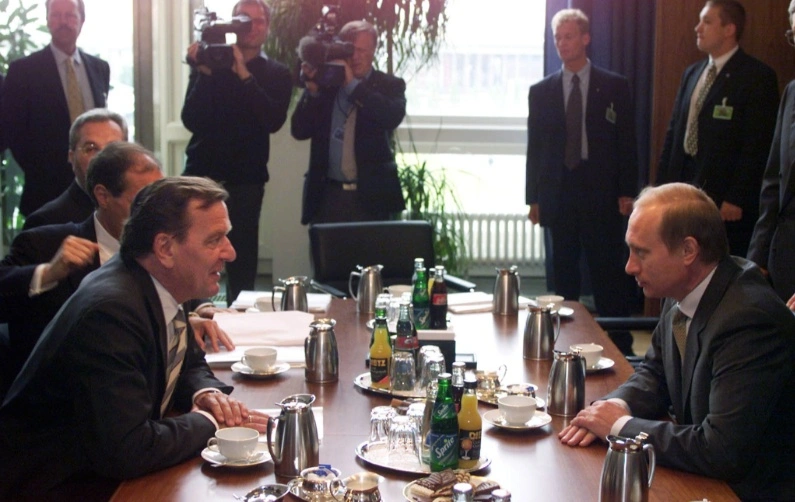
Former German Chancellor Schröder criticised for attending Putin's birthday
Section: News
The youth political organization JUNOS has called for prompt legislative action to raise the statutory retirement age in Austria, emphasizing that decisions should not be delayed until 2030. This comes in response to a recent initiative by Ingrid Korosec, head of the Austrian Seniors' Association, who has publicly advocated for a national debate on adjusting the retirement age in light of demographic changes.
According to JUNOS, the ongoing increase in life expectancy and the shifting age structure of the population necessitate a comprehensive reform of the pension system. The group highlights that more than a quarter of Austria's public expenditure is currently allocated to pensions, a figure they argue is unsustainable without significant policy changes. Economic analysts and social policy experts have long stressed the need for reforms to ensure the long-term viability of the pension system, particularly as the number of retirees rises and the working-age population diminishes.
JUNOS representatives assert that postponing critical decisions on pension reform until 2030 would merely delay necessary structural changes. They contend that the challenges posed by demographic trends have been well documented for decades, and that further inaction could increase the financial burden on future generations. The organization advocates for the immediate introduction of an automatic adjustment mechanism for the retirement age, linking it transparently to life expectancy, demographic data, and key economic indicators such as employment rates and gross domestic product growth.
Several other European countries have already implemented systems that automatically adjust the retirement age based on demographic and economic developments. These mechanisms are designed to maintain the sustainability of pension systems by ensuring that the ratio of contributors to beneficiaries remains balanced over time. In Austria, however, debate over pension reform has often been marked by political resistance and concerns about the social impact of raising the retirement age.
JUNOS maintains that establishing a transparent, rules-based system for pension adjustments would align Austria with international best practices and reduce the need for ad hoc political interventions. The organization also calls for reforms to the calculation of insurance periods and the structure of pension bonuses and penalties, suggesting that these should be directly tied to measurable demographic and economic factors.
Ingrid Korosec's recent statements have been viewed by JUNOS as an overdue acknowledgment of the need for pension reform. However, the youth group notes that meaningful progress will require coordinated action from all political parties, as well as a willingness to confront entrenched interests that have historically resisted changes to the pension system. Without decisive action, they warn, the growing gap between pension expenditures and contributions could necessitate substantial government subsidies, increasing fiscal pressures on the national budget.
JUNOS further underscores that delaying reforms could result in disproportionate costs being borne by younger generations, who would face higher contributions or reduced benefits in the future. The organization urges policymakers to move beyond political populism and commit to evidence-based reforms that ensure intergenerational fairness and the financial stability of Austria's social security system.
The debate over pension reform is expected to continue as demographic and fiscal pressures intensify. Stakeholders from across the political spectrum, including labor organizations and senior citizens' groups, are likely to play a significant role in shaping the outcome of legislative proposals in the coming years.
Section: News

Section: Science

Section: Business

Section: Business

Section: Science

Section: News
Section: Politics
Section: News

Section: Fashion
Section: Arts
Both private Health Insurance in Germany and public insurance, is often complicated to navigate, not to mention expensive. As an expat, you are required to navigate this landscape within weeks of arriving, so check our FAQ on PKV. For our guide on resources and access to agents who can give you a competitive quote, try our PKV Calculator.
Germany is famous for its medical expertise and extensive number of hospitals and clinics. See this comprehensive directory of hospitals and clinics across the country, complete with links to their websites, addresses, contact info, and specializations/services.
Didn't manage to get a ticket for Linkin Park? Or still not enough after the concert? Join us at CRASH on June 12th for our "IN THE END" Linkin Park Special + CORE NIGHT.All night long, we'll be playing Linkin Park's music, along with Nu Metal, Metalcore, and Alternative Rock from bands such as Limp...



No comments yet. Be the first to comment!