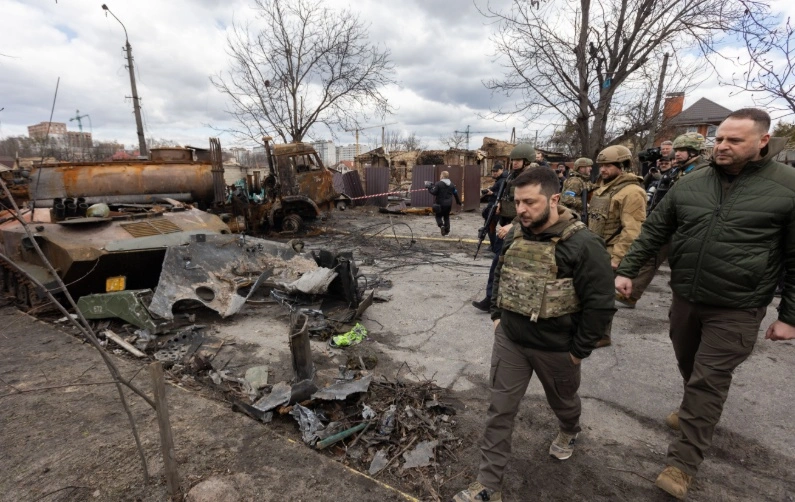
Zelensky urges US to enforce limited ceasefire
Section: Politics
The Austrian political landscape is currently witnessing an intense debate over proposed changes to the national pension system. The Freedom Party of Austria (FPÖ) has voiced significant criticism regarding recent suggestions from the Austrian People's Party (ÖVP) to adjust the retirement age based on years of employment.
The discussion was initiated after the leader of the ÖVP Seniors' Association, Ingrid Korosec, advocated for a potential increase in the effective retirement age. While the proposal links retirement eligibility to the number of years an individual has contributed to the workforce, this approach has drawn scrutiny for potentially disregarding the differing circumstances faced by many Austrian workers.
According to representatives from the FPÖ, the proposal to raise the retirement age--regardless of whether it is pegged to birth dates or employment duration--might not reflect the realities experienced by large segments of the population. Many workers, particularly those in physically or mentally strenuous occupations, face significant health challenges after decades of service. The assumption that every individual can maintain full employment capacity for 45 years is considered unrealistic by critics of the plan.
FPÖ's Position on Pension SecurityFPÖ officials argue that the ÖVP's latest initiative does not address the fundamental issues threatening the sustainability of Austria's pension system. Instead, the FPÖ suggests that the government should focus on strengthening the economic environment and limiting welfare migration as more effective strategies for securing pension funding. The current discussion about extending working lives, they contend, only contributes to uncertainty among those approaching retirement age.
The FPÖ has additionally highlighted a perceived inconsistency within the ÖVP's policy approach. While advocating for longer working lives, the government has also enacted measures that increase tax burdens for older employees. The FPÖ asserts that this dual approach places additional pressure on the very group expected to remain in the workforce longer, raising questions about the coherence of government policy on social security and employment.
Alternative Approaches and Legislative InitiativesIn response to the ÖVP's proposals, the FPÖ is championing the principle of respecting individuals' lifetime contributions to the workforce. The party maintains that after 45 years of employment, individuals should be entitled to retire without facing further policy uncertainties. Instead of imposing blanket extensions of working life, the FPÖ supports the creation of voluntary incentives for those who wish to continue working beyond the traditional retirement threshold.
The FPÖ's current legislative initiative, known as the "Pensioners' Referendum," is available for public signature at local government offices. This initiative is positioned as a measure to oppose what the party describes as socially unfair policy suggestions that could undermine established retirement rights. The FPÖ has called for a clear policy boundary, emphasizing that any changes to the pension system must prioritize fairness and respect for long-term workers, rather than introducing new obligations or financial pressures.
Broader Policy ImplicationsThe ongoing debate over pension reform in Austria is emblematic of challenges faced by many European nations with aging populations. Balancing fiscal sustainability with social justice remains a complex policy issue. The positions taken by the FPÖ and ÖVP illustrate differing priorities: while the ÖVP underscores the need for systemic reform to address demographic trends, the FPÖ prioritizes the protection of earned retirement rights and calls for targeted economic measures to support the pension system.
This dispute is likely to remain at the forefront of Austrian political discourse, as policymakers, advocacy groups, and citizens continue to negotiate the future framework of retirement and social security. The outcome of this debate will have significant ramifications for the structure of the Austrian welfare state and the livelihood of future retirees.
Section: Politics
Section: News
Section: News

Section: Science
Section: Business

Section: Business
Section: Science

Section: News
Section: Politics
Section: News
Both private Health Insurance in Germany and public insurance, is often complicated to navigate, not to mention expensive. As an expat, you are required to navigate this landscape within weeks of arriving, so check our FAQ on PKV. For our guide on resources and access to agents who can give you a competitive quote, try our PKV Calculator.
Germany is famous for its medical expertise and extensive number of hospitals and clinics. See this comprehensive directory of hospitals and clinics across the country, complete with links to their websites, addresses, contact info, and specializations/services.
Didn't manage to get a ticket for Linkin Park? Or still not enough after the concert? Join us at CRASH on June 12th for our "IN THE END" Linkin Park Special + CORE NIGHT.All night long, we'll be playing Linkin Park's music, along with Nu Metal, Metalcore, and Alternative Rock from bands such as Limp...


No comments yet. Be the first to comment!