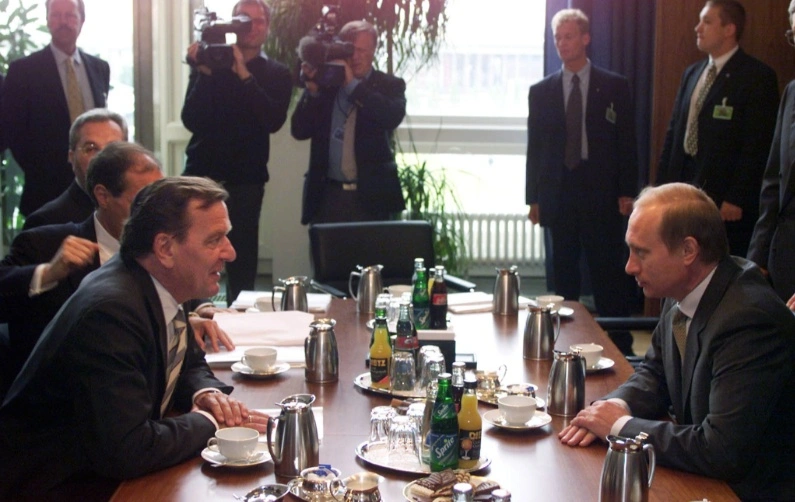
Former German Chancellor Schröder criticised for attending Putin's birthday
Section: News
Austria has recorded a notable shift in its approach to asylum and migration, as recent data shows the country now carries out more deportations than it receives new asylum applications. Government officials attribute this development to a series of policy adjustments and increased cooperation at both national and European Union levels.
According to statements from parliamentary sources, Austria has intensified its efforts to enforce stricter asylum regulations. The Ministry of the Interior reports that, on average, approximately 40 individuals are deported from Austria each day. This trend is reflected in recent coordinated operations, including participation in a European charter flight that facilitated the removal of 35 individuals--primarily those with criminal convictions--from the EU to Ghana and Nigeria. Of these, six were deported from Austria.
This approach aligns with Austria's ongoing commitment to strengthening its border controls and enforcing existing laws regarding residence and asylum. Officials have indicated that the country's current strategy is rooted in establishing a more controlled and legally robust migration management system.
At the European level, Austria has played an active role in influencing policy reforms. The EU Migration Pact, which came into effect on 12 June, introduces standardized border procedures and increased cooperation among member states to handle secondary migration. The pact aims to enhance the EU's capacity to manage irregular migration and streamline asylum processing, with stricter controls at external borders and mechanisms to improve the return of individuals whose applications have been rejected.
Austrian representatives credit this change in direction to sustained advocacy for a collective European response to migration challenges. The country's officials have underscored the importance of a harmonized approach, citing the new regulations as a significant step toward preventing uncontrolled movement across EU borders and mitigating the risks associated with unauthorized entry.
Domestically, Austrian leadership continues to emphasize the importance of clear and enforceable rules regarding asylum. The government has highlighted its efforts to balance public safety and humanitarian obligations, referencing recent decisions at the Council of Europe. Of particular note is the 'Chisinau Declaration,' adopted by the Council, which addresses the need to reconcile individual rights with the public interest in the context of asylum and migration policy. Observers note that such agreements were previously considered difficult to achieve, pointing to increased consensus among European states on migration management.
Austrian authorities also stress the significance of interpreting the European Convention on Human Rights in a manner that reflects current migration realities. They argue that updated interpretations can help establish a more effective legal framework for addressing asylum issues across the continent, potentially serving as a model for other EU member states.
Overall, Austria's current policies reflect a broader trend within the EU toward stricter asylum measures, increased deportations, and enhanced cooperation among member states. Officials maintain that these efforts are crucial for ensuring the integrity of the asylum system, maintaining public order, and fulfilling the country's international obligations in a manner consistent with national interests.
Section: News

Section: Science

Section: Business

Section: Business

Section: Science

Section: News
Section: Politics
Section: News

Section: Fashion
Section: Arts
Both private Health Insurance in Germany and public insurance, is often complicated to navigate, not to mention expensive. As an expat, you are required to navigate this landscape within weeks of arriving, so check our FAQ on PKV. For our guide on resources and access to agents who can give you a competitive quote, try our PKV Calculator.
Germany is famous for its medical expertise and extensive number of hospitals and clinics. See this comprehensive directory of hospitals and clinics across the country, complete with links to their websites, addresses, contact info, and specializations/services.
Didn't manage to get a ticket for Linkin Park? Or still not enough after the concert? Join us at CRASH on June 12th for our "IN THE END" Linkin Park Special + CORE NIGHT.All night long, we'll be playing Linkin Park's music, along with Nu Metal, Metalcore, and Alternative Rock from bands such as Limp...



No comments yet. Be the first to comment!