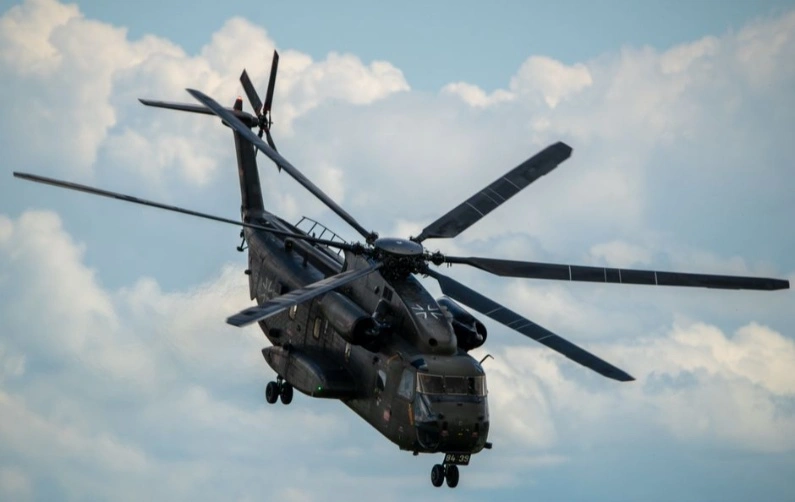
Record Orders in German Industry Driven by Defense Spending
Section: Politics
The Austrian government has announced a significant agreement on initial steps towards a comprehensive energy reform. According to a statement from the Federal Chancellery, the new Electricity Industry Act (ELWG) marks the start of the most extensive energy reform in the past two decades.
This new legislation aims to promote fairness, reduce bureaucracy, and lower electricity costs. In particular, a social tariff is set to be introduced for those at risk of poverty.
Bundeskanzler Christian Stocker emphasized the need for a fundamental overhaul of the energy sector to ensure that energy prices become more affordable for both households and businesses. The government has committed to implementing clear regulations, obligating energy suppliers to pass on any reductions in wholesale prices directly to consumers.
The reform package is designed to lower network costs while providing households and businesses with enhanced options for self-generating, sharing, and trading electricity. A legislative 'Energy Crisis Mechanism' is also in the works, aimed at preventing extreme price surges during crisis situations.
Vice Chancellor Andreas Babler pointed out that the rising costs of living, particularly in housing and energy, have burdened the Austrian population for far too long. He noted that the recently implemented rent freeze was a necessary initial measure to address this issue, benefiting approximately 2.7 million tenants nationwide. The proposed electricity market reform is intended to further alleviate financial pressure on the economy and citizens.
Foreign Minister Beate Meinl-Reisinger remarked that this first reform step, developed in collaboration with local governments and municipalities, brings renewed energy to the economic and employment landscape in Austria.
To provide context, the energy prices in May experienced a 1.3% increase. According to Statistics Austria, the inflation rate for May 2025 is expected to be around 3.0%, slightly down from 3.1% in April. The most significant contributors to this inflation include services, which have risen by 4.4% year-on-year. While energy prices increased, the impact was somewhat mitigated by lower fuel prices compared to the previous year.
Section: Politics
Section: Business
Section: Business

Section: Arts
Section: Business

Section: News
Section: Business
Section: News
Section: News
Section: Politics
Both private Health Insurance in Germany and public insurance, is often complicated to navigate, not to mention expensive. As an expat, you are required to navigate this landscape within weeks of arriving, so check our FAQ on PKV. For our guide on resources and access to agents who can give you a competitive quote, try our PKV Calculator.
Germany is famous for its medical expertise and extensive number of hospitals and clinics. See this comprehensive directory of hospitals and clinics across the country, complete with links to their websites, addresses, contact info, and specializations/services.
Didn't manage to get a ticket for Linkin Park? Or still not enough after the concert? Join us at CRASH on June 12th for our "IN THE END" Linkin Park Special + CORE NIGHT.All night long, we'll be playing Linkin Park's music, along with Nu Metal, Metalcore, and Alternative Rock from bands such as Limp...



No comments yet. Be the first to comment!