
Former German Chancellor Schröder criticised for attending Putin's birthday
Section: News
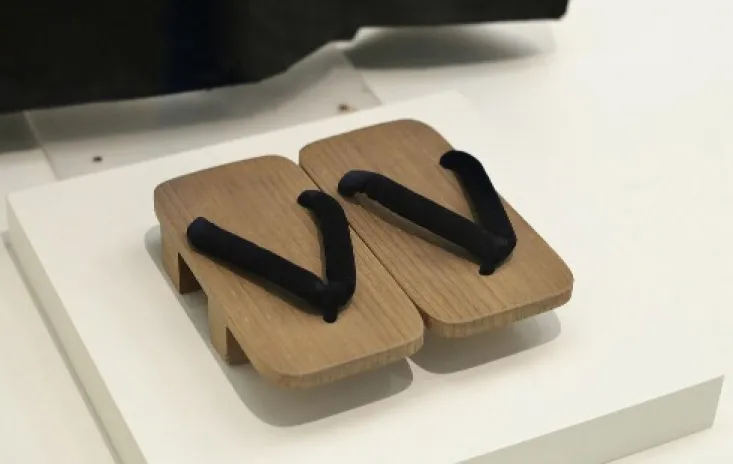 Long before it became one of the most recognisable shoes in contemporary fashion, the tabi was a modest garment shaped by function and tradition. Originating in Japan in the 15th century, the split toe sock was designed to be worn with traditional footwear such as getaandzori. Its construction followed the natural anatomy of the foot, allowing for balance and comfort, while its aesthetic remained secondary to its purpose. For centuries, the tabi existed quietly within everyday dress, far removed from the idea of fashion as statement.
That perception shifted dramatically in 1989, when Martin Margiela introduced the tabi to the Western fashion canon. In his first runway show in Paris, Margiela presented a leather boot that faithfully preserved the split toe of the original sock. The reaction was immediate and polarising. The shoe disrupted established ideals of elegance, confronting the audience with a silhouette that was at once archaic and startlingly modern.
Margiela's intervention was not decorative but conceptual. By elevating a utilitarian object into high fashion, he challenged the industry's obsession with refinement and uniform beauty. The Tabi did not elongate the leg or soften the foot; instead, it exposed its structure. This deliberate refusal to conform aligned with the house's broader language of deconstruction, anonymity and intellectual rigor.
Over time, the Tabi evolved from provocation to signature. Maison Margiela reinterpreted the design season after season, introducing pumps, ankle boots, ballet flats and even sneakers, crafted in leather, suede, patent and knit fabrics. Despite these variations, the split toe remained untouched, a visual anchor that preserved the shoe's radical identity.
Beyond its aesthetic impact, the Tabi has become a symbol of fashion literacy. To wear it is often understood as a statement of awareness rather than trend following, a quiet nod to fashion history and conceptual design. Its presence in wardrobes today reflects a broader shift toward pieces that carry narrative, heritage and intention.
More than three decades after its runway debut, the Tabi remains an anomaly in an industry driven by constant reinvention. It resists dilution, surviving seasonal cycles without losing its meaning.
What began as a traditional sock has become an enduring emblem of fashion's ability to reinterpret the past, not by erasing it, but by allowing it to walk confidently into the present.
Section: News

Section: Science

Section: Business

Section: Business

Section: Science

Section: News

Section: Politics

Section: News
Section: Fashion
Section: Arts
Both private Health Insurance in Germany and public insurance, is often complicated to navigate, not to mention expensive. As an expat, you are required to navigate this landscape within weeks of arriving, so check our FAQ on PKV. For our guide on resources and access to agents who can give you a competitive quote, try our PKV Calculator.
Germany is famous for its medical expertise and extensive number of hospitals and clinics. See this comprehensive directory of hospitals and clinics across the country, complete with links to their websites, addresses, contact info, and specializations/services.
Didn't manage to get a ticket for Linkin Park? Or still not enough after the concert? Join us at CRASH on June 12th for our "IN THE END" Linkin Park Special + CORE NIGHT.All night long, we'll be playing Linkin Park's music, along with Nu Metal, Metalcore, and Alternative Rock from bands such as Limp...



No comments yet. Be the first to comment!