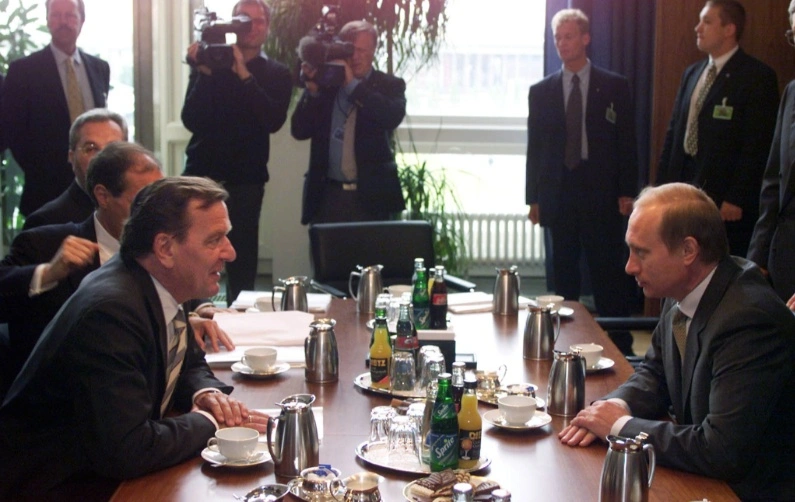
Former German Chancellor Schröder criticised for attending Putin's birthday
Section: News
The European Union is set to implement a new customs charge on small parcels imported from online retailers such as Shein and Temu. This regulatory move, which will take effect from July 1, 2026, aims to address the influx of low-cost goods entering the EU market from these platforms, many of which operate out of China.
The initiative follows recent changes at the EU level, where the previous exemption from customs duties on packages valued below 150 euros (approximately 1,600 Swedish kronor) has been revoked. Although the official removal of the exemption will not be enacted until 2028, some member states, with France taking a leading role, have advocated for an interim customs fee to be enforced sooner.
The new customs measure specifically targets smaller parcels shipped directly to consumers, a category that has seen exponential growth in recent years. In 2023 alone, 4.6 billion such packages entered the EU, with the overwhelming majority--about 91 percent--originating from China. Authorities expect this volume to increase further as cross-border e-commerce continues to expand.
European retailers have repeatedly raised concerns about what they describe as unfair competition from overseas platforms such as Shein, Temu, and AliExpress. According to industry representatives, these platforms often bypass the EU's stringent product safety and compliance regulations. The new customs charge is intended to level the playing field and ensure that all products sold within the EU adhere to the same standards and regulations.
Consumer organizations have acknowledged that the customs fee is likely to result in higher prices for imported goods from these platforms. However, they note that a significant portion of the products arriving via these channels may not meet EU safety requirements, as many are not certified or may contain hazardous chemicals. While the customs fee may pose challenges for consumers with limited financial resources who rely on low-cost online shopping, regulatory bodies emphasize the importance of ensuring the safety and legality of goods sold within the EU.
Trade associations recognize the customs fee as a necessary measure under the current circumstances, even though they generally advocate for free trade. They argue that the urgent issue of non-compliant goods entering the European market requires decisive action to protect both consumers and local businesses.
The move is also seen as a response to the rapid growth of e-commerce platforms that have leveraged gaps in EU regulations to expand their presence. Authorities underscore that participation in the European market should be contingent upon adherence to all regulatory requirements, including product safety and customs compliance.
As the EU works towards implementing permanent regulations set for 2028, the temporary customs fee introduced now is expected to serve as an important interim measure. The long-term goal is to create a fairer and safer marketplace for consumers and businesses across the European Union.
Section: News

Section: Science

Section: Business

Section: Business

Section: Science

Section: News

Section: Politics

Section: News

Section: Fashion
Section: Arts
Both private Health Insurance in Germany and public insurance, is often complicated to navigate, not to mention expensive. As an expat, you are required to navigate this landscape within weeks of arriving, so check our FAQ on PKV. For our guide on resources and access to agents who can give you a competitive quote, try our PKV Calculator.
Germany is famous for its medical expertise and extensive number of hospitals and clinics. See this comprehensive directory of hospitals and clinics across the country, complete with links to their websites, addresses, contact info, and specializations/services.
Didn't manage to get a ticket for Linkin Park? Or still not enough after the concert? Join us at CRASH on June 12th for our "IN THE END" Linkin Park Special + CORE NIGHT.All night long, we'll be playing Linkin Park's music, along with Nu Metal, Metalcore, and Alternative Rock from bands such as Limp...



No comments yet. Be the first to comment!