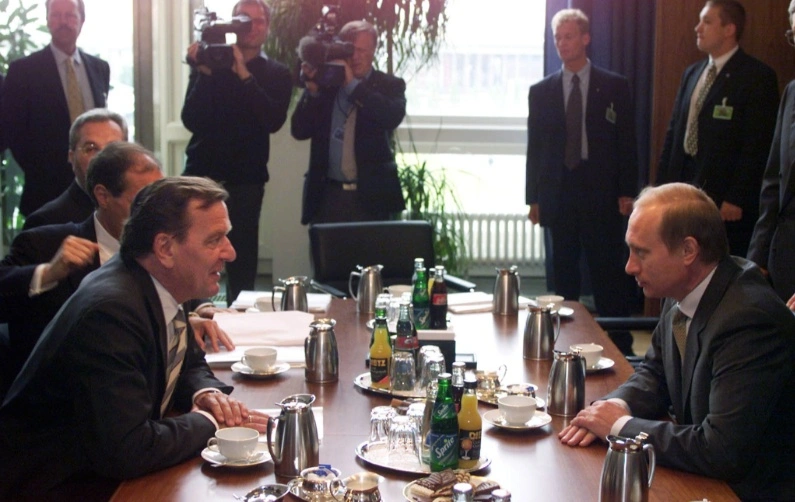
Former German Chancellor Schröder criticised for attending Putin's birthday
Section: News
The United States has announced an increase in global tariffs from 10 percent to 15 percent, marking a significant shift in its international trade strategy. The decision, which was communicated via official channels, is intended to take immediate effect and will apply broadly to imports from numerous countries.
This move follows a recent ruling by the U.S. Supreme Court, which determined that specific tariffs previously implemented under the International Emergency Economic Powers Act (IEEPA) were not legally justified. The court found that the conditions required to invoke the emergency powers of the 1977 law were not met in the initial tariff imposition, thus invalidating those measures.
In response to the court's decision, the White House has utilized Section 122 of the Trade Act of 1974 to reintroduce and elevate the tariffs. Under this provision, the president is authorized to impose temporary trade restrictions, including tariffs up to a 15 percent ceiling, provided these measures are subject to later congressional approval if they are to be extended beyond an initial period. The newly announced tariffs are scheduled to remain in effect for 150 days, after which legislative review will determine their continuation.
The revised policy has prompted immediate reactions from international partners. Sweden's Minister for Foreign Trade, Benjamin Dousa, expressed concerns regarding the unpredictability and seriousness of the new trade approach, emphasizing the need for Swedish businesses to diversify their markets and reduce reliance on the U.S. economy. The Swedish government has committed to providing support and guidance to domestic companies in navigating the changed trade environment, and has accelerated efforts to negotiate new free trade agreements with regions such as South America, India, and Australia.
European Union member states have also begun formulating their response. France's Minister for Foreign Trade, Nicolas Forissier, indicated that the EU possesses mechanisms to counteract the elevated U.S. tariffs. Among the tools under consideration is the Anti-Coercion Instrument (ACI), a policy framework that enables the EU to implement economic countermeasures against countries it believes are exerting undue pressure on its member states. Potential EU actions could include restrictions on American technology exports to Europe, the introduction of new tariffs on U.S. services, or the exclusion of American firms from public procurement processes within the EU.
The escalation in tariff measures and legal maneuvering underscores the ongoing tensions in global trade relations, with major economies reassessing their strategies and alliances. Businesses across multiple sectors are expected to monitor developments closely as governments seek to adapt to the rapidly changing landscape of international commerce.
This latest adjustment to U.S. trade policy highlights the growing complexity of the global economic environment and signals potential shifts in supply chains, investment decisions, and diplomatic relations in the months ahead.
Section: News

Section: Science
Section: Business

Section: Business
Section: Science
Section: News
Section: Politics
Section: News
Section: Fashion
Section: Arts
Both private Health Insurance in Germany and public insurance, is often complicated to navigate, not to mention expensive. As an expat, you are required to navigate this landscape within weeks of arriving, so check our FAQ on PKV. For our guide on resources and access to agents who can give you a competitive quote, try our PKV Calculator.
Germany is famous for its medical expertise and extensive number of hospitals and clinics. See this comprehensive directory of hospitals and clinics across the country, complete with links to their websites, addresses, contact info, and specializations/services.
Didn't manage to get a ticket for Linkin Park? Or still not enough after the concert? Join us at CRASH on June 12th for our "IN THE END" Linkin Park Special + CORE NIGHT.All night long, we'll be playing Linkin Park's music, along with Nu Metal, Metalcore, and Alternative Rock from bands such as Limp...



No comments yet. Be the first to comment!