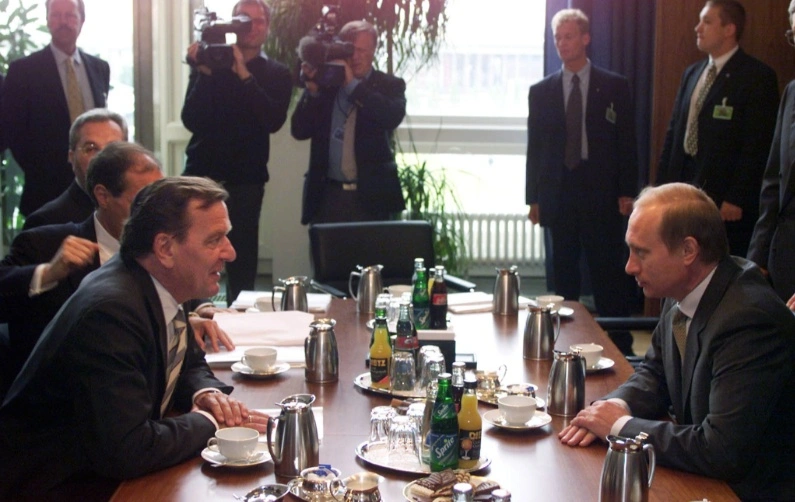
Former German Chancellor Schröder criticised for attending Putin's birthday
Section: News
The International Energy Agency (IEA) has announced the largest release of strategic oil reserves in history, aiming to stabilize the global oil market and curb soaring prices. The coordinated action, agreed upon by all 32 member countries, involves the release of 400 million barrels from emergency stockpiles. The unprecedented move comes in response to significant supply disruptions resulting from the ongoing conflict in the Persian Gulf region.
Oil prices have experienced a sharp escalation following the outbreak of war in Iran and the subsequent closure of the Hormuz Strait, a critical passageway for global oil shipments. With nearly all maritime traffic through the strait halted, the global market has seen a severe reduction in the daily supply of crude oil.
The IEA's decision to tap into strategic reserves is intended as a temporary measure to mitigate the immediate effects of the disruption. While the release is expected to provide short-term relief in oil supply and help moderate prices, analysts emphasize that this measure does not resolve the underlying issues stemming from the ongoing conflict in the region.
Typically, around 20 million barrels of oil transit through the Hormuz Strait daily, accounting for a substantial portion of the world's oil shipments. The current release is projected to cover approximately three weeks of lost supply at normal transit rates. Energy market experts note that the use of strategic reserves is a standard response during significant supply interruptions, but stress the importance of monitoring the duration and scope of the disruption.
The distinction between reserve production and reserve storage has become particularly relevant in the current context. Reserve production, largely based in the Middle East, has become inaccessible due to the conflict, necessitating the drawdown from storage facilities in IEA member countries. The effectiveness of this strategy depends on the ability to sustain market stability until normal shipping routes can be restored.
Recent history has shown the impact of such interventions. In 2022, the IEA coordinated a release of 182 million barrels of oil over two months in response to supply shocks caused by the war in Ukraine. That measure contributed to a temporary easing of prices, but did not fully resolve market volatility.
As the situation in the Persian Gulf continues to evolve, the global energy market remains highly sensitive to further developments. The IEA and its member countries are closely monitoring geopolitical and market conditions to determine whether additional actions may be necessary. The current release underscores the significance of strategic reserves as a tool for managing short-term crises, while highlighting the challenges of addressing long-term supply disruptions in an increasingly volatile energy landscape.
Section: News

Section: Science
Section: Business

Section: Business
Section: Science
Section: News
Section: Politics
Section: News

Section: Fashion
Section: Arts
Both private Health Insurance in Germany and public insurance, is often complicated to navigate, not to mention expensive. As an expat, you are required to navigate this landscape within weeks of arriving, so check our FAQ on PKV. For our guide on resources and access to agents who can give you a competitive quote, try our PKV Calculator.
Germany is famous for its medical expertise and extensive number of hospitals and clinics. See this comprehensive directory of hospitals and clinics across the country, complete with links to their websites, addresses, contact info, and specializations/services.
Didn't manage to get a ticket for Linkin Park? Or still not enough after the concert? Join us at CRASH on June 12th for our "IN THE END" Linkin Park Special + CORE NIGHT.All night long, we'll be playing Linkin Park's music, along with Nu Metal, Metalcore, and Alternative Rock from bands such as Limp...


No comments yet. Be the first to comment!