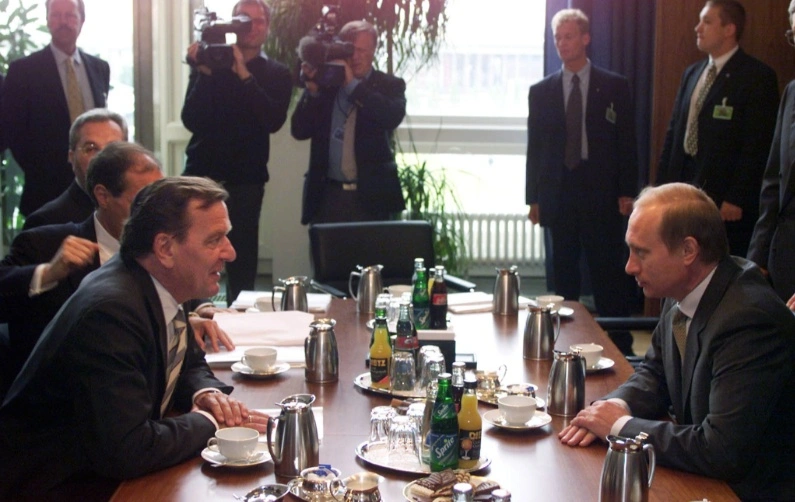
Former German Chancellor Schröder criticised for attending Putin's birthday
Section: News
The force of the impact during the crash test was evident, even when observed from behind the reinforced glass of the laboratory's viewing area. For safety reasons, no one is permitted to be on the test floor, as the risk of flying vehicle debris is substantial. The event involved a recreation of a real-life moose collision that previously occurred near Kiruna, Sweden, providing valuable data for automotive safety development.
During the laboratory test, a Volvo XC60 was propelled at 70 km/h into a 358-kilogram moose dummy, which replicated the physical dimensions and weight of an adult moose. The test aimed to simulate the conditions of the original incident as closely as possible, including the trajectory and impact zone. The XC60 is a model frequently highlighted by its manufacturer for its advanced safety features.
The practical demonstration formed part of Volvo's ongoing efforts to improve vehicle safety in high-risk environments, particularly in regions where wildlife collisions are common. The crash test was observed by specialists and engineers who analyzed the vehicle's structural integrity and the effectiveness of its safety systems, such as airbags and automatic emergency braking.
In the original incident, the vehicle's airbag deployed as a result of the collision, and the onboard emergency system detected the crash, automatically contacting emergency services. Both the driver and passengers escaped without serious injury, emphasizing the importance of robust safety technology in modern vehicles.
During the recreated crash, however, the airbag did not deploy. According to safety experts overseeing the test, this outcome was due to the moose dummy's elevated point of impact, where its long legs caused the body to strike the vehicle's upper structure and pass over the hood. This scenario reflects the challenges faced by automotive engineers in designing systems that can reliably respond to varied collision geometries.
Volvo's crash test laboratory, operational for over two decades, is regarded as one of the industry's most advanced facilities. It supports a wide range of testing scenarios, including impacts with fixed barriers, simulated trees, ditches, and other vehicles, as well as collisions with animal dummies. The facility's data-driven approach is essential for the continual refinement of safety measures.
Automotive safety ratings, such as those provided by the Euro NCAP program, play a significant role in consumer decision-making. Recent reports highlighted several Volvo models among the top performers, with the company's latest electric vehicle achieving high marks for safety. Independent organizations, such as Folksam, conduct additional analyses based on real-world accident data and have repeatedly recognized Volvo and other manufacturers for their advancements in occupant protection.
Statistics from the National Wildlife Accident Council indicate that over 6,000 moose collisions were reported in Sweden in the previous year, with significantly higher numbers for incidents involving deer and wild boar. Northern regions, such as Norrbotten, experience a particularly high frequency of moose-related accidents, making these tests highly relevant for public safety.
The collaboration between automotive manufacturers, researchers, and regulatory bodies is critical in addressing the challenges posed by wildlife collisions. By reconstructing real-world accidents and analyzing outcomes, automakers can develop and validate new technologies aimed at reducing injuries and fatalities on the road.
Section: News

Section: Science

Section: Business

Section: Business
Section: Science
Section: News

Section: Politics
Section: News

Section: Fashion
Section: Arts
Both private Health Insurance in Germany and public insurance, is often complicated to navigate, not to mention expensive. As an expat, you are required to navigate this landscape within weeks of arriving, so check our FAQ on PKV. For our guide on resources and access to agents who can give you a competitive quote, try our PKV Calculator.
Germany is famous for its medical expertise and extensive number of hospitals and clinics. See this comprehensive directory of hospitals and clinics across the country, complete with links to their websites, addresses, contact info, and specializations/services.
Didn't manage to get a ticket for Linkin Park? Or still not enough after the concert? Join us at CRASH on June 12th for our "IN THE END" Linkin Park Special + CORE NIGHT.All night long, we'll be playing Linkin Park's music, along with Nu Metal, Metalcore, and Alternative Rock from bands such as Limp...



No comments yet. Be the first to comment!