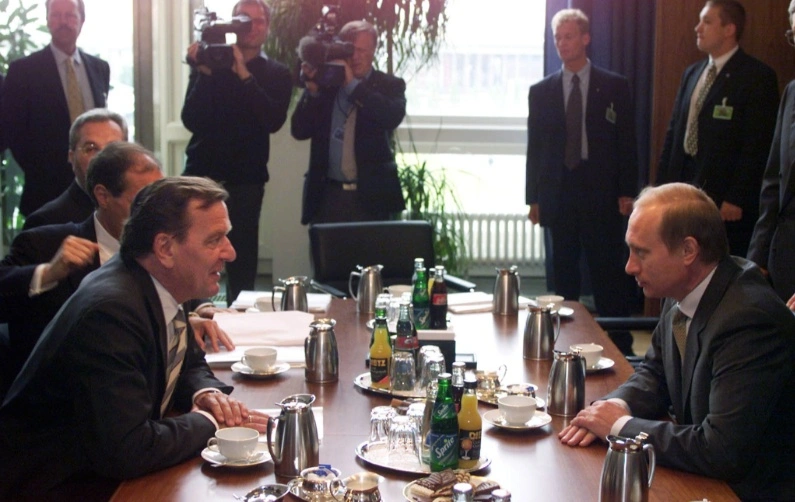
Former German Chancellor Schröder criticised for attending Putin's birthday
Section: News
The European market for rare earth elements is facing increased pressure following China's recent implementation of export controls on these critical materials. As a result, European companies are intensifying efforts to secure alternative sources, with Sweden's state-owned mining company LKAB taking a leading role in developing local production capabilities in Luleå.
Rare earth elements, once considered merely byproducts of iron ore mining, have now become central to Europe's industrial and geopolitical strategies. These materials are essential for manufacturing electric vehicles, wind turbines, electronics, and defense systems. Currently, China dominates the global supply chain, accounting for an estimated 70% of mining and up to 90% of refining and separation processes, according to several industry reports. This dominance allows China significant influence over global prices and availability.
LKAB, responsible for about 80% of Europe's iron ore production, is now advancing its plans to extract rare earth elements from previously unused byproducts. The company has established a demonstration facility in Luleå to develop and test new extraction and processing techniques. The demonstration plant aims to refine processes for producing gypsum for the construction sector, phosphorus for fertilizer industries, and most notably, rare earth elements needed for Europe's green transition.
The demonstration facility represents an important step toward establishing full-scale production. During the next phases, LKAB will install advanced processing equipment and conduct technical trials to validate manufacturing methods. Pending successful outcomes and necessary environmental permits, the company anticipates scaling up to industrial-level operations, potentially creating up to 500 new jobs in the region.
One of the main challenges for LKAB is obtaining the required environmental approvals, particularly due to the location overlapping with traditional reindeer grazing lands. The company is pursuing permits for both the Luleå facility and associated processing sites in Malmberget, where iron ore byproducts are sourced. These regulatory steps are considered crucial before large-scale extraction and processing can commence.
Additionally, LKAB plans to send processed rare earth materials to Norway for further separation by Reetec, a company in which LKAB holds a majority stake. This integrated approach allows LKAB to manage the entire value chain, from mining to final processing, thereby strengthening Europe's self-sufficiency in critical materials.
The most significant rare earth reserves in Sweden are located at the Per Geijer deposit near Kiruna. However, development of this site remains uncertain due to opposition from local Sami communities who rely on the area for traditional herding routes. The issue of land use and indigenous rights continues to be a focal point in the project's advancement.
Currently, LKAB's initial focus is on extracting rare earths from the Malmberget site, with production volumes estimated to reach between 2,000 and 3,000 tonnes of rare earth oxides annually. This output is notable when compared to China's monthly exports, which typically range between 4,000 and 5,000 tonnes worldwide.
LKAB's demonstration facility utilizes apatite concentrate--a byproduct of iron ore enrichment--as its primary raw material. The processing involves dissolving the concentrate, followed by steps to separate phosphorus, rare earth elements, and impurities, and to produce gypsum. The pilot projects in Malmberget supply the necessary material volumes for these demonstration efforts.
The European Union and the United States are actively working to diversify their sources of rare earth elements, with Sweden's LKAB project recognized as strategic under the EU's Critical Raw Materials Act. This status grants the project expedited permitting and support, reflecting its importance to Europe's industrial resilience and sustainable supply chains.
Through these initiatives, Europe aims to reduce its dependency on external suppliers and ensure stable access to materials essential for modern technologies and the energy transition.
Section: News

Section: Science
Section: Business

Section: Business
Section: Science
Section: News
Section: Politics
Section: News

Section: Fashion
Section: Arts
Both private Health Insurance in Germany and public insurance, is often complicated to navigate, not to mention expensive. As an expat, you are required to navigate this landscape within weeks of arriving, so check our FAQ on PKV. For our guide on resources and access to agents who can give you a competitive quote, try our PKV Calculator.
Germany is famous for its medical expertise and extensive number of hospitals and clinics. See this comprehensive directory of hospitals and clinics across the country, complete with links to their websites, addresses, contact info, and specializations/services.
Didn't manage to get a ticket for Linkin Park? Or still not enough after the concert? Join us at CRASH on June 12th for our "IN THE END" Linkin Park Special + CORE NIGHT.All night long, we'll be playing Linkin Park's music, along with Nu Metal, Metalcore, and Alternative Rock from bands such as Limp...



No comments yet. Be the first to comment!