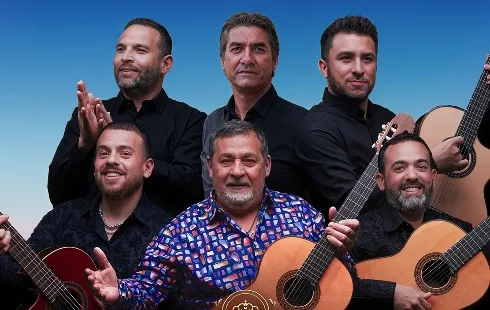
Gipsy Kings: "Music Is a Natural Way of Life"
Section: Arts
As the clock strikes 5 PM, Sköndalshallen comes alive with eager young handball players, parents, and volunteer coaches. Two teams share the space, training simultaneously to accommodate everyone's schedule. Over the past year, GT Söder HK has welcomed 100 new members, pushing their total to over 500. However, the additional administrative workload imposed by the Fritidskortet initiative is proving challenging for club administrator Helena Olsson.
"This isn't the only task I have on my plate during October and November," she notes, highlighting the strain on resources.
Many sports clubs across Sweden are utilizing digital platforms to streamline invoice payments. However, the recent influx of membership fees for the autumn season has revealed that Fritidskortet is not compatible with all existing systems. Consequently, clubs must manually process these transactions to enable guardians to utilize the support allocated for each child aged 8 to 16 years--2,000 kronor for those from families that received housing benefits the previous year, and 500 kronor for others.
According to the platform svenskalag.se, "Given that Fritidskortet brings increased administrative tasks and costs for clubs, it may be necessary to raise membership or training fees to avoid financial losses related to the initiative."
Recently, the Social Department announced plans to provide financial support to service providers of club systems in 2026, indicating a recognition of the challenges faced.
Social Minister Jakob Forssmed, a key advocate for Fritidskortet, stated that funding is being allocated to service providers to expedite the development of solutions, assuring clubs that efforts are underway to resolve the issues.
Yet, Olsson expressed concern about the timing, stating, "These developments should have occurred earlier. Announcing these efforts in September, when our season has already started, is not ideal."
Erik Dahlbäck, chairman of Sweden's association systems, acknowledged the premature launch on September 8 and advised clubs to assess their capacities before enrolling in Fritidskortet, suggesting that some may be able to manage the additional administrative burden sooner than others.
Azadeh Rojhan, the sporting political spokesperson for the Social Democrats, highlighted that smaller clubs, many of which lack dedicated administrative staff, are disproportionately affected by these changes. She suggested that investment should focus on infrastructure improvements instead.
"The aim cannot be to undermine the sports movement. It should be about enabling them to allocate time to what truly matters--engaging with children and youth, rather than getting bogged down in administrative tasks," she asserted.
Forssmed acknowledged the added manual workload for certain clubs this fall, expressing gratitude for their willingness to facilitate broader participation.
Kristina Ljungros, secretary-general of Friluftsfrämjandet, emphasized the importance of training more leaders rather than providing direct support to guardians. She noted that if there are already waiting lists for activities, the financial support may not make a significant impact.
Last year, Friluftsfrämjandet received government funding that allowed them to train 300 new leaders and expand activities in underserved areas and for individuals with disabilities. "This demonstrates that allocating resources where they are needed can lead to tangible improvements," Ljungros remarked.
Forssmed explained that last year's funding for Friluftsfrämjandet was intended to prepare for the implementation of Fritidskortet, which now provides financial assistance directly to guardians, helping families afford activities amidst rising living costs.
GT Söder remains optimistic about Fritidskortet, with Bergendahl expressing hope that it will fulfill their goal of inclusivity in handball, stating, "We want as many people as possible to have the opportunity to play for as long as possible." However, Olsson emphasizes the need for practical functionality in the system, as it falls upon the clubs to manage these processes.
Fritidskortet Overview:
Section: Arts

Section: Fashion

Section: Health Insurance
Section: News

Section: Politics
Section: Business

Section: Health

Section: Arts

Section: Politics
Section: Business
Both private Health Insurance in Germany and public insurance, is often complicated to navigate, not to mention expensive. As an expat, you are required to navigate this landscape within weeks of arriving, so check our FAQ on PKV. For our guide on resources and access to agents who can give you a competitive quote, try our PKV Cost comparison tool.
Germany is famous for its medical expertise and extensive number of hospitals and clinics. See this comprehensive directory of hospitals and clinics across the country, complete with links to their websites, addresses, contact info, and specializations/services.
Didn't manage to get a ticket for Linkin Park? Or still not enough after the concert? Join us at CRASH on June 12th for our "IN THE END" Linkin Park Special + CORE NIGHT.All night long, we'll be playing Linkin Park's music, along with Nu Metal, Metalcore, and Alternative Rock from bands such as Limp...



No comments yet. Be the first to comment!