
Record Orders in German Industry Driven by Defense Spending
Section: Politics
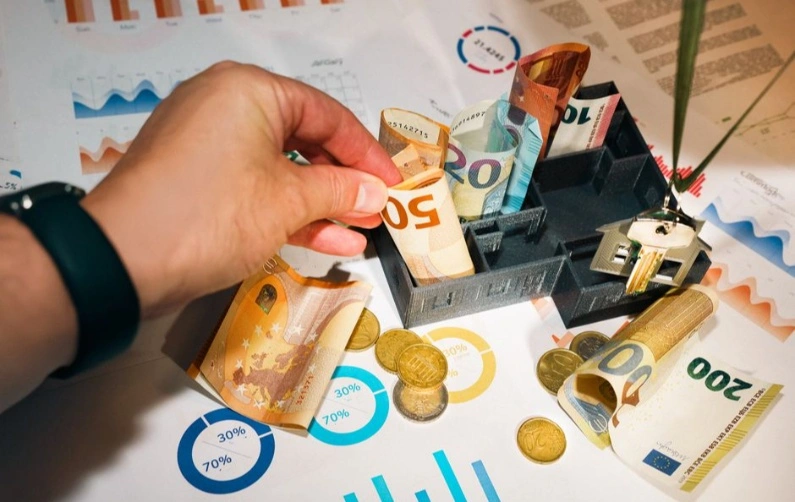
This year, the international financial community observes the 100th anniversary of World Savings Day, an initiative originally launched by banks to promote financial literacy and encourage personal savings. In Austria, savings products continue to be the most popular form of financial investment, maintaining their status even through periods of low interest rates between 2008 and 2022. Nevertheless, alternative investment options such as stocks, mutual funds, exchange-traded funds (ETFs), and digital assets have steadily gained ground over the past decades.
World Savings Day was conceived at the inaugural International Savings Bank Congress held in Milan in October 1924. The event also marked the establishment of the World Savings and Retail Banking Institute (WSBI), with 29 countries, including Austria, participating in its foundation. The initiative aimed to enhance public understanding of financial management and promote the habit of saving, particularly targeting workers and the middle class to foster wealth accumulation. The first observance of World Savings Day took place on 30 October 1925.
The movement gained significant momentum in the 1950s as European societies began to recover from the disruptions of World War II. In Austria, the introduction of school and youth savings programs in 1949, along with the creation of numerous new savings clubs, significantly boosted savings culture. The mid-1950s also saw the emergence of the character 'Sparefroh', designed to teach the importance of saving to children. While originating in Germany, 'Sparefroh' became especially popular in Austria and remains associated with the Erste Group. Over time, various banks developed their own mascots to promote savings, such as 'Sumsi', a bee figure introduced by Raiffeisen banks in several countries during the 1960s. These mascots were accompanied by the tradition of gifting small items to savers, ranging from toys and stationery for children to practical items for adults.
World Savings Day reached its peak popularity in Austria during the 1970s, maintaining a strong presence among local savers until the close of the 20th century. In contrast, the observance of this day has largely faded in many other founding countries. In Austria, however, the day continues to be marked by banks, albeit with less fanfare. In recent years, banks have extended their World Savings Day activities over several days, offering small gifts primarily to children. Historical savings memorabilia and the evolution of the 'Sparefroh' mascot are displayed at the Sparefroh House in Vienna's Alsergrund district museum, showcasing items dating back to 1957.
Savings habits remain deeply ingrained in Austrian society. Amid ongoing economic uncertainty, recent studies by Erste Bank indicate that Austrians have increased their monthly savings, with the average amount rising from EUR308 in 2024 to EUR320. The traditional savings account remains a cornerstone of personal finance across all age groups, although alternative investments are increasingly being adopted. For example, 38 percent of surveyed individuals now invest in equities, representing a 10 percentage point increase compared to a decade ago.
Austrian households continue to demonstrate a high savings rate, which consistently exceeds the average for the Eurozone. While forecasts suggest a slight decrease in 2025, the savings rate remains robust. Data from Statistik Austria reveal that the savings rate climbed from 8.6 percent to 11.7 percent in 2024, with households collectively setting aside approximately EUR34 billion--a 46 percent increase over the previous year.
As investment behaviors evolve, traditional savings products remain relevant, but Austrians are increasingly diversifying their portfolios to include assets such as shares, gold, and cryptocurrencies. This shift reflects a broader trend toward varied and modern approaches to managing personal finances, even as the cultural tradition of saving retains its significance in Austria.
Section: Politics
Section: Business
Section: Business
Section: Arts

Section: Business
Section: News
Section: Business

Section: News
Section: News
Section: Politics
Both private Health Insurance in Germany and public insurance, is often complicated to navigate, not to mention expensive. As an expat, you are required to navigate this landscape within weeks of arriving, so check our FAQ on PKV. For our guide on resources and access to agents who can give you a competitive quote, try our PKV Calculator.
Germany is famous for its medical expertise and extensive number of hospitals and clinics. See this comprehensive directory of hospitals and clinics across the country, complete with links to their websites, addresses, contact info, and specializations/services.
Didn't manage to get a ticket for Linkin Park? Or still not enough after the concert? Join us at CRASH on June 12th for our "IN THE END" Linkin Park Special + CORE NIGHT.All night long, we'll be playing Linkin Park's music, along with Nu Metal, Metalcore, and Alternative Rock from bands such as Limp...



No comments yet. Be the first to comment!