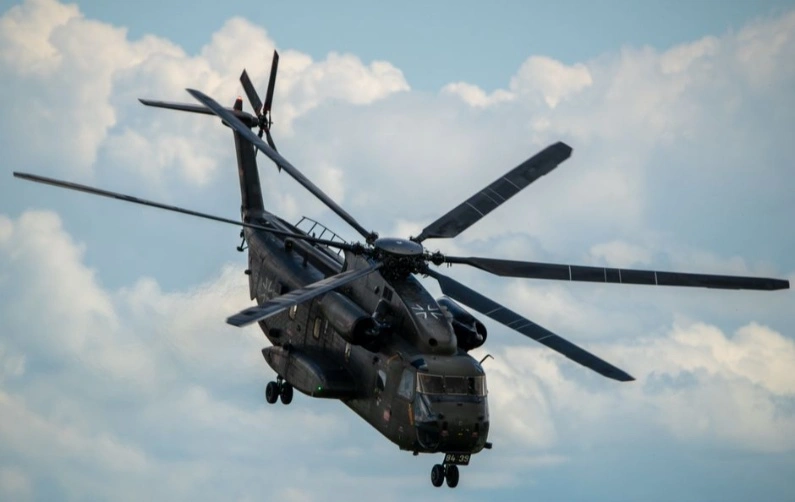
Record Orders in German Industry Driven by Defense Spending
Section: Politics
Austria's Minister for Economic Affairs, Wolfgang Hattmannsdorfer, has called for an extension to the allocation of free carbon emissions certificates within the European Union's emissions trading system (EU-ETS) beyond the scheduled 2034 phase-out. The Minister emphasized the need for a gradual transition, citing the current limited availability of low-carbon technologies across industries.
The EU-ETS serves as a central instrument in the bloc's climate policy, requiring companies in sectors such as energy, manufacturing, and aviation to acquire permits corresponding to their greenhouse gas emissions. The system is designed to incentivize emission reductions by making it more costly to produce carbon-intensive goods and services.
Historically, the EU has allocated a portion of emissions permits free of charge to certain industries, aiming to prevent the relocation of manufacturing activities to regions with less stringent environmental regulations--a phenomenon known as carbon leakage. This policy has been under review as the EU intensifies efforts to meet its climate goals, particularly those outlined in the Paris Agreement.
Beginning in 2026, the EU plans to gradually replace free allowances for selected products with the Carbon Border Adjustment Mechanism (CBAM). This mechanism is intended to level the playing field between EU-based companies and foreign competitors by imposing a carbon cost on imports from countries with lower climate standards.
Minister Hattmannsdorfer highlighted concerns that withdrawing free certificates prematurely could undermine investment in low-emission technologies and drive both value creation and emissions abroad. He advocated for extending the current phase-out timeline until global competition is equitable and practical alternatives to carbon-intensive processes are widely available. The Minister also suggested that the CBAM should be overhauled by 2028 to better support industry needs.
Industry groups have echoed these concerns, with the Federation of Austrian Industries maintaining that the current border adjustment framework does not sufficiently replace the benefits of free allowance allocations. They argue that continued free allocation is essential for maintaining competitiveness while industries adapt to cleaner processes.
The EU-ETS, established in 2005, now covers approximately 40 percent of the EU's total greenhouse gas output. In recent years, the price of carbon permits has fluctuated significantly, rising from around 30 euros per tonne in early 2021 to surpassing 100 euros in 2023, before settling in the 60-80 euro range throughout the current year. This volatility has influenced both investment decisions and the pace of emissions reductions within regulated sectors.
According to the Intergovernmental Panel on Climate Change (IPCC), significantly higher carbon prices will be necessary for the EU and other countries to achieve the climate targets set by the Paris Agreement, which aims to limit global warming to well below 2 degrees Celsius.
The debate over the future of free emissions permits and the structure of the EU's carbon market reflects broader challenges in aligning industrial competitiveness with ambitious climate objectives. Policymakers continue to weigh the balance between maintaining economic stability and accelerating the transition to a low-carbon economy.
Section: Politics
Section: Business
Section: Business
Section: Arts
Section: Business

Section: News
Section: Business
Section: News
Section: News
Section: Politics
Both private Health Insurance in Germany and public insurance, is often complicated to navigate, not to mention expensive. As an expat, you are required to navigate this landscape within weeks of arriving, so check our FAQ on PKV. For our guide on resources and access to agents who can give you a competitive quote, try our PKV Calculator.
Germany is famous for its medical expertise and extensive number of hospitals and clinics. See this comprehensive directory of hospitals and clinics across the country, complete with links to their websites, addresses, contact info, and specializations/services.
Didn't manage to get a ticket for Linkin Park? Or still not enough after the concert? Join us at CRASH on June 12th for our "IN THE END" Linkin Park Special + CORE NIGHT.All night long, we'll be playing Linkin Park's music, along with Nu Metal, Metalcore, and Alternative Rock from bands such as Limp...



No comments yet. Be the first to comment!