
Why Turquoise Is Becoming Most Viral Color of 2026
Section: Fashion
Recent reports indicate that Austrian consumers are exhibiting a cautious approach to spending, despite a noticeable increase in their financial capacity. According to Bank Austria, if consumers were to engage more actively in the economy, it could potentially avert a third consecutive decline in the country's GDP this year. The report highlights that wage increases have largely compensated for the losses incurred due to high inflation in recent years, although this does not apply uniformly across all sectors. Notably, fields such as energy supply, public administration, and certain service sectors have experienced tangible gains in purchasing power.
As per the UniCredit Bank Austria Economic Indicator, it is projected that throughout 2025, an increase in wage rates will enable the average purchasing power to return to the levels observed in 2020 across nearly all major categories. The recovery in purchasing power was already evident in 2024, marked by a rise in the savings rate.
Reflecting on the past, data shows that by October 2022, real wages, when compared to the development of collective wages and consumer prices, had dropped to 91% of the average for 2020. The report notes that as inflation began to slow down from autumn 2022 onwards, real wage losses diminished gradually. By mid-2023, collective wages began to rise faster than inflation for the first time in 28 months.
Since July 2023, there have been consistent increases in real wages, effectively offsetting previous losses. The purchasing power in Austria has largely returned to the levels recorded at the turn of 2024/25. It is expected that inflation will decrease to an average of 2.5% in 2025, alongside an anticipated average wage increase of 3.9%. This combination is expected to further boost real purchasing power beyond pre-inflation levels, as indicated by economist Walter Pudschedl.
However, the outlook is not uniformly positive across all sectors. Analysts acknowledge discrepancies in wage increases, which have not been uniformly high or timely. As of the end of the first quarter of 2025, employees in six sectors have already achieved gains in real purchasing power, including energy supply and public administration. Conversely, many sectors, such as finance, arts, entertainment, and healthcare, have yet to fully recover from inflationary impacts, with employees in manufacturing still facing purchasing power declines.
Particularly concerning is the situation for retirees, whose pension adjustments have fallen short of inflation rates since the onset of the economic shock. Nevertheless, the gap between their current purchasing power and that of 2020 is relatively small. Some pension increases have favored lower and medium pensions through direct payments and enhanced adjustments, while higher pensions have faced greater declines due to various caps on increases.
This economic backdrop has influenced consumer behavior significantly. In 2023, private consumption dropped by 0.5% in real terms, followed by stagnation in 2024. While the contraction in 2023 can be attributed to diminished purchasing power due to inflation, this rationale does not apply to 2024 when disposable income rose by 3.5% in real terms. Rather than being utilized for consumption, the additional income was largely saved, resulting in a savings rate that climbed to 11.7%. Austrian households set aside over EUR33.7 billion in 2024.
In conclusion, Stefan Bruckbauer, chief economist at UniCredit Bank Austria, emphasizes that the responsibility now lies with domestic consumers to stimulate economic activity, especially as external trade faces challenges from U.S. trade policies and a difficult competitive landscape for local industries.
Section: Fashion

Section: Health Insurance

Section: News

Section: Politics

Section: Business

Section: Health
Section: Arts
Section: Politics

Section: Business
Section: Health Insurance
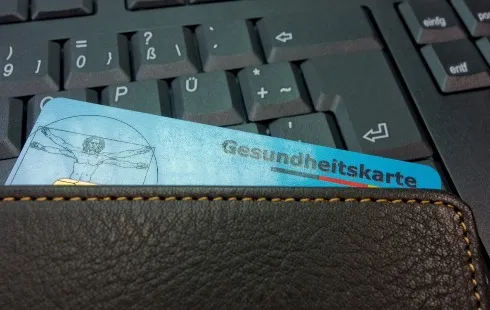
Both private Health Insurance in Germany and public insurance, is often complicated to navigate, not to mention expensive. As an expat, you are required to navigate this landscape within weeks of arriving, so check our FAQ on PKV. For our guide on resources and access to agents who can give you a competitive quote, try our PKV Cost comparison tool.
Germany is famous for its medical expertise and extensive number of hospitals and clinics. See this comprehensive directory of hospitals and clinics across the country, complete with links to their websites, addresses, contact info, and specializations/services.
Join us for the premiere of Echtzeitalter, a captivating theater production based on the novel by Tonio Schachinger. The story follows Till, a new student at a prestigious gymnasium, who grapples with the outdated teaching methods of his strict teacher, Dolinar. As Till navigates his elite...



No comments yet. Be the first to comment!