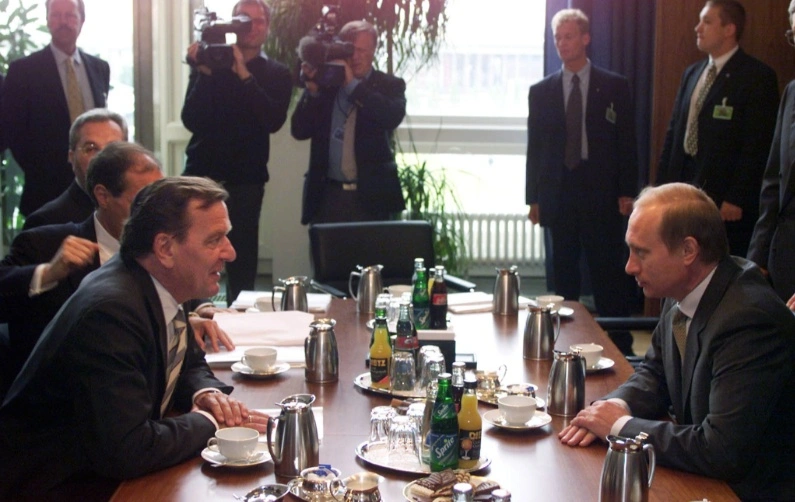
Former German Chancellor Schröder criticised for attending Putin's birthday
Section: News
Swedish households are preparing for significant changes to electricity billing as a new fee targeting high consumption peaks is set to take effect nationally in 2027. The revised structure, overseen by the Swedish Energy Markets Inspectorate, aims to encourage a more balanced electricity usage by charging higher fees during periods of elevated network demand.
Under the planned system, households consuming large amounts of electricity during peak hours--typically daytime and evening--will incur additional charges. Energy companies across Sweden are currently designing mechanisms to implement these tariffs.
One of the most vocal respondents to the proposed changes is Gothenburg's municipal energy provider. The company has highlighted that households in apartments, which represent 185,000 of the city's 275,000 homes, are likely to see little benefit from the new tariff model. Apartment dwellers, whose energy consumption is generally low and stable, rely mainly on district heating systems and seldom use high-energy appliances or electric vehicle chargers. Collectively, these properties account for only 7 percent of peak electricity demand on a typical winter day.
Analysis suggests that individual apartment customers could save approximately 23 Swedish kronor per month during winter by shifting their electricity usage to off-peak hours. However, the practical impact of such changes is expected to be minimal. The costs associated with informing and influencing customer behavior regarding the new tariffs are estimated to be disproportionately high, with basic informational campaigns costing several million kronor and more comprehensive efforts potentially requiring tens of millions over several years.
Given the limited potential for energy use optimization among apartment residents, Gothenburg's energy provider has formally requested an exemption from the new fee structure for these customers. The company argues that the administrative burden and the cost of outreach are not justified by the modest potential for improved network efficiency within this group.
The Swedish Energy Markets Inspectorate is currently reviewing the request and is expected to provide a decision in the coming months. The outcome could influence policy for apartment customers in electricity networks across the country. The regulator has stated that its main consideration is whether such exemptions would undermine the objective of making electricity networks more efficient.
The rationale behind the new fee structure is to encourage households to distribute their electricity consumption more evenly throughout the day. The goal is to reduce periods of high demand on the power grid and, consequently, limit the need for costly infrastructure expansions. Some energy companies, such as those operating in central Sweden, have already introduced similar tariffs.
Electricity providers have some discretion in setting the specifics of the penalty fees. For instance, some may base the surcharge on a single peak usage event during the month, while others might use an average of several peaks. Rates and terms--such as whether weekend usage is included--also differ among providers.
Industry experts suggest that, at present, the new tariffs are most relevant for single-family home owners, who typically have higher energy consumption and greater flexibility in managing their usage. As the adoption of electric vehicles increases, it is anticipated that apartment residents will eventually become more engaged in adjusting their consumption patterns to mitigate costs.
The new system is anticipated to add complexity to electricity bills, making it more challenging for customers to understand their charges. For example, a homeowner charging an electric vehicle during the day might face substantial penalty fees, even if the base electricity price is low at that time. These overlapping pricing mechanisms could create confusion among consumers.
While the new tariffs are designed to be cost-neutral, meaning they should not increase overall fees, projections indicate that they could constitute up to 60 percent of the network fee for some households. Observers suggest that more energy providers may seek similar exemptions to Gothenburg's in order to minimize administrative costs and customer dissatisfaction.
If exemptions for apartment residents become widespread, the new penalty fees would primarily affect those living in single-family homes--roughly 40 percent of Swedish households. This group is seen as having the greatest capacity to manage their energy use and, therefore, the most significant impact on grid efficiency.
Key Facts About the New Electricity Fee Structure:
Section: News

Section: Science

Section: Business

Section: Business

Section: Science

Section: News

Section: Politics

Section: News

Section: Fashion
Section: Arts
Both private Health Insurance in Germany and public insurance, is often complicated to navigate, not to mention expensive. As an expat, you are required to navigate this landscape within weeks of arriving, so check our FAQ on PKV. For our guide on resources and access to agents who can give you a competitive quote, try our PKV Calculator.
Germany is famous for its medical expertise and extensive number of hospitals and clinics. See this comprehensive directory of hospitals and clinics across the country, complete with links to their websites, addresses, contact info, and specializations/services.
Didn't manage to get a ticket for Linkin Park? Or still not enough after the concert? Join us at CRASH on June 12th for our "IN THE END" Linkin Park Special + CORE NIGHT.All night long, we'll be playing Linkin Park's music, along with Nu Metal, Metalcore, and Alternative Rock from bands such as Limp...



No comments yet. Be the first to comment!