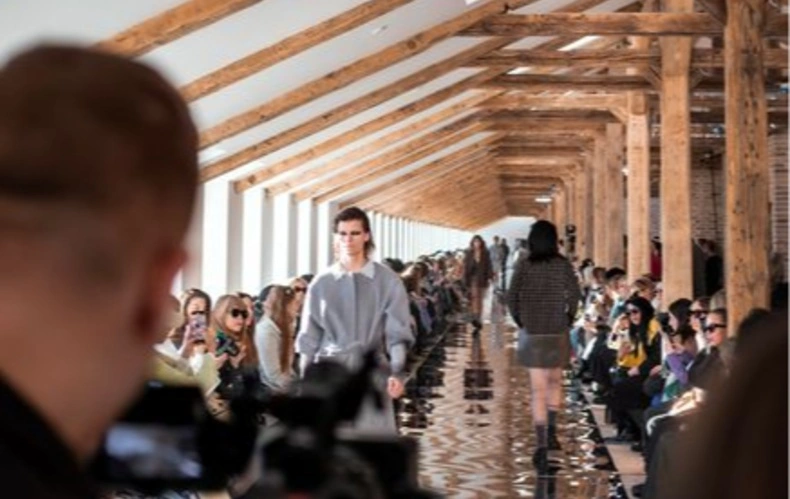
Why Marie Antoinette Showed Up All Over Fashion Week This Year
Section: Fashion
Austria's pension system primarily relies on a state-funded, pay-as-you-go model, where current workers contribute to the pensions of retirees. This system provides a degree of security for Austrians, particularly when contrasted with concerns from American retirees facing uncertainties due to fluctuating stock markets and political maneuvers. Reports indicate that many American pensioners feel their capital market-based retirement plans are jeopardized by unpredictable market behaviors, particularly those influenced by recent political decisions.
Market volatility has become a significant concern, as recent events have demonstrated that external factors can dramatically impact financial stability. For instance, the stock market has experienced considerable turbulence due to tariffs and trade tensions, leading to a perception that investing in stocks can be akin to gambling, particularly for smaller investors.
Historically, such periods of uncertainty are not uncommon. Notable examples include the economic turmoil during the COVID-19 pandemic in March 2020, the collapse of Lehman Brothers in 2008, and the market crash on October 19, 1987, when stock prices plummeted without clear explanations. While short-term losses can occur, investing in the stock market over a long period typically yields positive returns. Exceptions do exist, but they are rare for those who adopt a consistent and diversified investment strategy.
Despite the apparent reliability of Austria's pension system, questions about its long-term viability persist. The state pension alone may not guarantee a high standard of living in retirement, as it often reflects a lower income than what retirees earned during their working years. Furthermore, the pay-as-you-go system's sustainability depends on the ratio of workers to retirees, economic growth, and life expectancy trends. The ability of the state to meet these challenges without implementing cuts remains uncertain.
To mitigate the risk of old-age poverty, experts recommend having multiple sources of retirement income. Individuals should consider a combination of government pensions, company pensions, and private savings to create a more secure financial future. Countries like Sweden, Denmark, and the Netherlands, which have more capital market-financed pension systems, experience significantly lower rates of elderly poverty, showcasing the benefits of diversified pension strategies.
Critics of capital market-oriented pension systems point out that government interventions have sometimes led to suboptimal outcomes, with policies designed to serve multiple interests resulting in minimal returns for investors. Historical examples include government-mandated capital guarantees combined with high minimum equity quotas that have frequently resulted in negligible earnings.
In conclusion, while the Austrian pension system provides a safety net, it is essential for individuals to be proactive in planning for retirement. Diversifying pension sources and investing wisely over the long term can help ensure financial stability in old age, reducing reliance on potentially volatile capital markets.
Section: Fashion

Section: Health
Section: Politics

Section: Politics
Section: Business
Section: Business

Section: Arts

Section: Business

Section: News
Section: Business
Both private Health Insurance in Germany and public insurance, is often complicated to navigate, not to mention expensive. As an expat, you are required to navigate this landscape within weeks of arriving, so check our FAQ on PKV. For our guide on resources and access to agents who can give you a competitive quote, try our PKV Calculator.
Germany is famous for its medical expertise and extensive number of hospitals and clinics. See this comprehensive directory of hospitals and clinics across the country, complete with links to their websites, addresses, contact info, and specializations/services.
Didn't manage to get a ticket for Linkin Park? Or still not enough after the concert? Join us at CRASH on June 12th for our "IN THE END" Linkin Park Special + CORE NIGHT.All night long, we'll be playing Linkin Park's music, along with Nu Metal, Metalcore, and Alternative Rock from bands such as Limp...



No comments yet. Be the first to comment!