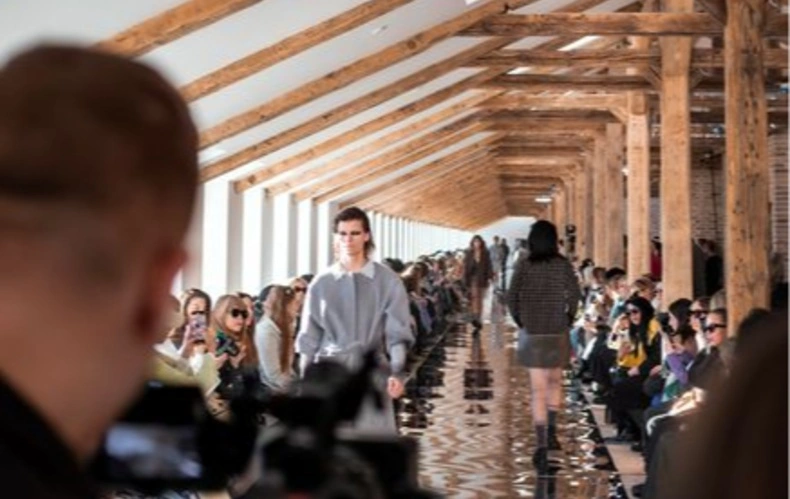
Why Marie Antoinette Showed Up All Over Fashion Week This Year
Section: Fashion
Water drips from the hair of a local resident as he reflects on the history of Valhallabadet, a bathhouse that has served as a second home to many since its opening in the 1950s. Once a state-of-the-art facility that welcomed elite swimmers, the bathhouse now faces the threat of demolition due to deteriorating conditions.
Bengt Friberg, a 79-year-old swimmer who has frequented Valhallabadet for over six decades, recalls his training sessions that once spanned up to eight kilometers daily. Today, however, he can only manage a few kilometers. The facility, which recently earned recognition as one of Europe's seven most endangered cultural heritage sites from Europa Nostra, is now in a state of disrepair, with rotting wooden structures and damaged brick walls.
The architectural design of Valhallabadet was celebrated when it won an Olympic medal in the art competition of the 1948 London Games. The facility features exquisite mosaic artworks by renowned artist Nils Wedel, further underscoring its cultural significance.
Despite its historical value, a political majority in Gothenburg advocates for the bathhouse's demolition to make way for a new event district, which will include a multi-arena capable of seating up to 18,000 spectators, additional sports facilities, hotels, and shops. The city officials argue that such developments are essential for maintaining Gothenburg's status as a competitive event city.
Opposition to these plans is strong, with local leaders like Daniel Bernmar from the Left Party emphasizing the need to preserve unique local heritage. He notes that Gothenburg's cultural and historical venues are crucial for its identity and appeal. On the other hand, Elisabet Lann from the Christian Democrats expresses concern over the potential loss of historical sites, citing past experiences with similar demolition projects that disregarded the city's historical fabric.
The debate surrounding Valhallabadet extends beyond mere structure; it touches on the city's identity and the balance between modern development and historical preservation. While proponents of the event district argue that new arenas will benefit the city economically, critics like Filip Laurits, who heads a preservation group, insist that such projects prioritize prestige over community needs.
As plans for the new event district progress, the future of Valhallabadet remains uncertain. Political factions continue to clash over the best path forward, with some advocating for renovation rather than demolition. Recent estimates suggest that renovating the bathhouse could cost upwards of 320 million kronor, with some estimates reaching as high as 1.5 billion kronor when factoring in the construction of new facilities.
Public sentiment is palpable, with protests and demonstrations planned by preservationists who seek to halt the destruction of this cultural landmark. As the city grapples with its decision, questions about the future direction of Gothenburg and its commitment to preserving its historical heritage loom large.
Section: Fashion

Section: Health
Section: Politics

Section: Politics
Section: Business
Section: Business
Section: Arts

Section: Business

Section: News
Section: Business
Both private Health Insurance in Germany and public insurance, is often complicated to navigate, not to mention expensive. As an expat, you are required to navigate this landscape within weeks of arriving, so check our FAQ on PKV. For our guide on resources and access to agents who can give you a competitive quote, try our PKV Calculator.
Germany is famous for its medical expertise and extensive number of hospitals and clinics. See this comprehensive directory of hospitals and clinics across the country, complete with links to their websites, addresses, contact info, and specializations/services.
Didn't manage to get a ticket for Linkin Park? Or still not enough after the concert? Join us at CRASH on June 12th for our "IN THE END" Linkin Park Special + CORE NIGHT.All night long, we'll be playing Linkin Park's music, along with Nu Metal, Metalcore, and Alternative Rock from bands such as Limp...



No comments yet. Be the first to comment!