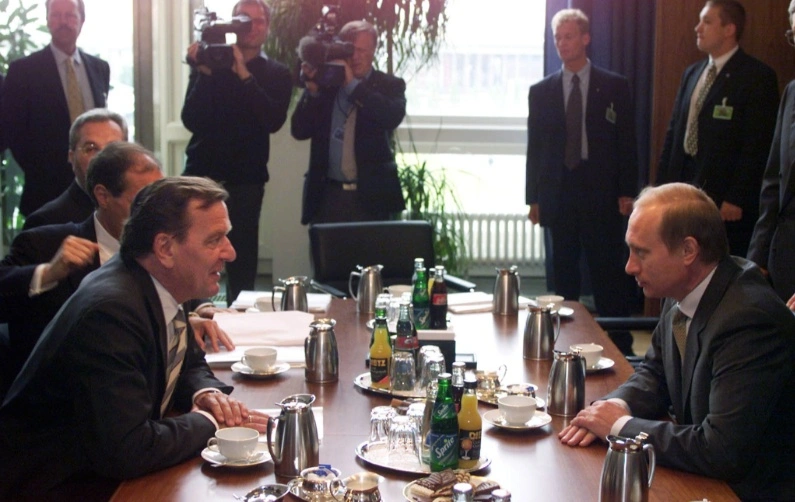
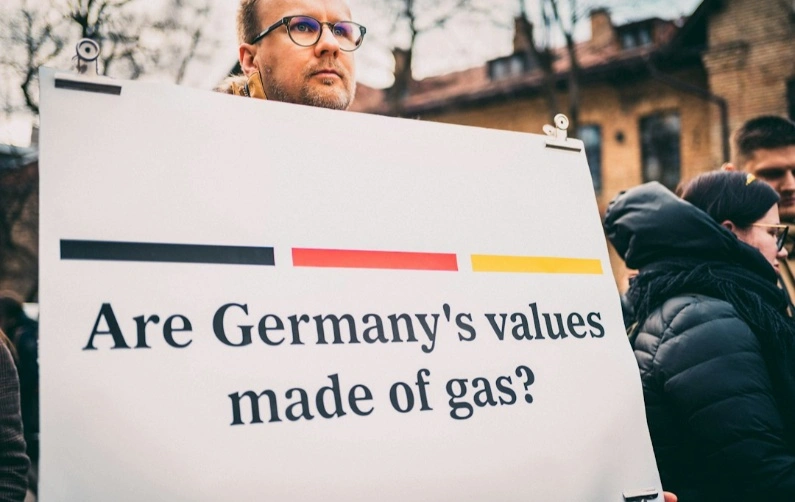
Former German Chancellor Schröder criticised for attending Putin's birthday
Section: News
Vienna experienced renewed transport disruptions as independent taxi drivers staged a coordinated protest for the second time in recent weeks. The demonstration, organized by a group of approximately 1,200 drivers, aimed to highlight concerns over what participants describe as unfair competition posed by major dispatch centers and international ride-hailing platforms.
The convoy began at midday in the city's Arbeiterstrandbadstraße, near the Donauturm, and proceeded through central districts towards Heldenplatz, where a final rally was scheduled. The protest followed a similar demonstration two weeks prior that led to significant traffic congestion throughout the city.
Calls for Regulatory ReformOrganizers of the protest contend that ride-hailing services such as Uber and Bolt operate under pricing models that differ from those applied to traditional taxis. The group advocates for a unified and mandatory fare system for all passenger transport services within Vienna, arguing that this would create a level playing field.
Additional demands include the establishment of geographic protections to prevent operators from neighboring regions, such as Lower Austria, from entering the Vienna market without restriction. The drivers are also seeking more rigorous oversight of commercial licenses and a more reliable and transparent representation from their trade association to safeguard their interests.
Traffic Impact and Public ResponseWhile the protest did create some travel delays, the city's major automobile clubs, ARBÖ and ÖAMTC, reported that the impact on traffic remained moderate by early afternoon. Notable slowdowns were observed on major routes including Lassallestraße, Schüttelstraße, Obere Donaustraße, the Ring, and Franz Josefs Kai. Delays were estimated at around ten minutes in the affected areas.
Officials noted that the demonstration coincided with the busy pre-holiday period, a time when traffic volume typically increases due to heightened shopping activity and reduced reliance on public transport for transporting goods. As a result, traffic authorities anticipated further congestion as the protest progressed through central Vienna.
Parallel Concerns in the Automotive SectorOn the same day, automotive importers voiced criticism regarding proposed changes to Austria's standard consumption tax (NoVA). The planned adjustments, which include ending the tax rebate for vehicles exported abroad, have been described by industry representatives as overly complicated and administratively burdensome. The automotive sector is urging the government to simplify the tax framework, suggesting that current regulations present significant challenges for both authorities and businesses.
Despite ongoing dialogue, industry spokespeople reported little progress in discussions with government officials concerning tax reform. Calls for more accessible and transparent procedures remain a priority for automotive companies operating in Austria.
As Vienna's taxi sector continues to push for regulatory changes, the outcome of these protests and related industry appeals may shape future policy decisions impacting urban transportation and the broader mobility market in the region.
Section: News

Section: Science
Section: Business

Section: Business
Section: Science

Section: News
Section: Politics
Section: News

Section: Fashion
Section: Arts
Both private Health Insurance in Germany and public insurance, is often complicated to navigate, not to mention expensive. As an expat, you are required to navigate this landscape within weeks of arriving, so check our FAQ on PKV. For our guide on resources and access to agents who can give you a competitive quote, try our PKV Calculator.
Germany is famous for its medical expertise and extensive number of hospitals and clinics. See this comprehensive directory of hospitals and clinics across the country, complete with links to their websites, addresses, contact info, and specializations/services.
Didn't manage to get a ticket for Linkin Park? Or still not enough after the concert? Join us at CRASH on June 12th for our "IN THE END" Linkin Park Special + CORE NIGHT.All night long, we'll be playing Linkin Park's music, along with Nu Metal, Metalcore, and Alternative Rock from bands such as Limp...



No comments yet. Be the first to comment!