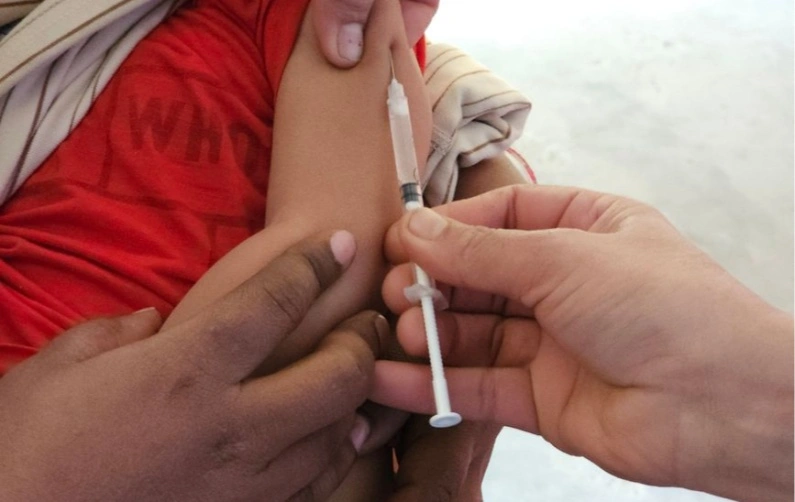
Child Vaccination Rates Decline in Germany Amid Health Concerns
Section: Health
The ongoing legal battle regarding Meta's ownership of Instagram and WhatsApp is set to commence in Washington, D.C., raising critical questions about potential antitrust violations. The Federal Trade Commission (FTC) alleges that Meta, the parent company of Facebook, engaged in anti-competitive practices by acquiring these popular platforms to maintain its monopoly in the social media landscape.
The FTC's claims are centered on the assertion that Meta's control over Instagram and WhatsApp has stifled competition, particularly against emerging platforms such as TikTok. The commission is seeking remedies that could include unwinding the acquisitions made in 2012 and 2014, respectively. Meta, however, has vehemently denied these allegations, arguing that these acquisitions have benefited consumers and enhanced competition in the digital marketplace.
The FTC's original lawsuit was filed in December 2020 during the final days of the Trump administration and was perceived by some observers as a politically motivated act. The lawsuit aimed to challenge the FTC's earlier approval of the acquisitions, a move that has gained momentum under the Biden administration, which has since bolstered the case with additional data. According to the FTC, Facebook commanded a staggering 80% market share among daily active users on smartphones and 98% on personal computers between 2016 and 2020.
Despite the FTC's efforts, legal hurdles remain significant. The agency faces challenges in demonstrating that the lack of pricing competition--common in antitrust cases--applies to free services like Instagram and WhatsApp. The FTC has modified its argument to focus on the perceived decline in quality of Meta's services due to reduced competition. In response, Meta contends that users have gained from the acquisitions and that these platforms have fostered a competitive environment.
Mark Zuckerberg, Meta's CEO, has recently shifted his stance closer to former President Trump, easing content moderation rules and halting fact-checking in the U.S. Notably, Meta reached a financial settlement with Trump, compensating him $25 million for the suspension of his accounts following the January 2021 Capitol riots. Reports indicate that Zuckerberg has sought to persuade Trump to influence the FTC toward a settlement.
The FTC, traditionally viewed as an independent regulatory body, has seen changes in its leadership dynamics, particularly during Trump's presidency, which has fueled discussions about its direction and priorities. As the case unfolds, it's anticipated that appeals will arise regardless of the initial outcomes, with the case likely extending over multiple years.
The implications of this trial are vast, not only for Meta but also for the broader tech industry, as it could set precedents regarding antitrust enforcement and corporate acquisitions in the digital age.
Section: Health
Section: Politics

Section: Politics

Section: Business

Section: Business

Section: Arts

Section: Business

Section: News
Section: Business

Section: News
Both private Health Insurance in Germany and public insurance, is often complicated to navigate, not to mention expensive. As an expat, you are required to navigate this landscape within weeks of arriving, so check our FAQ on PKV. For our guide on resources and access to agents who can give you a competitive quote, try our PKV Calculator.
Germany is famous for its medical expertise and extensive number of hospitals and clinics. See this comprehensive directory of hospitals and clinics across the country, complete with links to their websites, addresses, contact info, and specializations/services.
Didn't manage to get a ticket for Linkin Park? Or still not enough after the concert? Join us at CRASH on June 12th for our "IN THE END" Linkin Park Special + CORE NIGHT.All night long, we'll be playing Linkin Park's music, along with Nu Metal, Metalcore, and Alternative Rock from bands such as Limp...



No comments yet. Be the first to comment!