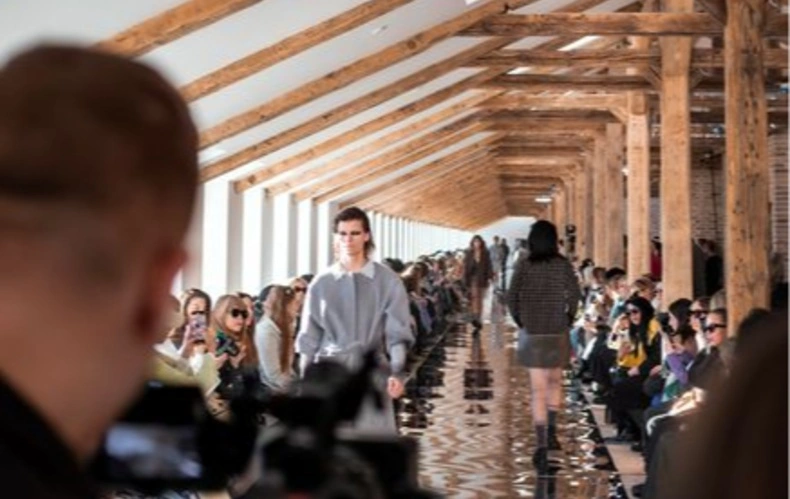
Why Marie Antoinette Showed Up All Over Fashion Week This Year
Section: Fashion
Six months following a national election, political parties are required to submit their election advertising reports to the Court of Audit. These reports, recently made public, provide insight into the financing of election campaigns. The Court of Audit assesses whether parties adhered to the established cap on campaign expenses, which was set at EUR8.66 million for this election cycle. Notably, all parties complied with this limit, a significant change from past elections where violations were common. For instance, the ÖVP exceeded the limit by nearly 100% in 2017, a scenario that has been avoided in the current climate due to stricter penalties for non-compliance.
What can be gleaned from these reports? Initially, it appears that a straightforward correlation--higher advertising costs equating to better electoral outcomes--does not hold true. The ÖVP invested the most, at EUR7.9 million, yet experienced a loss of 11.2 percentage points, resulting in a first-place finish being claimed by the Freedom Party (FPÖ), which spent EUR7.2 million on advertising. Other parties, including the SPÖ and the Greens, also had expenditures in the range of EUR6.6 million to EUR7 million, indicating that spending alone does not guarantee success.
The performance of the Greens illustrates this point effectively. They achieved a significantly better result in the 2019 election with a much smaller budget. Additionally, the Neos managed to surpass the Greens despite spending only EUR3.5 million, indicating that factors beyond financial outlay are at play in determining electoral success.
All five parliamentary parties agreed on one primary strategy: enhancing public visibility through advertising. Plakatwerbung (poster advertising) was the largest expense for every party. The Greens allocated over half of their campaign budget--EUR3.34 million--to this form of advertising, while the FPÖ and the Neos spent between EUR1.07 million and EUR2.2 million on posters.
In terms of printed advertisements, the FPÖ surprisingly invested over EUR1 million in print media, while their spending on radio ads was negligible. Online advertising was also a significant focus, with the FPÖ spending EUR737,000. On the other hand, for the SPÖ, Neos, and Greens, online advertising constituted their largest expenditure category, with the Greens additionally investing heavily in radio while minimally engaging in print media. The ÖVP, conversely, allocated the least to advertisements, with only EUR675,000 in print and a mere EUR150,000 online, highlighting a strategic divergence.
Direct advertising, including mailers and flyers, was a stronghold for the ÖVP, which spent EUR835,000, with the SPÖ following closely. Notably, the ÖVP also led in expenditures for promotional gifts, spending EUR756,000, while the Greens and Neos each allocated over EUR300,000 for similar initiatives.
When it comes to party-owned media, the Greens outspent the FPÖ, investing EUR321,000 compared to the latter's EUR168,000. Events and gatherings saw significant investments, particularly from the ÖVP and FPÖ, each spending over EUR1 million. In contrast, the Neos only invested EUR162,000 in such activities.
Smaller parties like the KPÖ and the Beer Party, which did not secure seats in the parliament, submitted their advertising reports as well. Operating without state funding, these parties had limited budgets, with the KPÖ spending EUR877,000 and the Beer Party managing to spend EUR504,000, down from an anticipated EUR1.2 million. The KPÖ allocated a substantial portion of its budget--EUR534,000--on posters, while the Beer Party focused more on personnel costs.
Ultimately, the financial investments made by the smaller parties did not translate into electoral success, highlighting the complexities of voter behavior and campaign strategies.
Section: Fashion
Section: Health
Section: Politics
Section: Politics
Section: Business
Section: Business
Section: Arts
Section: Business
Section: News
Section: Business
Both private Health Insurance in Germany and public insurance, is often complicated to navigate, not to mention expensive. As an expat, you are required to navigate this landscape within weeks of arriving, so check our FAQ on PKV. For our guide on resources and access to agents who can give you a competitive quote, try our PKV Calculator.
Germany is famous for its medical expertise and extensive number of hospitals and clinics. See this comprehensive directory of hospitals and clinics across the country, complete with links to their websites, addresses, contact info, and specializations/services.
Didn't manage to get a ticket for Linkin Park? Or still not enough after the concert? Join us at CRASH on June 12th for our "IN THE END" Linkin Park Special + CORE NIGHT.All night long, we'll be playing Linkin Park's music, along with Nu Metal, Metalcore, and Alternative Rock from bands such as Limp...



No comments yet. Be the first to comment!