
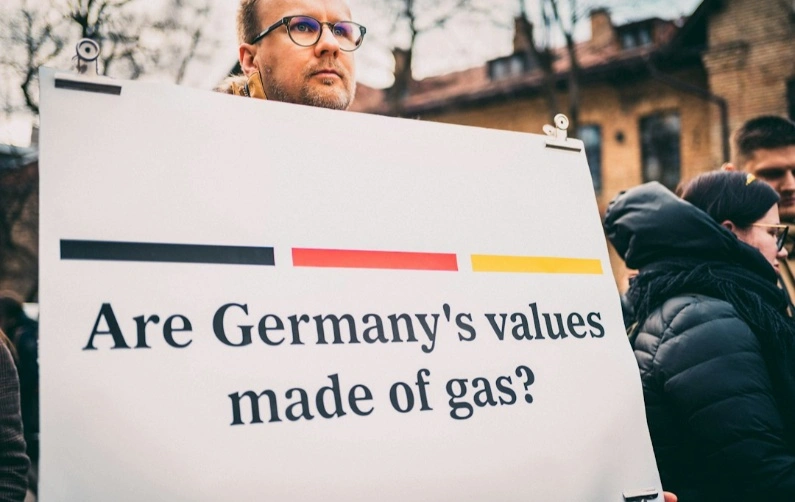
Former German Chancellor Schröder criticised for attending Putin's birthday
Section: News
For years, debates have emerged in farmer markets and social media regarding the health benefits and digestibility of milk derived from horned versus hornless cows. A recent study from Switzerland has shed light on this topic, revealing that the horn status of cows has no impact on either the quality or digestibility of milk.
The research involved the analysis of 128 milk samples sourced from Brown Swiss and Original Braunvieh cows, split evenly between those with horns and those without. The findings indicated that key components such as fat, protein, and amino acids remained constant regardless of whether the cows possessed horns. Furthermore, the fatty acid profile exhibited no significant variations.
Interestingly, the only factor found to influence digestive patterns was the genetic variant of the milk protein ?-casein (A1 or A2), although these differences balanced out in the small intestine. The researchers noted that the implications of these findings on human well-being remain unclear. What is evident, however, is that the presence or absence of horns does not play a role in milk quality.
Lower Austria: A Hub of Quality Milk Production
Lower Austria continues to be a significant contributor to the milk industry, with reports from the Milk Cooperative of Lower Austria (MGN) indicating that 438,454,408 kilograms of milk were delivered in 2024, marking a 2.12% increase from the previous year. While the number of dairy farms decreased to 2,205, the average milk delivery per farm saw a notable rise.
Organic milk production also experienced growth, with 53.2 million kilograms produced in 2024, reflecting a 1.14% increase. The average payment for raw milk in 2024 was recorded at 48.40 cents per kilogram, rising to 55.34 cents per kilogram by January 2025, positioning Lower Austria above the EU average of 53.49 cents per kilogram.
All milk produced in the region comes from non-GMO feed and meets stringent quality standards. In 2022, an impressive 99.34% of all milk was categorized into the highest quality grade, as reported by the Lower Austrian Chamber of Agriculture. Currently, the average milk yield per cow stands at around 8,000 liters annually.
Environmental Sustainability and Regional Value Creation
Lower Austrian milk production is also recognized for its environmental sustainability. The majority of production occurs in grassland regions, such as the Waldviertel and Mostviertel, contributing to the preservation of cultural landscapes. Initiatives like the Lower Austrian Animal Health Service and the Milk Quality Seal underscore the commitment to quality and animal welfare. Notably, despite the challenges posed by the hot summer of 2024, 926 out of 2,200 active dairy farmers were able to maintain their Milk Quality Seal.
Milk is an important source of nutrients, providing an average of 3.3 grams of protein, 3.5 grams of fat, and 4.5 grams of carbohydrates per 100 grams, while also supporting numerous jobs within the region. Outlooks remain optimistic, with anticipated increases in per capita consumption of milk and dairy products globally, alongside stable prices and strong demand.
Section: News

Section: Science

Section: Business

Section: Business

Section: Science

Section: News

Section: Politics
Section: News

Section: Fashion

Section: Arts
Both private Health Insurance in Germany and public insurance, is often complicated to navigate, not to mention expensive. As an expat, you are required to navigate this landscape within weeks of arriving, so check our FAQ on PKV. For our guide on resources and access to agents who can give you a competitive quote, try our PKV Calculator.
Germany is famous for its medical expertise and extensive number of hospitals and clinics. See this comprehensive directory of hospitals and clinics across the country, complete with links to their websites, addresses, contact info, and specializations/services.
Didn't manage to get a ticket for Linkin Park? Or still not enough after the concert? Join us at CRASH on June 12th for our "IN THE END" Linkin Park Special + CORE NIGHT.All night long, we'll be playing Linkin Park's music, along with Nu Metal, Metalcore, and Alternative Rock from bands such as Limp...



No comments yet. Be the first to comment!