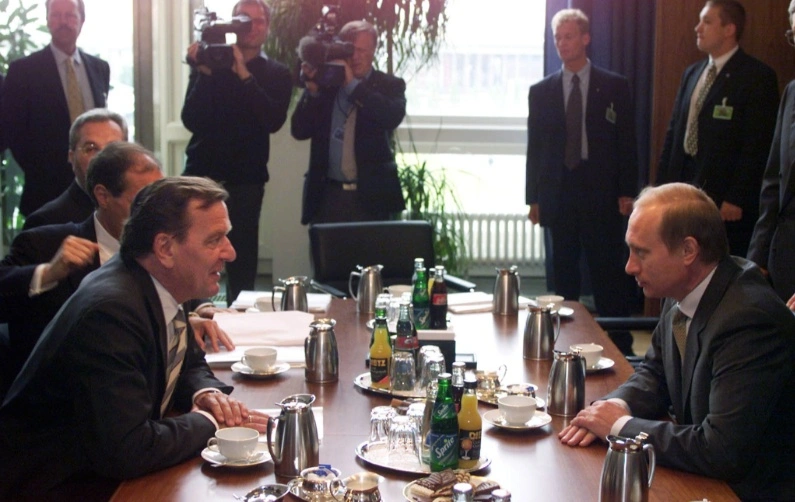
Former German Chancellor Schröder criticised for attending Putin's birthday
Section: News
In a significant global analysis, a recent study illustrates that drug shortages pose a systemic threat to the health of millions, substantially impacting healthcare systems across Europe and North America.
Drug shortages represent a complex challenge that extends beyond mere inconveniences for patients, as they can lead to serious health consequences. The unavailability of critical medications can jeopardize patient health due to treatment failures, delays, or the necessity of prescribing less effective alternatives, potentially resulting in severe complications or increased healthcare costs.
The World Health Organization (WHO) has identified drug shortages as a pressing global health issue, necessitating immediate intervention. Additionally, the European Medicines Agency (EMA) maintains a registry of medicine shortages to track this growing concern.
A research team from the Nuffield Department of Orthopaedics, Rheumatology and Musculoskeletal Sciences (NDORMS) at the University of Oxford, led by Theresa Burkard and Marta Pineda-Moncusí, collaborated with various international institutions to assess real-world healthcare data. Their study analyzed data from over 52 large databases, encompassing more than 600 million individuals, and focused on the usage of 57 essential medicines, including antibiotics, cancer treatments, and therapies for chronic diseases.
Pineda-Moncusí emphasized the importance of monitoring drug shortages to evaluate their impact on patient care. While the EMA catalogs medicines that are in short supply, this study aimed to delve deeper into how these shortages influence medicine usage patterns across Europe and North America, specifically assessing whether they lead to reductions in the overall use of medicines or result in shifts in treatment approaches.
The findings revealed that certain drug shortages affected nearly all countries, while others varied in their impact, leading to declines in the incidence and prevalence of medication use, as well as alterations in drug utilization and treatment indications.
The EHDEN project played a pivotal role in forming a unique network of over 200 European data sources from 29 countries, aligning data to the Observational Medical Outcomes Partnership (OMOP) Common Data Model. This allowed for federated analytics to be conducted across various geographic and healthcare settings, presenting an unprecedented overview of the repercussions of drug shortages on patient care in Europe and North America.
Professor Peter Rijnbeek from Erasmus MC, who coordinates the EHDEN project, noted that this study highlights how data standardization can facilitate large-scale evidence generation. He expressed optimism for the future insights the EHDEN network could provide to enhance patient care.
Pineda-Moncusí concluded by stating that because supply chains for medications are global, shortages in one nation often have repercussions in others. The health ramifications for patients can be dire. The utilization of extensive health data can assist healthcare providers in identifying issues more rapidly, informing smarter policies to anticipate demand, promoting safe and effective alternatives, fortifying supply chains, and prioritizing care for vulnerable patients during shortages.
Section: News

Section: Science

Section: Business

Section: Business

Section: Science

Section: News

Section: Politics

Section: News

Section: Fashion

Section: Arts
Both private Health Insurance in Germany and public insurance, is often complicated to navigate, not to mention expensive. As an expat, you are required to navigate this landscape within weeks of arriving, so check our FAQ on PKV. For our guide on resources and access to agents who can give you a competitive quote, try our PKV Calculator.
Germany is famous for its medical expertise and extensive number of hospitals and clinics. See this comprehensive directory of hospitals and clinics across the country, complete with links to their websites, addresses, contact info, and specializations/services.
Didn't manage to get a ticket for Linkin Park? Or still not enough after the concert? Join us at CRASH on June 12th for our "IN THE END" Linkin Park Special + CORE NIGHT.All night long, we'll be playing Linkin Park's music, along with Nu Metal, Metalcore, and Alternative Rock from bands such as Limp...



No comments yet. Be the first to comment!