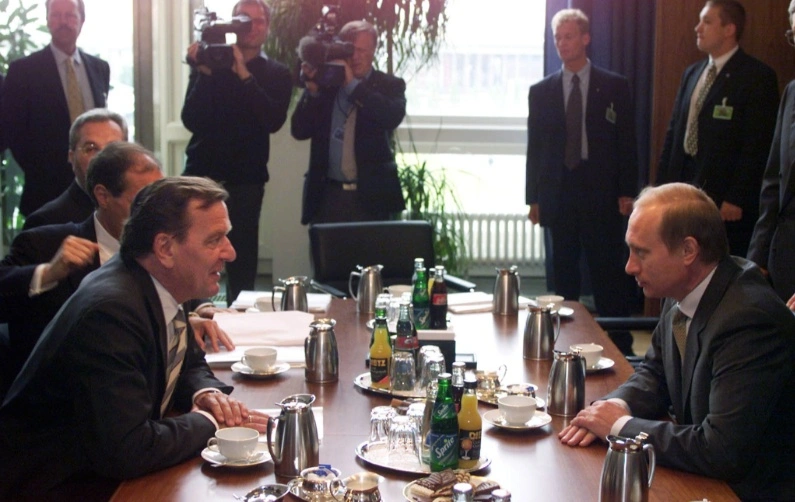
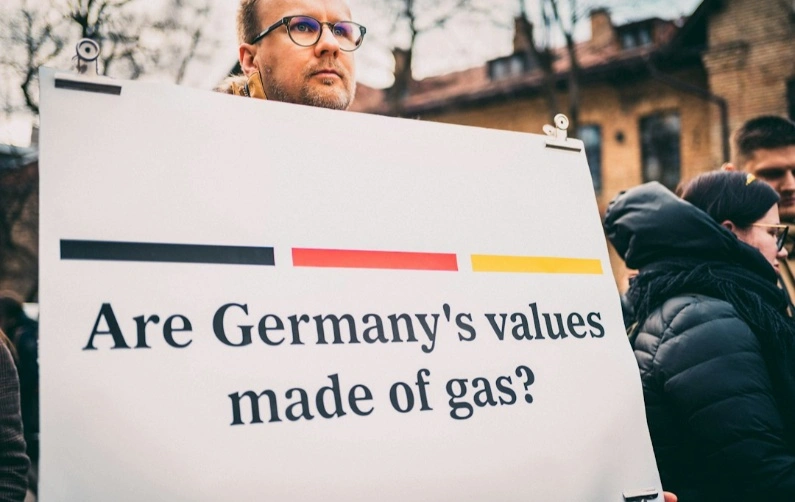
Former German Chancellor Schröder criticised for attending Putin's birthday
Section: News
In a surprising turn of events, Sébastien Lecornu announced his resignation as Prime Minister of France, a decision that has left the political landscape in disarray. The announcement came via a brief statement from the Élysée Palace, where it was also confirmed that President Emmanuel Macron had accepted Lecornu's resignation.
The political reaction has been one of shock and disbelief among French politicians and commentators. Jordan Bardella, the leader of the right-wing National Rally party, stated that the only viable solution to restore stability in the country is through a new election.
The current situation has exacerbated the ongoing political crisis in France, coinciding with significant instability in the nation's finances. Just a day before his resignation, Lecornu had revealed the names of the ministers in his cabinet after a prolonged negotiation period, which included discussions with the Socialist Party to secure additional support for his minority government in parliament. However, the newly formed government comprised mainly familiar faces from Macron's centrist bloc and the Republicans.
Frustration is mounting within Macron's own party, with members expressing their dissatisfaction publicly. Agnès Pannier-Runnacher, the Minister of Ecological Transition, conveyed her discontent on social media, reflecting a growing sentiment of frustration regarding the current political impasse.
The Socialist Party had previously threatened a vote of no confidence due to its demands for the repeal of Macron's controversial pension reform. This threat could have led to the downfall of Lecornu's government later this week, with both the left and the National Rally poised to support the motion. Compounding Lecornu's difficulties, the Republicans--a party whose members are part of his newly appointed government--also signaled their intention to withdraw support.
Given the precarious position, Lecornu, a loyal ally of President Macron, seemingly recognized that his options were severely limited. The future course of action remains uncertain. One possibility is that Macron could reinstate Lecornu, granting him another opportunity to stabilize the government. However, the internal dissent within Macron's party complicates this scenario.
Another option could involve allowing the Socialist Party to form a government, although this would mean conceding defeat in the ongoing battle over pension reforms. Alternatively, Macron might choose to dissolve parliament and call for new elections. The least likely scenario would involve Macron taking responsibility for the crisis, resigning from his position, and scheduling an early presidential election.
Background: Lecornu's resignation marks the fourth change in the prime ministerial office in just over a year. Following the legislative elections in July 2024, which weakened Macron's centrist coalition, the political landscape has become increasingly fragmented, featuring distinct left, center, and right-wing factions in parliament. Previous prime ministers, including Gabriel Attal, Michel Barnier, and François Bayrou, have faced similar challenges, leading to their respective resignations amidst growing political tensions.
Section: News

Section: Science
Section: Business

Section: Business
Section: Science
Section: News
Section: Politics
Section: News

Section: Fashion
Section: Arts
Both private Health Insurance in Germany and public insurance, is often complicated to navigate, not to mention expensive. As an expat, you are required to navigate this landscape within weeks of arriving, so check our FAQ on PKV. For our guide on resources and access to agents who can give you a competitive quote, try our PKV Calculator.
Germany is famous for its medical expertise and extensive number of hospitals and clinics. See this comprehensive directory of hospitals and clinics across the country, complete with links to their websites, addresses, contact info, and specializations/services.
Didn't manage to get a ticket for Linkin Park? Or still not enough after the concert? Join us at CRASH on June 12th for our "IN THE END" Linkin Park Special + CORE NIGHT.All night long, we'll be playing Linkin Park's music, along with Nu Metal, Metalcore, and Alternative Rock from bands such as Limp...



No comments yet. Be the first to comment!