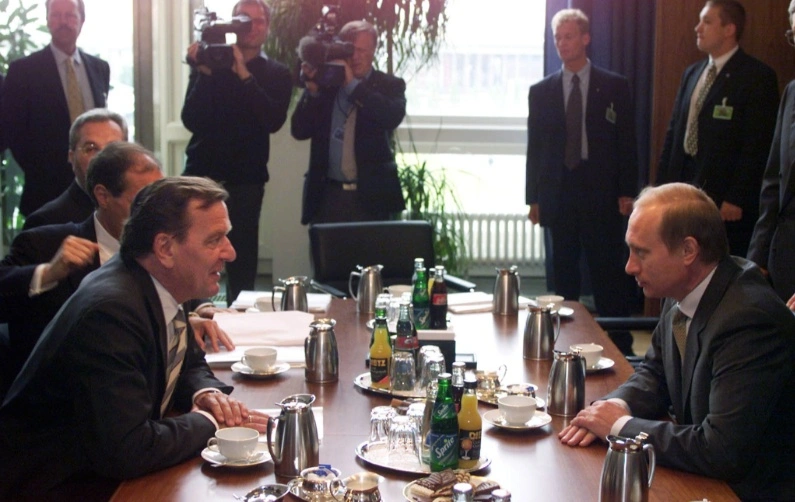
Former German Chancellor Schröder criticised for attending Putin's birthday
Section: News
The Freedom Party of Austria (FPÖ) has voiced strong criticism regarding the recent efforts of NEOS State Secretary Sepp Schellhorn, questioning the effectiveness of his initiatives to reduce bureaucratic processes within the Austrian government. The FPÖ claims that the measures presented by Schellhorn fall significantly short of expectations and do not deliver substantial administrative simplification for citizens and businesses.
According to information obtained from a series of parliamentary inquiries, the FPÖ alleges that, out of an initial 160 reforms announced by Schellhorn, the number was reduced to 113 by December, with only 14 measures reportedly implemented to date. The FPÖ describes most of these completed actions as minor updates, with a particular emphasis on digitalization rather than fundamental procedural changes. Among the implemented reforms, the removal of the requirement for a fax number in environmental management legislation has been highlighted as an example by critics within the FPÖ, who argue that such changes have limited practical impact on reducing red tape for the public or private sector.
The FPÖ further contends that the position of State Secretary, currently held by Schellhorn, is an unnecessary expense, stating that the office costs taxpayers approximately 240,000 euros annually. The party suggests that the abolition of this post would represent a more meaningful step toward fiscal responsibility and government efficiency.
Party representatives assert that, while Austrian families and pensioners face economic pressures and businesses struggle with ongoing administrative burdens, government resources are not being optimally allocated. The FPÖ maintains that the current approach to bureaucracy reduction is insufficient and that more comprehensive reforms are needed to address the structural challenges within Austria's public administration.
In response, the FPÖ is calling for a thorough review of the effectiveness of existing government posts dedicated to administrative reform, as well as a critical evaluation of the actual benefits delivered by such roles. They argue that eliminating superfluous positions and focusing on substantive procedural improvements would better serve the interests of Austrian citizens and contribute to a more efficient public sector.
The debate underscores ongoing tensions between Austria's political parties over public sector reform, government spending, and the best strategies to modernize administrative processes. While digitalization remains a priority for many policymakers, the FPÖ insists that genuine reductions in bureaucracy require more substantial action than symbolic measures or isolated legislative amendments.
Section: News

Section: Science

Section: Business

Section: Business

Section: Science

Section: News

Section: Politics

Section: News

Section: Fashion

Section: Arts
Both private Health Insurance in Germany and public insurance, is often complicated to navigate, not to mention expensive. As an expat, you are required to navigate this landscape within weeks of arriving, so check our FAQ on PKV. For our guide on resources and access to agents who can give you a competitive quote, try our PKV Calculator.
Germany is famous for its medical expertise and extensive number of hospitals and clinics. See this comprehensive directory of hospitals and clinics across the country, complete with links to their websites, addresses, contact info, and specializations/services.
Didn't manage to get a ticket for Linkin Park? Or still not enough after the concert? Join us at CRASH on June 12th for our "IN THE END" Linkin Park Special + CORE NIGHT.All night long, we'll be playing Linkin Park's music, along with Nu Metal, Metalcore, and Alternative Rock from bands such as Limp...



No comments yet. Be the first to comment!