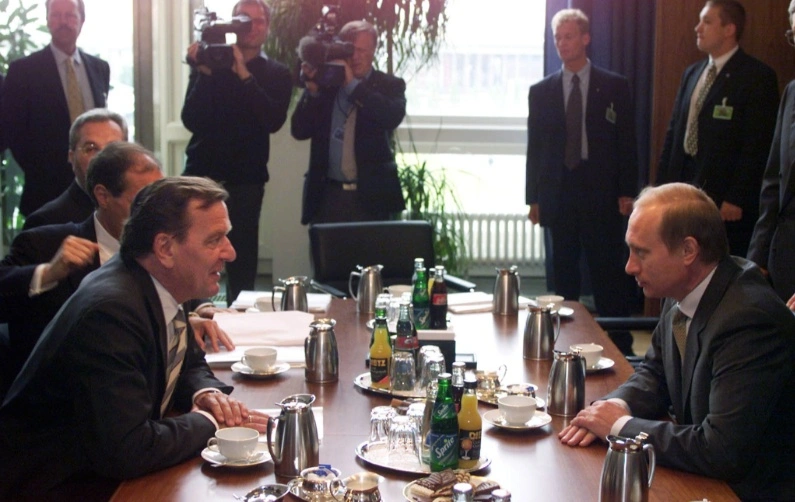
Former German Chancellor Schröder criticised for attending Putin's birthday
Section: News
Europe offers significant opportunities for start-ups, particularly in regions like Salzburg, which has a strong foundation in research and education. Despite this potential, several barriers hinder the growth and success of innovative ventures across the continent.
Christian Mohr, the managing director of UnternehmerTUM in Munich, Europe's largest innovation and start-up center, emphasizes the need for better integration of start-ups with research institutions and established companies. He notes that while Europe possesses a vast internal market with hundreds of millions of consumers, it still lags behind regions like the United States and China in terms of risk-taking and entrepreneurial culture.
Mohr points out that cultural attitudes towards failure in start-ups differ markedly between Europe and the US. For instance, when a European start-up like Isar Aerospace experiences a setback, local media often focus on the negative aspects, while US outlets might celebrate the valuable data obtained from the experience. This difference in perception can influence the overall start-up ecosystem in Europe.
In discussing the competitive landscape among European nations, Mohr highlights France as a model for supporting start-ups. The French government tends to act more swiftly and pragmatically in facilitating funding and resources for new ventures, recognizing the broader economic benefits of successful start-ups. This strategic foresight is crucial for fostering a vibrant entrepreneurial environment.
Austria, particularly Salzburg, has an emerging venture capital scene, but the translation of research into commercial success remains a significant challenge. Mohr acknowledges that while Austria is not at the forefront of venture capital, it boasts strong innovation capabilities. The key challenge lies in converting research outputs into viable business ideas, which requires a robust support system.
Salzburg benefits from its status as a university and higher education hub, which fuels collaboration with institutions in Munich. This collaborative spirit is essential for nurturing long-term projects and ensuring that stakeholders--including universities, local government, and private investors--engage constructively.
Mohr also discusses the importance of research transfer in the start-up ecosystem. At UnternehmerTUM, there has been a concerted effort to bridge the gap between academic research and entrepreneurship, particularly through partnerships with institutions like the Technical University of Munich. In 2024, the university achieved a milestone with 100 start-ups launched, demonstrating the potential of combining academic rigor with entrepreneurial spirit.
Moreover, the relationship between established companies and start-ups is crucial. Mohr advocates for a collaborative approach, suggesting that both sectors can learn from each other. Start-ups often require significant investment in a short timeframe, which can be at odds with the more gradual investment strategies typically favored by established businesses. However, when successful, start-ups can generate substantial returns that benefit the broader economy.
Ultimately, fostering a thriving start-up environment in Salzburg and other European regions necessitates a shift in mindset towards collaboration, risk-taking, and investment in innovation. Events and conferences can play a pivotal role in uniting these two worlds, providing opportunities for knowledge exchange and partnership development.
Section: News

Section: Science

Section: Business

Section: Business
Section: Science

Section: News
Section: Politics
Section: News

Section: Fashion

Section: Arts
Both private Health Insurance in Germany and public insurance, is often complicated to navigate, not to mention expensive. As an expat, you are required to navigate this landscape within weeks of arriving, so check our FAQ on PKV. For our guide on resources and access to agents who can give you a competitive quote, try our PKV Calculator.
Germany is famous for its medical expertise and extensive number of hospitals and clinics. See this comprehensive directory of hospitals and clinics across the country, complete with links to their websites, addresses, contact info, and specializations/services.
Didn't manage to get a ticket for Linkin Park? Or still not enough after the concert? Join us at CRASH on June 12th for our "IN THE END" Linkin Park Special + CORE NIGHT.All night long, we'll be playing Linkin Park's music, along with Nu Metal, Metalcore, and Alternative Rock from bands such as Limp...



No comments yet. Be the first to comment!