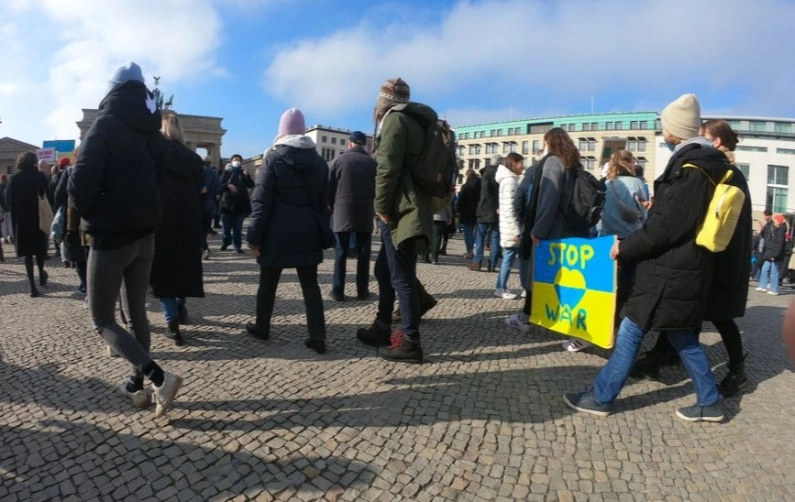
Berlin meeting discusses support for Ukraine
Section: Politics
The European Court of Human Rights (ECHR) has upheld the legality of COVID-19 vaccination mandates for certain workers, ruling that such measures are consistent with human rights standards. This decision comes after challenges from healthcare and emergency service workers in countries like Germany and France, who were required to get vaccinated against COVID-19 amid the pandemic.
In 2022, Germany implemented a sector-specific vaccination requirement as part of its efforts to combat the pandemic. The mandate, effective from March 16, 2022, obligated employees in hospitals, medical practices, nursing homes, and emergency services to be vaccinated. Workers were required to present proof of vaccination to their employers, failing which they risked being barred from employment.
The decision to enforce a vaccination mandate provoked significant public debate and protest across Germany. Despite these protests, the mandate was enacted, with the government arguing it was necessary to protect vulnerable populations from COVID-19.
The Federal Constitutional Court of Germany had previously dismissed a complaint against the vaccination requirement, maintaining that the legislation was within the government's rights to protect public health. According to the court, employees had to accept the intrusion into their basic rights brought about by the vaccination mandate as justifiable under the circumstances.
The ECHR’s ruling is a significant affirmation of national efforts to impose vaccination mandates during health crises. The court case was brought forth by a French firefighter and two French hospital employees who had been suspended without pay for not being vaccinated. The claimants argued that their human rights were violated by the enforced vaccination policies.
Despite similar protests in France, including legal challenges, the French courts upheld the government's vaccination mandate. As was the case in Germany, French authorities argued that the mandate was crucial for the protection of public health and the prevention of further virus spread, particularly among vulnerable groups.
The ECHR's decision underscores the balancing act between individual rights and the collective need to safeguard public health during pandemics. By supporting the vaccination mandate, the ECHR has reinforced the view that, under exceptional circumstances such as a pandemic, states can adopt measures that may impose on individual freedoms, provided they are proportional and aimed at protecting public welfare.
This decision could have broader implications for other countries considering or implementing similar mandates, especially as new COVID-19 variants emerge and governments seek to boost vaccination rates.
As the pandemic continues to pose challenges around the world, the ruling by the ECHR might influence the legal landscape, guiding how countries balance individual rights against public health imperatives. This is particularly pertinent as countries continue to navigate their responses to controlling the spread of COVID-19, safeguarding public health, and managing the rights of individuals.
Source: tagesschau.de
Section: Politics

Section: News
Section: Politics
Section: News

Section: News

Section: News

Section: News

Section: Fashion

Section: News

Section: Business
Both private Health Insurance in Germany and public insurance, is often complicated to navigate, not to mention expensive. As an expat, you are required to navigate this landscape within weeks of arriving, so check our FAQ on PKV. For our guide on resources and access to agents who can give you a competitive quote, try our PKV Calculator.
Germany is famous for its medical expertise and extensive number of hospitals and clinics. See this comprehensive directory of hospitals and clinics across the country, complete with links to their websites, addresses, contact info, and specializations/services.
Didn't manage to get a ticket for Linkin Park? Or still not enough after the concert? Join us at CRASH on June 12th for our "IN THE END" Linkin Park Special + CORE NIGHT.All night long, we'll be playing Linkin Park's music, along with Nu Metal, Metalcore, and Alternative Rock from bands such as Limp...



No comments yet. Be the first to comment!