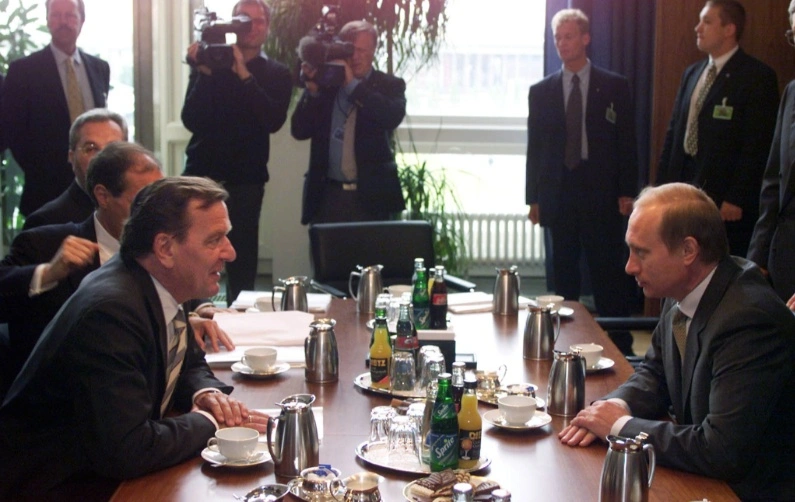
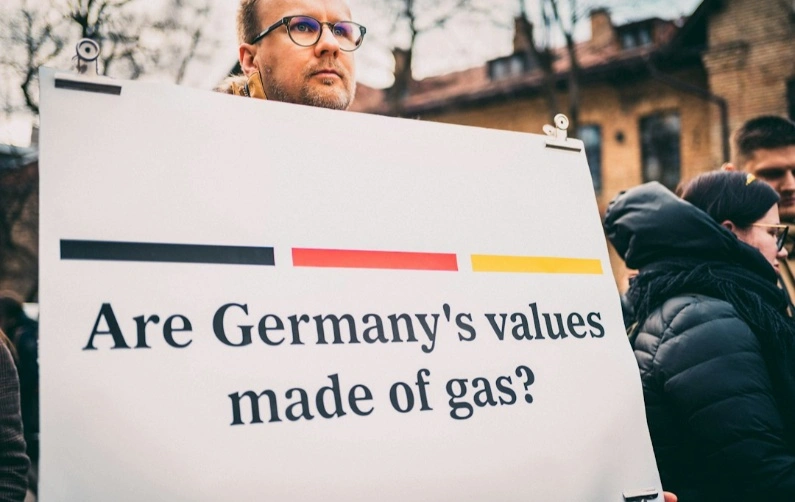
Former German Chancellor Schröder criticised for attending Putin's birthday
Section: News
The landscape of the European economy is currently defined by a tension between established industries and emerging innovators, as the continent navigates a transformative era marked by rapid technological change. Leading economist and recent Nobel Memorial Prize recipient Philippe Aghion emphasizes that while Europe has a rich history of fostering innovation, much of the groundbreaking technological advancement is now taking place in the United States and China. In contrast, European industries often focus on incremental improvements to established technologies.
Aghion, whose work has significantly influenced economic reform efforts within the European Union, underscores the necessity of reinforcing the internal market across EU member states. He advocates for the removal of barriers that hinder competition and calls for more integrated capital markets, suggesting that these steps are essential for stimulating growth and innovation across borders.
Despite the EU's strong commitment to climate targets and its leadership in emissions trading, Aghion points out that existing measures alone are insufficient to drive the large-scale transition from fossil-based technologies to clean alternatives. He identifies a dual challenge facing Europe: not only must the region reduce emissions, but it must also overcome the inertia created by established industries that continue to invest in and refine legacy technologies.
According to Aghion, addressing this issue demands a coordinated approach that combines market-driven mechanisms with significant public sector involvement. He contends that while competition is vital, the exclusion of industrial policy from Europe's economic strategy has limited the continent's ability to match the innovation subsidy programs seen in the United States. In sectors such as energy, defense, and biotechnology, Aghion asserts that robust industrial support is necessary to foster technological breakthroughs and maintain competitiveness on the global stage.
The economist particularly stresses the importance of coordinated green innovation programs. He argues that punitive measures, such as taxing fossil fuel technologies, must be accompanied by incentives that encourage the development and adoption of sustainable alternatives. Aghion highlights the complexity of building new value chains for green industries, such as electric vehicles, which require the alignment of multiple resources from raw materials to advanced manufacturing. He believes that such coordination is only achievable through well-designed industrial policies at the European level.
Recent high-profile challenges, including the collapse of major green industry initiatives, have sparked debate about the role of state support in fostering innovation. Aghion maintains that the scale of public investment in green technologies in Europe has been insufficient and fragmented. He suggests that national efforts, such as those seen in Sweden, would be more effective if implemented across the continent, enabling shared risk and resource allocation among EU member states.
Critics have raised concerns that increased public support for industry may encourage dependency rather than genuine innovation. However, Aghion argues that the transition to clean technology presents such a significant economic and technical challenge that businesses will require substantial assistance to adapt and thrive. He believes that a balanced approach--combining market competition with targeted government intervention--will be essential for Europe to achieve its climate goals and reclaim a leadership position in global innovation.
Philippe Aghion's research, recognized by the Nobel committee for advancing the understanding of innovation-driven economic growth, continues to shape policy discussions at the highest levels within the European Union. As Europe confronts an urgent need to transform its industrial base and meet ambitious environmental targets, his call for greater green industrial support presents a clear direction for policymakers seeking to secure the continent's economic future.
Section: News

Section: Science
Section: Business

Section: Business

Section: Science
Section: News
Section: Politics
Section: News

Section: Fashion
Section: Arts
Both private Health Insurance in Germany and public insurance, is often complicated to navigate, not to mention expensive. As an expat, you are required to navigate this landscape within weeks of arriving, so check our FAQ on PKV. For our guide on resources and access to agents who can give you a competitive quote, try our PKV Calculator.
Germany is famous for its medical expertise and extensive number of hospitals and clinics. See this comprehensive directory of hospitals and clinics across the country, complete with links to their websites, addresses, contact info, and specializations/services.
Didn't manage to get a ticket for Linkin Park? Or still not enough after the concert? Join us at CRASH on June 12th for our "IN THE END" Linkin Park Special + CORE NIGHT.All night long, we'll be playing Linkin Park's music, along with Nu Metal, Metalcore, and Alternative Rock from bands such as Limp...



No comments yet. Be the first to comment!