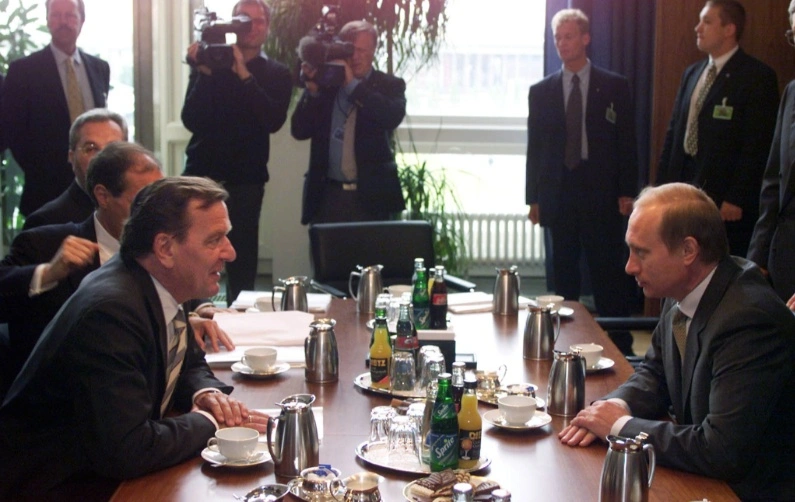
Former German Chancellor Schröder criticised for attending Putin's birthday
Section: News
European telecommunications providers are poised to gain access to additional radio frequencies, as the European Union prepares to recommend making a substantial portion of the 6 gigahertz (GHz) frequency band available for mobile data transmission. This move is a significant step toward supporting future mobile communication standards, including the anticipated rollout of 6G technology in the coming decade.
The EU's Radio Spectrum Policy Group, an expert advisory body, is expected to propose that most of the 6 GHz frequency spectrum be allocated to mobile network operators. Industry insiders note that this allocation is intended to address the growing demand for high-speed, reliable mobile connectivity, as well as to ensure Europe's competitiveness in digital infrastructure.
Frequencies within the 6 GHz band are highly sought after due to their potential to deliver faster data rates and increased network capacity. The planned allocation aligns with Europe's broader digitalization strategy, aiming to facilitate advanced applications such as mobile robotics, artificial intelligence, and next-generation internet services. However, a final decision on the remaining segments of the 6 GHz band is expected to be made in 2027, following further international discussions by the International Telecommunication Union (ITU) regarding the global roadmap for future wireless technologies.
While telecommunications companies across Europe stand to benefit from enhanced network performance and expanded capacity, major technology firms specializing in consumer electronics and software, such as Apple and Microsoft, have advocated for a different approach. These companies have pushed for the allocation of additional 6 GHz frequencies for Wi-Fi networks, arguing that expanded Wi-Fi capacity is essential for supporting faster internet access in homes, businesses, and public spaces. Their position is backed by the precedents set in countries like the United States, Canada, and several others, where portions of the 6 GHz band have already been released for Wi-Fi use.
The anticipated EU recommendation has sparked debate among industry groups and stakeholders. Telecommunications operators, such as Vodafone, have welcomed the move as crucial for ensuring Europe's digital sovereignty and for keeping pace with technological advancements. They argue that prioritizing mobile communications in the 6 GHz band will lay the groundwork for robust, future-ready wireless networks.
Conversely, several German associations representing broadband providers, energy and water utilities, and municipal enterprises have voiced strong opposition to the proposed allocation. In a joint statement, they highlighted the importance of 6 GHz Wi-Fi as a complement to ongoing fiber-optic infrastructure projects. They contend that reserving more spectrum for Wi-Fi would enable faster and more reliable internet connections in residential and public environments, and called for a thorough review of the distribution plan before any final decisions are made at the ITU conference.
Proponents of wider Wi-Fi access point to the experiences of countries such as the United States, South Korea, and parts of South America, where the full release of the 6 GHz band for Wi-Fi has reportedly bolstered innovation and improved digital competitiveness. These examples are cited as evidence that balancing spectrum allocation between mobile networks and Wi-Fi services is vital for fostering technological growth and supporting a diverse range of digital applications.
As Europe moves toward a decision on the use of the 6 GHz frequency band, the outcome will have significant ramifications for the region's digital landscape. The final allocation will influence the development of both mobile and Wi-Fi technologies, shaping access to high-speed internet and determining the pace of future innovation across the continent.
Section: News

Section: Science

Section: Business

Section: Business

Section: Science

Section: News

Section: Politics

Section: News

Section: Fashion

Section: Arts
Both private Health Insurance in Germany and public insurance, is often complicated to navigate, not to mention expensive. As an expat, you are required to navigate this landscape within weeks of arriving, so check our FAQ on PKV. For our guide on resources and access to agents who can give you a competitive quote, try our PKV Calculator.
Germany is famous for its medical expertise and extensive number of hospitals and clinics. See this comprehensive directory of hospitals and clinics across the country, complete with links to their websites, addresses, contact info, and specializations/services.
Didn't manage to get a ticket for Linkin Park? Or still not enough after the concert? Join us at CRASH on June 12th for our "IN THE END" Linkin Park Special + CORE NIGHT.All night long, we'll be playing Linkin Park's music, along with Nu Metal, Metalcore, and Alternative Rock from bands such as Limp...



No comments yet. Be the first to comment!