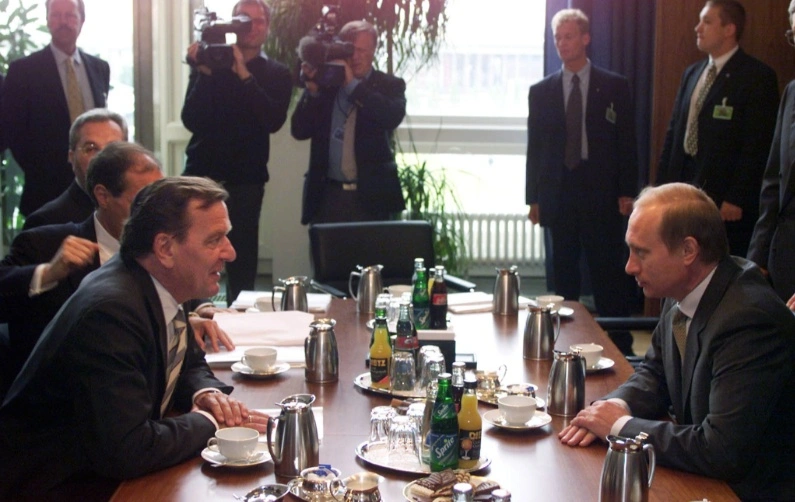
Former German Chancellor Schröder criticised for attending Putin's birthday
Section: News
This year, following a dry winter, the spring season in Austria has also experienced minimal rainfall, leading to significant implications for hydropower generation. According to Verbund, a major energy provider operating nationwide, this spring ranks among the five driest in the past century.
Despite the concerning trend, representatives from the energy sector have reassured the public that there is currently no cause for alarm. A spokesperson from Oesterreichs Energie noted that the overall hydropower generation is at 80% of the long-term average, which, while indicative of low water levels, falls within a typical range of variability.
Interestingly, reduced water levels do not necessarily equate to a proportional decrease in electricity production. The efficiency of hydropower plants is also influenced by the elevation difference between water levels, which can increase when water flow decreases. This phenomenon can help offset energy production losses.
The climate crisis has contributed to more frequent extreme weather events, including droughts and heavy rains. Currently, the energy gap created by low water levels is supplemented by pumped storage systems, gas power plants, and energy imports. Verbund suggests that increasing investments in wind energy could reduce reliance on imports during spring in the future.
Oesterreichs Energie has also indicated that fluctuations in water flow are part of natural cycles, although they acknowledge that climate change is causing more frequent extreme weather patterns. Data from the regulatory authority E-Control shows that the generation coefficient for run-of-river plants was at 0.98 in January and 0.86 in February, with a score of 1 representing the long-term average. Specific figures for March are still pending.
The impact of the dry conditions is felt differently across various regions. For instance, Wien Energie stated that while some hydropower facilities have reported production levels consistent with the previous year, others have shown significant fluctuations. The energy provider EVN remarked that the low precipitation levels during the winter months have notably affected hydropower generation in Lower Austria, particularly when compared to the robust water availability of the previous year.
In some instances, hydropower generation has dropped by as much as 50% compared to expected values. The importance of water resources is critical not only for energy generation but also for drinking water supply, as EVN is Austria's second-largest provider of drinking water. They assured that current water levels in their aquifers remain stable, making them well-prepared for the summer.
In Tyrol, the regional energy provider Tiwag reported below-average water flows, particularly in the Inn River. Conversely, conditions in East Tyrol appear more favorable, with water flows and power production aligning with long-term averages. Overall, usable inflows for electricity generation are approximately 10% below historical averages, which has immediate implications for run-of-river plants.
When run-of-river facilities produce less electricity than required, the shortfall is compensated either by increased output from other plants, such as large storage facilities, or through imports from the European grid. Tiwag also noted that fluctuations in energy production due to changing river flows are commonplace.
In Vorarlberg, the lack of rainfall since the previous autumn has resulted in low water levels across rivers and Lake Constance, leading to a 20% reduction in electricity production compared to an average year. However, the current production levels are still within the historical variability range, and energy supply remains secure through market purchases.
Salzburg has reported that hydropower production since the beginning of the year is about 20% lower than planned, although recent snowfall is expected to improve water flow as snowmelt begins. Currently, water levels in the Salzach River are at their lowest since 1990. The Salzburg AG has managed to offset low water levels with stored energy but has recently turned to market purchases to meet demand.
In Upper Austria, the energy agency has observed a slight decline in electricity production due to drought conditions, with the current year showing approximately a 10% deviation from the historical average. The security of supply is not at risk, and historical data indicates that overall water availability has remained stable over time, though seasonal variations are noted.
In Carinthia, the drought has yet to significantly impact water flow, with current levels at 99% of the average. However, due to the unusually low snowfall on mountains this year, it is anticipated that the snowmelt in May and June will be lower, potentially leading to reduced hydropower generation. A wetter spring could help mitigate these effects.
Section: News

Section: Science

Section: Business

Section: Business

Section: Science
Section: News
Section: Politics
Section: News

Section: Fashion
Section: Arts
Both private Health Insurance in Germany and public insurance, is often complicated to navigate, not to mention expensive. As an expat, you are required to navigate this landscape within weeks of arriving, so check our FAQ on PKV. For our guide on resources and access to agents who can give you a competitive quote, try our PKV Calculator.
Germany is famous for its medical expertise and extensive number of hospitals and clinics. See this comprehensive directory of hospitals and clinics across the country, complete with links to their websites, addresses, contact info, and specializations/services.
Didn't manage to get a ticket for Linkin Park? Or still not enough after the concert? Join us at CRASH on June 12th for our "IN THE END" Linkin Park Special + CORE NIGHT.All night long, we'll be playing Linkin Park's music, along with Nu Metal, Metalcore, and Alternative Rock from bands such as Limp...



No comments yet. Be the first to comment!