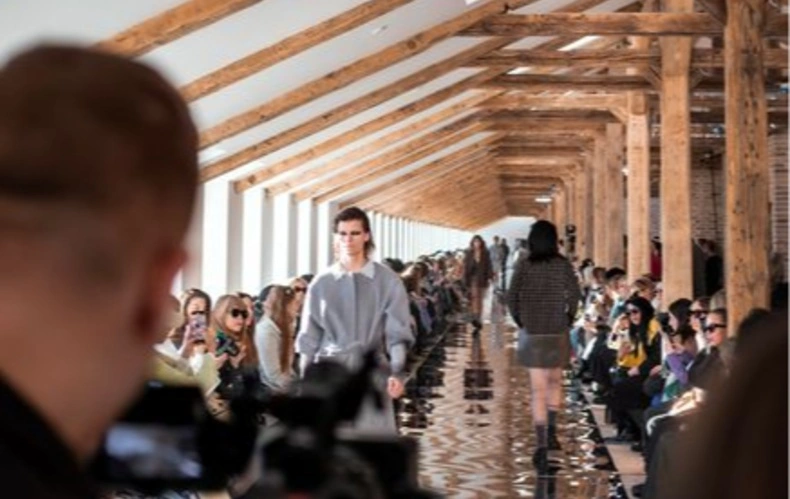
Why Marie Antoinette Showed Up All Over Fashion Week This Year
Section: Fashion
The Austrian shoe retail landscape is undergoing a significant transformation, with the number of shoe stores plummeting dramatically in recent years. According to market research firm RegioData, since 2014, the total number of shoe retailers in Austria has decreased by over 25%. This trend has notably benefited Deichmann, a German footwear retailer that has established itself as the market leader in Austria.
In 2024, Deichmann reported a 6% increase in revenue, reaching EUR314 million, despite navigating a challenging market environment. The retailer successfully sold approximately 9.13 million pairs of shoes through its physical stores and online platform. The company has been active in Austria since 1992 and currently operates 174 stores, employing around 1,400 staff members, an increase of about 50 employees from the previous year.
The decline of shoe stores in Austria can be attributed to various factors, including the growing preference for online shopping and alternative sales channels that extend beyond traditional brick-and-mortar establishments. In 2024 alone, the number of shoe retailers dropped by 13%, highlighting the ongoing shift in consumer behavior.
Several notable retailers have exited the Austrian market in recent years, including Vögele Shoes in 2017, Stiefelkönig in 2018, and CCC in 2021, with others like Delka, Reno, and Salamander following suit in 2023. This consolidation has left Deichmann as a dominant player in an increasingly competitive environment.
Interestingly, while many retailers are shrinking or disappearing, some are managing to thrive. Zalando, the German online retailer, has risen to become the second-largest shoe seller in Austria. Additionally, the Austrian shoe retail chain Leder & Schuh, which operates the brands Humanic and Shoe4You, is bucking the trend by expanding its store network.
As the retail landscape continues to evolve, industry experts suggest that shopping centers should offer more support to retailers facing difficulties. This could involve initiatives to help businesses adapt to changing consumer habits and enhance their physical presence in the market.
Section: Fashion
Section: Health
Section: Politics

Section: Politics
Section: Business
Section: Business
Section: Arts
Section: Business

Section: News
Section: Business
Both private Health Insurance in Germany and public insurance, is often complicated to navigate, not to mention expensive. As an expat, you are required to navigate this landscape within weeks of arriving, so check our FAQ on PKV. For our guide on resources and access to agents who can give you a competitive quote, try our PKV Calculator.
Germany is famous for its medical expertise and extensive number of hospitals and clinics. See this comprehensive directory of hospitals and clinics across the country, complete with links to their websites, addresses, contact info, and specializations/services.
Didn't manage to get a ticket for Linkin Park? Or still not enough after the concert? Join us at CRASH on June 12th for our "IN THE END" Linkin Park Special + CORE NIGHT.All night long, we'll be playing Linkin Park's music, along with Nu Metal, Metalcore, and Alternative Rock from bands such as Limp...



No comments yet. Be the first to comment!