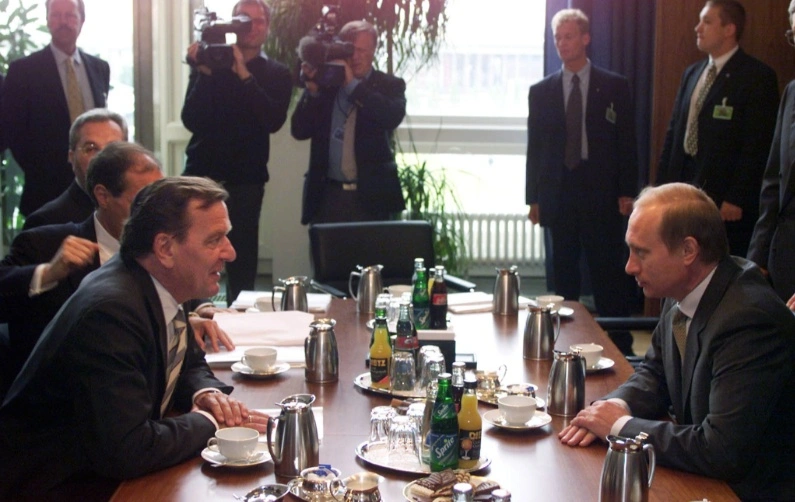
Former German Chancellor Schröder criticised for attending Putin's birthday
Section: News
The Austrian National Council is set to convene an extraordinary session on December 16 to deliberate on a proposed temporary reduction of the electricity tax. The initiative, brought forward by the governing coalition parties, aims to alleviate the burden of rising energy costs for consumers and help combat inflationary pressures.
The session, which will commence at 11 a.m., was arranged following consultations among parliamentary groups. Lawmakers will focus on legislative measures that seek to lower the electricity tax for the 2026 calendar year. Under the proposed amendment, the electricity tax rate would decrease from the current 1.5 cents per kilowatt-hour (kWh) to 0.82 cents per kWh. In addition, private households would benefit from a significantly reduced rate of just 0.1 cents per kWh for the same period.
This legislative proposal, jointly introduced by the Austrian People's Party (ÖVP), Social Democratic Party of Austria (SPÖ), and NEOS, reflects a coordinated effort to provide targeted relief to both households and businesses amid ongoing economic challenges. The initiative is designed to make electricity more affordable and to help stabilize consumer prices, which have been affected by global market fluctuations and increased living expenses.
Prior to the plenary debate, the Finance Committee will conduct a preparatory session to review and discuss the technical details of the bill. This meeting is scheduled for the afternoon before the parliamentary session, ensuring that all aspects of the proposal are thoroughly examined before a formal vote.
The planned reduction in electricity taxes follows a series of government measures introduced in recent years to cushion the effects of rising energy costs. By substantially lowering the tax rate, especially for private households, the government aims to provide direct financial relief to citizens and support domestic consumption. The measure is also expected to have a positive impact on small and medium-sized enterprises, which have faced increased operational costs due to higher energy prices.
Parliamentary officials have allocated a total debate time of two and a half hours for the special session. This limited timeframe reflects the urgency and focused nature of the deliberations, as lawmakers seek to implement the new tax rates in a timely manner before the end of the legislative year.
The electricity tax reduction is part of a broader policy response to inflation and the cost-of-living crisis facing many Austrian households. By adjusting fiscal measures, the government hopes to ease financial pressures and support economic stability. If the legislation is approved, the reduced rates will be implemented throughout 2026, with the possibility of further review depending on economic conditions.
The upcoming parliamentary session underscores the government's commitment to proactive economic management and its willingness to convene outside the regular schedule to address pressing issues. Stakeholders in the energy sector, consumer advocacy groups, and business representatives are closely monitoring the legislative process, recognizing the potential benefits of lower energy taxes for the wider economy.
Further information regarding the outcome of the session and the implementation of the proposed measures will be made available following the parliamentary discussions.
Section: News

Section: Science
Section: Business

Section: Business
Section: Science
Section: News
Section: Politics
Section: News

Section: Fashion
Section: Arts
Both private Health Insurance in Germany and public insurance, is often complicated to navigate, not to mention expensive. As an expat, you are required to navigate this landscape within weeks of arriving, so check our FAQ on PKV. For our guide on resources and access to agents who can give you a competitive quote, try our PKV Calculator.
Germany is famous for its medical expertise and extensive number of hospitals and clinics. See this comprehensive directory of hospitals and clinics across the country, complete with links to their websites, addresses, contact info, and specializations/services.
Didn't manage to get a ticket for Linkin Park? Or still not enough after the concert? Join us at CRASH on June 12th for our "IN THE END" Linkin Park Special + CORE NIGHT.All night long, we'll be playing Linkin Park's music, along with Nu Metal, Metalcore, and Alternative Rock from bands such as Limp...



No comments yet. Be the first to comment!