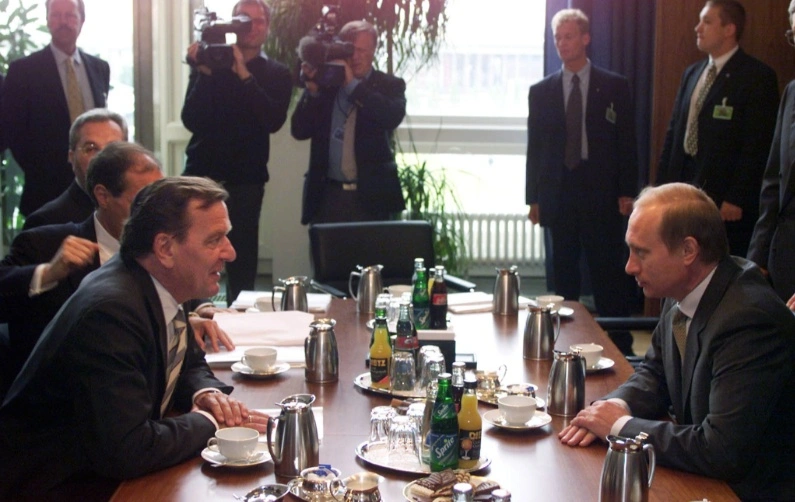
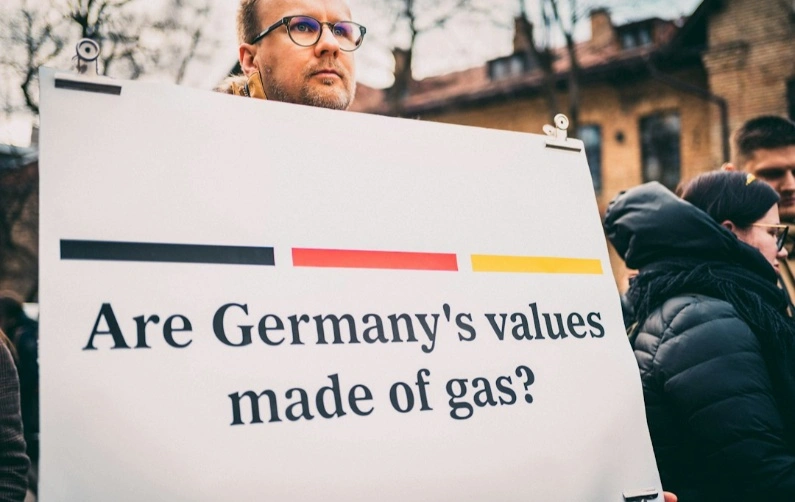
Former German Chancellor Schröder criticised for attending Putin's birthday
Section: News
The availability of residential housing in Austria remained strained in 2024 as the completion of new homes witnessed a significant downturn. According to preliminary data from Statistics Austria, a total of 54,472 residential units were completed nationwide during the year. Of these, 41,762 units were constructed in newly built structures, marking a decrease of approximately 20% compared to the previous year. Additionally, 12,710 units were delivered through extensions, additions, or renovations of existing buildings.
Current market conditions reflect a substantial reduction in newly available homes, a trend that aligns with the continued decline observed in building permits over recent years. Since 2021, the number of approved housing projects has consistently fallen year-over-year, with the most pronounced drops recorded in 2022 and 2023. Although the decrease in building permits moderated somewhat in 2024, the cumulative effect is expected to result in a persistent shortage of new housing for the foreseeable future.
Regional Distribution of New HousingAmong Austria's federal states, Vienna led with the most completed residential units in 2024, totaling 12,478. This was followed by Upper Austria with 9,084 and Lower Austria with 9,055. Notably, Vienna's reported figures now include units resulting from building extensions and renovations for the first time. In contrast, Burgenland, Carinthia, and Vorarlberg recorded the fewest completions.
When adjusted for population, Vorarlberg achieved the highest completion rate, with 8.7 new homes per 1,000 residents. Both Tyrol (6.9) and Vienna (6.2) also performed above the national average of 5.9 completions per 1,000 inhabitants. Conversely, Carinthia (4.3), Lower Austria (5.2), Burgenland (5.7), and Styria (5.8) were below the average.
Trends in Building Permits and CompletionsBetween 2010 and 2021, the number of permits issued for new residential buildings consistently exceeded the number of finished units, as not every approved project proceeded to completion. After reaching peaks in 2017 and 2019, permit approvals began to decline slightly in 2020 and 2021, followed by sharp decreases in 2022 and 2023. Specifically, permit numbers dropped by 15.8% in 2022 and 32.8% in 2023, before a more moderate 10.7% decline in 2024, resulting in approvals for 32,100 new homes.
While the number of completed units in new buildings rose by 4.8% in 2021 to 62,091, subsequent years saw successive declines: a 7.6% reduction in 2022 (to 57,342 units), an 8.7% drop in 2023 (to 52,330 units), and a substantial 20.2% decrease in 2024 (to 41,762 units). This pattern mirrors the downward trend in building permits observed in the previous years, and it marks the first time since the financial crisis of 2007-2008 that completions have surpassed permits for three consecutive years (2022-2024).
Impact Across Building TypesAll categories of building construction experienced contraction in 2024. Nationally, only 17,355 new buildings were completed, nearly 23% fewer than in the prior year. Of these, 12,637 were residential structures, with single-family and two-family houses comprising the majority (10,635 units). This segment suffered a 25.4% decline year-over-year. The completion of multi-family apartment buildings also fell by 20.1%, while other types of buildings saw a 17.5% decrease.
Analyzing the distribution of completed homes, approximately 20.7% (11,271 units) were in single- and two-family houses, while 55.1% (30,010 units) were in multi-family apartment complexes. Other buildings accounted for 0.9% (481 units), and 23.3% of the total were realized through building modifications or expansions.
These figures underscore a pronounced slowdown in residential construction activity across Austria, reflecting broader economic and regulatory pressures. With building permits at a sustained low and completions continuing to trail, the country faces ongoing challenges in meeting housing demand in the coming years.
Section: News

Section: Science
Section: Business

Section: Business
Section: Science
Section: News
Section: Politics
Section: News

Section: Fashion
Section: Arts
Both private Health Insurance in Germany and public insurance, is often complicated to navigate, not to mention expensive. As an expat, you are required to navigate this landscape within weeks of arriving, so check our FAQ on PKV. For our guide on resources and access to agents who can give you a competitive quote, try our PKV Calculator.
Germany is famous for its medical expertise and extensive number of hospitals and clinics. See this comprehensive directory of hospitals and clinics across the country, complete with links to their websites, addresses, contact info, and specializations/services.
Didn't manage to get a ticket for Linkin Park? Or still not enough after the concert? Join us at CRASH on June 12th for our "IN THE END" Linkin Park Special + CORE NIGHT.All night long, we'll be playing Linkin Park's music, along with Nu Metal, Metalcore, and Alternative Rock from bands such as Limp...



No comments yet. Be the first to comment!