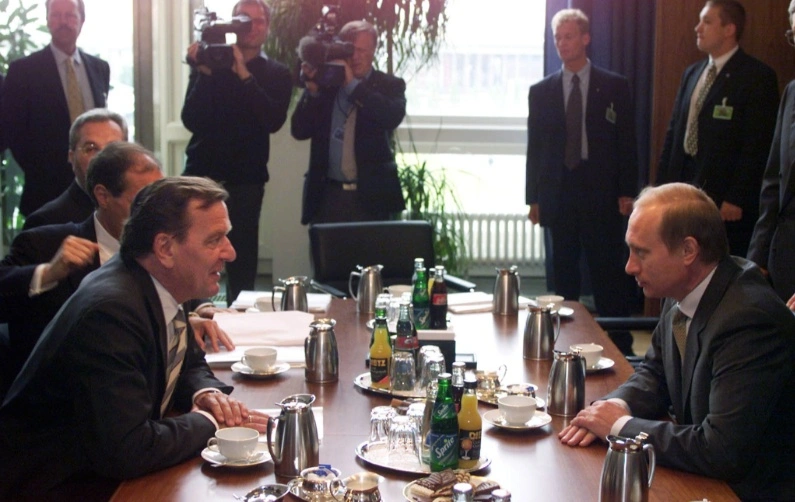
Former German Chancellor Schröder criticised for attending Putin's birthday
Section: News
The European Union has set ambitious recycling targets for its member states regarding packaging and waste paper. Altstoff Recycling Austria (ARA) has announced that it has exceeded previous goals and is poised to meet the stricter regulations that come into effect this year. This information was shared during a briefing with journalists. In contrast, other EU member states have drawn criticism from the European Court of Auditors for presenting dubious recycling data.
Austria has consistently been a leader in recycling, and recent statistics affirm this trend. In the previous year, Austrian households collected approximately 1.02 million tons of packaging and waste paper, a slight increase compared to the prior year. While there was a minor decline in the collection of glass and paper, there was an uptick in the collection of lightweight and metal packaging.
Under the EU Packaging and Packaging Waste Regulation (PPWR), Austria has performed exceptionally well. The previous recycling target for paper was set at 60%, but this year it has been raised to 75%, a goal that Austria is surpassing with a rate of 80%. For plastics, Austria's recycling rate stands at 30%, which is significantly above the EU's target of 22.5% established for 2020. Additionally, for ARA licensing volumes, the country has achieved a recycling rate of 38%. The ARA is optimistic about reaching the new target of 50% for this year.
Austria has also excelled in recycling metals and glass, boasting a recycling rate of 83%, which is well above the EU's 2030 targets. However, there remains a slight gap in meeting the recycling targets for packaging and municipal waste. The introduction of a deposit system for PET bottles and beverage cans has impacted ARA's licensing revenues while also reducing available raw materials. Consequently, ARA has adjusted its fees, although these increases remain moderate compared to other providers.
While household recycling efforts are progressing well, ARA executives noted a need for improvement in the recycling practices of commercial enterprises. Since early 2023, businesses have been required to separately collect and sort their packaging waste for recycling, but the existing transport cost subsidies appear insufficient as an incentive. According to ARA, only about one-third of the 100,000 tons of plastic packaging from businesses is properly separated for recycling, while the remainder is mixed with unsorted commercial waste and incinerated.
ARA's leadership has suggested that the current regulations may need revision to better accommodate businesses, many of which lack the space to store separated packaging. Additionally, ARA highlighted that the recycling rates reported by member states are not rigorously validated, referencing criticism from the European Court of Auditors. Concerns have been raised about potential fraud in reporting, particularly in countries with notably low recycling rates.
Industry investments have significantly increased over recent years to meet the legal recycling requirements, including achieving a 50% recycling rate for plastics by 2025. However, ARA representatives emphasize that these investments should not result in a competitive disadvantage. They are advocating for thorough verification of reported recycling rates by the EU.
Starting in 2030, the EU will mandate a minimum use of recycled materials in plastic packaging ranging from 10% to 35%, with expectations for these figures to rise to between 25% and 65% by 2040. ARA is preparing for these changes by developing a new sorting facility and a processing plant for polyolefins, which will enable the processing of 20,000 tons of sorting residues from plastics that previously were only used as substitute fuels.
Section: News

Section: Science

Section: Business

Section: Business

Section: Science
Section: News
Section: Politics
Section: News

Section: Fashion
Section: Arts
Both private Health Insurance in Germany and public insurance, is often complicated to navigate, not to mention expensive. As an expat, you are required to navigate this landscape within weeks of arriving, so check our FAQ on PKV. For our guide on resources and access to agents who can give you a competitive quote, try our PKV Calculator.
Germany is famous for its medical expertise and extensive number of hospitals and clinics. See this comprehensive directory of hospitals and clinics across the country, complete with links to their websites, addresses, contact info, and specializations/services.
Didn't manage to get a ticket for Linkin Park? Or still not enough after the concert? Join us at CRASH on June 12th for our "IN THE END" Linkin Park Special + CORE NIGHT.All night long, we'll be playing Linkin Park's music, along with Nu Metal, Metalcore, and Alternative Rock from bands such as Limp...



No comments yet. Be the first to comment!