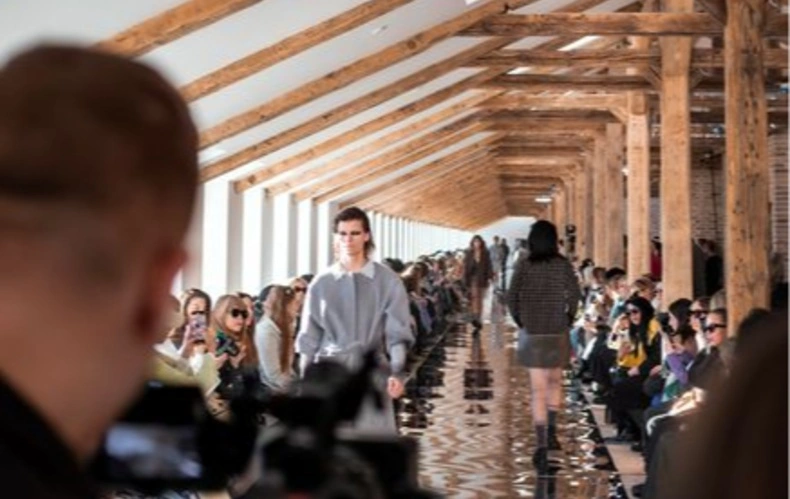
Why Marie Antoinette Showed Up All Over Fashion Week This Year
Section: Fashion
The upcoming weekend marks the annual transition to daylight saving time, prompting discussions about the implications of time changes in Austria and Germany. As clocks spring forward by one hour, many individuals will experience what some term a 'mini-jetlag'--the result of losing an hour of sleep. This change elicits a range of responses: some lament the disruption to their circadian rhythms, while others appreciate the longer daylight hours in the evening.
This perennial debate surrounding the time change is compounded by ongoing discussions within the European Union regarding its permanent abolition. A proposal put forth by the EU Commission to eliminate the biannual clock changes has stalled amid disagreements among member states. Currently, the EU operates under three different time zones, with Austria and Germany, alongside several other nations including Italy and France, falling within the Central European Time zone.
The crux of the issue lies in the inability of the 27 EU member states to reach a consensus on whether to adopt permanent summer time or winter time. Although there is no official directive from Brussels mandating a specific choice, member states are encouraged to decide in a coordinated manner. Failing to achieve this could result in a fragmented time system across the EU, leading to confusion and logistical challenges. For instance, if Germany opts for permanent summer time while Austria chooses winter time, it could create significant complications for travel and commerce.
The potential impacts of such a time divergence are far-reaching. A chaotic time structure could hinder the functioning of the EU single market, affecting businesses and consumers alike. From a health perspective, studies indicate that permanent winter time aligns better with the human body's natural circadian rhythms, suggesting that the transition to summer time can impose greater strain on individuals. This strain has been linked to various health issues, including obesity, diabetes, and cardiovascular problems.
Conversely, if the EU member states were to adopt a permanent summer time, countries in southern Europe could face particularly challenging mornings during the winter months, with daylight arriving as late as 10:00 AM. On the flip side, the adoption of a permanent winter time could result in early sunrises at around 3:00 AM in places like Warsaw during the summer, presenting its own set of challenges.
Despite the arguments for and against the time change, the original rationale for these biannual adjustments--energy savings--has come under scrutiny, raising questions about its continued relevance in modern society. As the debate continues, it remains unclear how and when a resolution will be reached regarding the future of timekeeping in Europe.
Section: Fashion

Section: Health
Section: Politics

Section: Politics
Section: Business
Section: Business

Section: Arts

Section: Business

Section: News
Section: Business
Both private Health Insurance in Germany and public insurance, is often complicated to navigate, not to mention expensive. As an expat, you are required to navigate this landscape within weeks of arriving, so check our FAQ on PKV. For our guide on resources and access to agents who can give you a competitive quote, try our PKV Calculator.
Germany is famous for its medical expertise and extensive number of hospitals and clinics. See this comprehensive directory of hospitals and clinics across the country, complete with links to their websites, addresses, contact info, and specializations/services.
Didn't manage to get a ticket for Linkin Park? Or still not enough after the concert? Join us at CRASH on June 12th for our "IN THE END" Linkin Park Special + CORE NIGHT.All night long, we'll be playing Linkin Park's music, along with Nu Metal, Metalcore, and Alternative Rock from bands such as Limp...



No comments yet. Be the first to comment!