
German companies unprepared for AI-based cyber attacks
Section: Science
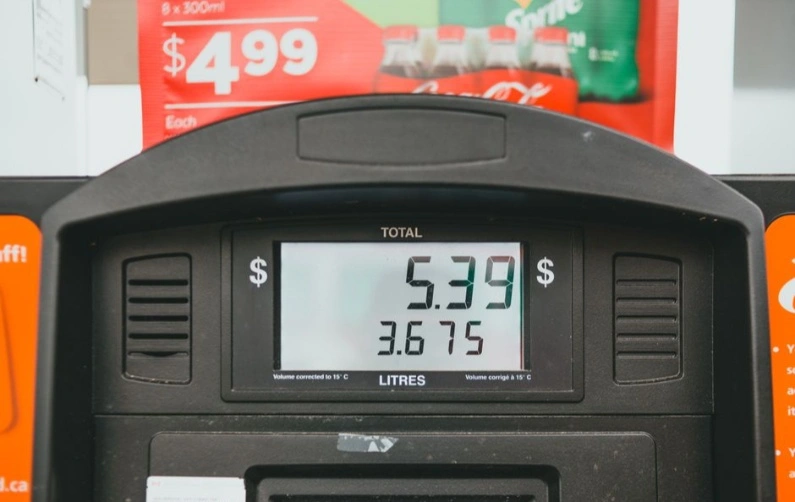
Recent fluctuations in global oil markets, driven by tensions in the Middle East, have caused notable changes in fuel prices across Europe. After a period during which fuel costs in Austria surged above two euros per liter, both crude oil prices and retail pump prices have seen significant declines in recent days. As of now, Austrian motorists pay approximately 1.73 euros per liter for diesel and 1.68 euros for Super 95 petrol, bringing prices back to levels last observed in early March 2026.
This decrease presents advantageous conditions for those planning holiday travel by car. When compared to neighboring countries, Austria currently offers more competitive fuel prices. For instance, diesel in Italy is priced at 1.89 euros per liter, while Super 95 costs 1.81 euros. In France, diesel stands at 1.87 euros and Super 95 at 1.94 euros per liter. Motorists in Germany face costs of 1.76 euros for diesel and 1.90 euros for Super 95, making Austria a more attractive option for refueling.
Conversely, certain neighboring countries offer even lower prices. In the Czech Republic, diesel is available at 1.45 euros per liter and Super 95 at 1.59 euros. Slovenia and Croatia also feature competitive rates, with diesel in Slovenia priced at 1.68 euros and Super 95 at 1.58 euros, while Croatia offers diesel at 1.66 euros and Super 95 at 1.61 euros per liter.
Given these regional differences, it is recommended that travelers review current fuel prices in their intended destinations prior to departure. Planning strategic refueling stops along the travel route can result in considerable savings, especially as fuel costs continue to vary significantly between countries and even within regions. Motorists are advised to consider the costs in traditional tourist hotspots, large urban centers, and major highways, where prices often trend higher than in other areas.
Electric vehicle users encounter fewer complexities regarding charging costs. Those utilizing services such as the ARBÖ E-Club card benefit from uniform pricing throughout Europe, as no roaming fees are applied. This means charging an electric vehicle abroad typically incurs the same cost as in Austria, depending on the chosen tariff model.
Regardless of vehicle type, thorough preparation remains crucial for a smooth journey. Travelers are encouraged to map out their routes in advance, factoring in both fuel and charging stops. It is important to note that detouring long distances or making significant deviations solely to access cheaper fuel stations is generally not cost-effective, as additional fuel consumption and increased travel time often outweigh potential savings.
Motorists travelling through countries with lower fuel prices than Austria may find it beneficial to fill their tanks before returning or continuing their journey. However, the most efficient approach is to maintain an updated awareness of regional and cross-border pricing trends and to integrate fuel stops seamlessly into travel plans, ensuring both convenience and cost-effectiveness throughout the journey.
Section: Science
Section: Business

Section: Business
Section: Science
Section: News
Section: Politics
Section: News

Section: Fashion
Section: Arts

Section: Fashion
Both private Health Insurance in Germany and public insurance, is often complicated to navigate, not to mention expensive. As an expat, you are required to navigate this landscape within weeks of arriving, so check our FAQ on PKV. For our guide on resources and access to agents who can give you a competitive quote, try our PKV Calculator.
Germany is famous for its medical expertise and extensive number of hospitals and clinics. See this comprehensive directory of hospitals and clinics across the country, complete with links to their websites, addresses, contact info, and specializations/services.
Didn't manage to get a ticket for Linkin Park? Or still not enough after the concert? Join us at CRASH on June 12th for our "IN THE END" Linkin Park Special + CORE NIGHT.All night long, we'll be playing Linkin Park's music, along with Nu Metal, Metalcore, and Alternative Rock from bands such as Limp...

No comments yet. Be the first to comment!