
Munich Signals Its Ambition at Plug and Play Tech Center AI Summit
Section: Business
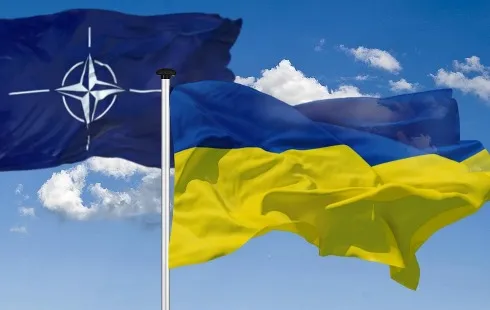
Discussions are underway regarding the management of a significant nuclear power facility located in Enerhodar, Ukraine, which has been under Russian control since March 2022. The facility, known as the Zaporizhzhia Nuclear Power Plant, is vital for Ukraine's energy supply, historically accounting for nearly half of the country's electricity generation. As negotiations between the USA and Russia progress in Saudi Arabia, former President Donald Trump has suggested that American ownership could enhance the security of this critical infrastructure.
The White House has echoed this sentiment, indicating that U.S. control could provide essential protection for Ukraine's energy needs. In response, Ukrainian President Volodymyr Zelensky has emphasized that the plant is owned by the Ukrainian state and is a matter of national significance, asserting that its status is non-negotiable in any potential peace agreement. However, he remains open to exploring energy agreements with the United States.
The ongoing conflict has heightened concerns about the plant's operational security. Following the occupation of southeastern Ukraine, Russian officials have claimed that the facility, along with the surrounding region, rightfully belongs to Russia. The Russian Foreign Ministry has declared that the plant has "regained Russian ownership," insisting that any transfer of control back to Ukraine or another country is "impossible."
With the plant's reactors currently inactive, the situation remains precarious. Prior to the conflict, the facility played a crucial role in Ukraine's energy landscape, but now, due to the war, its electricity production has ceased. While one reactor was briefly operational at a limited capacity to maintain essential functions, all major power lines to the facility are damaged, creating instability in nuclear safety.
Experts have noted that while the technical infrastructure connecting Russian and Ukrainian power grids could allow Russia to benefit from any potential electricity generated at the plant, restarting production would likely be a lengthy process contingent on a peace agreement. The International Atomic Energy Agency (IAEA) has expressed concerns regarding safety conditions at the site.
Significant challenges remain, including the destruction of the Kakhovka Dam in June 2023, which previously supplied cooling water to the plant. This catastrophe has created an ecological and economic crisis in the region, requiring extensive rebuilding efforts before the plant can be operational again. Moreover, maintenance work that was underway prior to the invasion has been neglected, adding to the difficulties of restoring the facility.
Ukraine had previously worked to reduce its dependence on Russian nuclear fuel, opting instead for supplies from the American company Westinghouse. However, the likelihood of the U.S. taking over the operation of the Zaporizhzhia facility remains low, as American operators lack experience with Soviet-era reactors. Analysts suggest that the discussions around U.S. involvement may be more about leveraging political pressure than a genuine plan for collaboration.
Ultimately, the significance of the Zaporizhzhia plant extends beyond mere electricity generation; it symbolizes Ukraine's struggle for sovereignty and stability. Control over the facility is viewed by some analysts as a means for Russia to undermine Ukraine's statehood, reinforcing the idea that the energy conflict is deeply intertwined with the broader geopolitical tensions in the region.
Section: Business

Section: Health Insurance

Section: News

Section: Arts

Section: Health

Section: Fashion
Section: Politics

Section: Fashion

Section: News
Section: Fashion
Both private Health Insurance in Germany and public insurance, is often complicated to navigate, not to mention expensive. As an expat, you are required to navigate this landscape within weeks of arriving, so check our FAQ on PKV. For our guide on resources and access to agents who can give you a competitive quote, try our PKV Cost comparison tool.
Germany is famous for its medical expertise and extensive number of hospitals and clinics. See this comprehensive directory of hospitals and clinics across the country, complete with links to their websites, addresses, contact info, and specializations/services.
Join us at the Kunstraum in der Au for the exhibition titled ,,Ereignis: Erzählung" by Christoph Scheuerecker, focusing on the captivating world of bees. This exhibition invites visitors to explore the intricate relationship between bees and their environment through various artistic expressions,...



No comments yet. Be the first to comment!