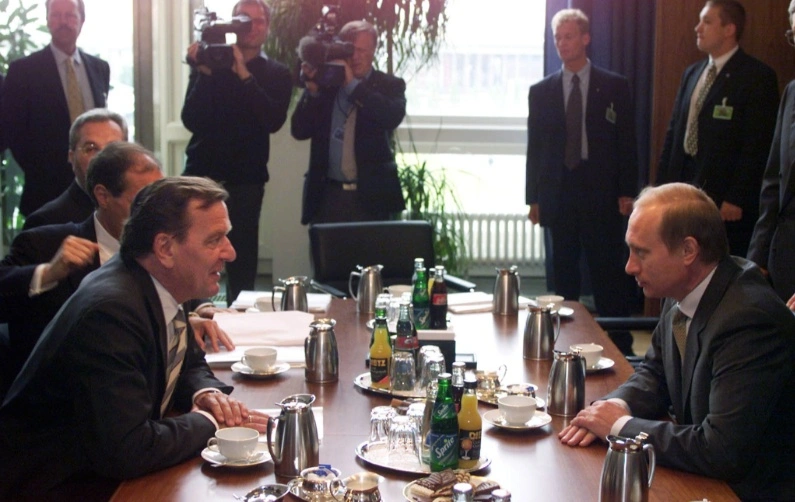
Former German Chancellor Schröder criticised for attending Putin's birthday
Section: News
The recent legal resolution involving a leading member of Austria's conservative party, August Wöginger, has raised significant discussion about the standards of political accountability and the application of diversion in cases of alleged misconduct. Wöginger, who faced accusations related to abuse of office and alleged favoritism in political appointments, was granted a diversion by the court, effectively allowing him to avoid a formal conviction.
The court's decision was based on Wöginger's assertion that, with the knowledge he possesses today, he would not have acted in the same manner. This admission was interpreted as a lack of intent or understanding of the potential wrongdoing during his extensive political career. The outcome has prompted debate on how legal interpretations can affect future cases involving public officials.
The diversion process in Austria is designed as an alternative to traditional criminal proceedings, typically reserved for less severe offenses and for individuals who admit their actions and express remorse. In Wöginger's case, the court appeared to accept his claim of unintentional error, which some legal experts suggest could set a precedent for similar defenses by other politicians or public servants facing comparable allegations.
Observers note that the court's acceptance of Wöginger's explanation might influence how both politicians and non-politicians address accusations of misconduct. The argument that the consequences of one's actions could not have been foreseen may become a more common defense strategy, potentially complicating efforts to hold individuals accountable for breaches of public trust.
The ruling has also sparked reflection on the broader issue of political ethics in Austria. Some critics argue that existing party ethics committees, intended to provide oversight and maintain standards, have not demonstrated sufficient rigor in evaluating such cases. This perception is reinforced by the absence of internal criticism or disciplinary measures following the court's decision.
The practice of political appointments based on personal or party loyalty, commonly known as 'postenschacher,' has a long history in Austrian politics. While public surveys indicate that a majority of citizens believe corruption is prevalent and harmful, actual public outrage is often muted, possibly due to perceptions of personal benefit or resignation to longstanding practices.
Cases like Wöginger's underscore the challenges in balancing legal frameworks, political accountability, and public expectations. As legal defenses evolve and institutional oversight adapts, questions remain about how effectively misconduct can be addressed and prevented within the political system.
The outcome of this case has prompted calls for a reassessment of diversion procedures and the standards applied to public officials. Observers suggest that clearer guidelines and more robust oversight mechanisms may be necessary to restore public trust and ensure equal treatment before the law. The ongoing debate underscores the need for transparent and consistent application of ethical standards in public life to uphold the integrity of political institutions.
Section: News

Section: Science

Section: Business

Section: Business

Section: Science

Section: News
Section: Politics
Section: News

Section: Fashion
Section: Arts
Both private Health Insurance in Germany and public insurance, is often complicated to navigate, not to mention expensive. As an expat, you are required to navigate this landscape within weeks of arriving, so check our FAQ on PKV. For our guide on resources and access to agents who can give you a competitive quote, try our PKV Calculator.
Germany is famous for its medical expertise and extensive number of hospitals and clinics. See this comprehensive directory of hospitals and clinics across the country, complete with links to their websites, addresses, contact info, and specializations/services.
Didn't manage to get a ticket for Linkin Park? Or still not enough after the concert? Join us at CRASH on June 12th for our "IN THE END" Linkin Park Special + CORE NIGHT.All night long, we'll be playing Linkin Park's music, along with Nu Metal, Metalcore, and Alternative Rock from bands such as Limp...



No comments yet. Be the first to comment!