
Francis Halzen awarded Nobel Prize for groundbreaking neutrino discovery
Section: Science
The privately insured in Germany have just been lucky once again. In view of the weak performance of the Left Party, they have been spared a red-red-green coalition. This alliance could have abolished private health insurance and more or less forcibly transferred its members to the statutory health insurance funds.
All three parties, the SPD, the Left Party and the Greens, want to introduce a so-called citizens' insurance. Everyone would have to pay into this and, if necessary, contributions would be levied on other types of income besides wages, such as rental income.
However, this radical change is off the table for the time being, since the next government will include the CDU/CSU or the Free Democrats, who want to maintain the coexistence of statutory health insurance (SHI) and private insurance (PHI). At the moment, it looks like there will be a traffic light coalition, an alliance of the SPD under Chancellor Olaf Scholz with the Greens and the FDP.
The divergent positions between the right and the left would create "high potential for conflict" in the formation of a coalition, writes the Institute of the German Economy (IW) in an as yet unpublished study on "Statutory Health Insurance after the Election."
Health and care are not at the top of the agenda in the talks. But the issues are likely to be brought into the game of political compromise as a bargaining chip. And here it is unclear how steadfast the liberals are on issues such as private insurance, freedom of contract, the personal responsibility of patients and those in need of care, or the reduction in the number of hospitals they are seeking.
In the black-red coalition, there had been a kind of truce, also called the "do-nothing deal." The SPD postponed the citizens' insurance, while the CDU/CSU abandoned its plans to advance private health insurance, for example by setting contributions more flexibly. Now the weights are less favorable for the PKV side than before: The FDP faction in the new Bundestag makes up only one-fifth of the traffic light alliance, while the CDU/CSU put two-thirds on the scales in the old constellation.
The parties involved do not want to make any open statements. It is clear, however, that the "traffic light" will not fail because of the different ideas on health and care. On the contrary, there is some common ground, it is said. For example, the reform of emergency care or the introduction of a uniform reimbursement system for outpatient and inpatient interventions.
According to reports, the SPD and the Greens do not want to insist on citizens' insurance, but they do want to introduce elements of it. For example, they want to open up the GKV to civil servants and members of parliament, but on a voluntary basis and without them suffering any disadvantages. The fact that these people generally earn higher incomes, are healthier and incur fewer costs means that more money comes into the system.
In this way, it would also be possible to compensate for the loss of revenue for physicians. In fact, the privately insured play a major role: they make up only 10 percent of the population, but contribute more than 20 percent to the fees of physicians in private practice.
More than 50,000 euros less per medical practice
In total, the PKV association calculates, 12.7 billion euros would be lost each year after the introduction of a standardized insurance, half of which would be lost in outpatient care. If there were no compensation, each medical practice would have to forego 55,000 euros a year. According to an expert opinion, such compensation would drive up health insurance contributions by 0.5 percentage points. For an average earner, that would be an additional 200 euros a year.
But the Greens and SPD are no longer seeking such a complete break with the system in a coalition with the FDP. "We will find a way without losing face, in which the financial deficits do not increase, but decrease noticeably," says a health politician involved. Red-Green could tell its own voters that it is on the way to citizens' insurance.
The FDP could advertise new freedom of choice in the still dual system and that no one would suffer losses. Finally, private insurers would have the opportunity to offer more supplementary rather than full insurance.
A completely different question is whether such compromises will be enough to plug the billions in gaps left by the health insurance funds. According to scientists, the system cannot survive without higher tax subsidies or contributions if there are to be no cuts in benefits. In a new study, the IW economic research institute writes that there is a lot of talk about "two-tier medicine" and "solidarity."
But no party, with the exception of the FDP, is addressing the real weaknesses, namely that pay-as-you-go systems are passing on sharply rising expenditures to younger generations. In order to establish "intergenerational solidarity," the contribution-financed share of benefit expenditures must be permanently limited, argues author Jochen Pimpertz.
In addition, a "second pillar" must be established, whose premiums are not based on income but on the risks covered. This funded variant with optional tariffs based on the so-called prospective coverage method would also ensure competition in the insurance market and thus increase efficiency.
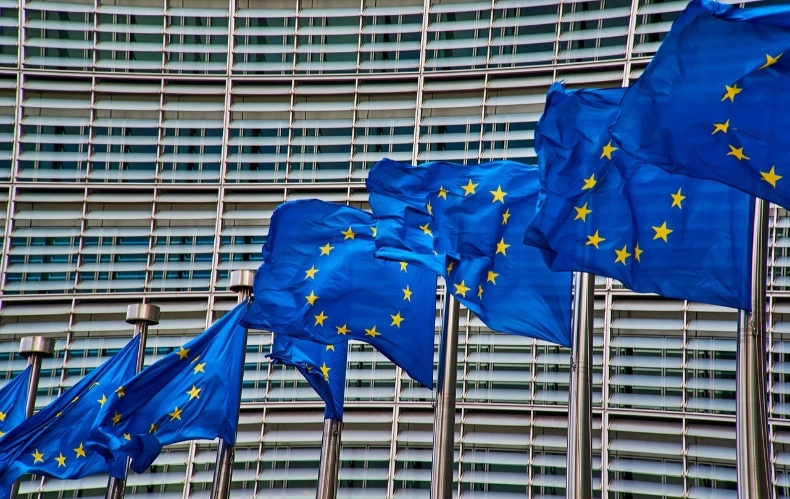
Image by Steve Buissinne
Section: Science

Section: News
Section: Politics
Section: News

Section: Fashion
Section: Arts

Section: Fashion
Section: Arts
Section: Business

Section: Business
Both private Health Insurance in Germany and public insurance, is often complicated to navigate, not to mention expensive. As an expat, you are required to navigate this landscape within weeks of arriving, so check our FAQ on PKV. For our guide on resources and access to agents who can give you a competitive quote, try our PKV Calculator.
Germany is famous for its medical expertise and extensive number of hospitals and clinics. See this comprehensive directory of hospitals and clinics across the country, complete with links to their websites, addresses, contact info, and specializations/services.
Didn't manage to get a ticket for Linkin Park? Or still not enough after the concert? Join us at CRASH on June 12th for our "IN THE END" Linkin Park Special + CORE NIGHT.All night long, we'll be playing Linkin Park's music, along with Nu Metal, Metalcore, and Alternative Rock from bands such as Limp...



No comments yet. Be the first to comment!