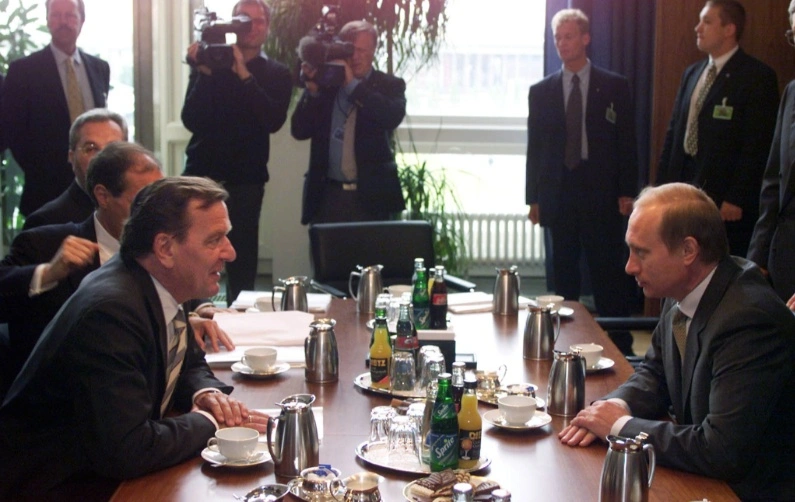
Former German Chancellor Schröder criticised for attending Putin's birthday
Section: News
Vorarlberg has officially closed its fiscal year 2024 with a significant deficit in its financing budget amounting to EUR242.9 million. The net loss in the results budget reached EUR148.5 million, a figure that aligns closely with earlier forecasts, as reported by the regional leader Markus Wallner.
Despite the financial shortfall, Vorarlberg did not incur new debts in 2024. However, the situation is expected to change in the current year, with a total debt standing at EUR449.9 million at the end of 2024.
The overall budget volume for Vorarlberg in 2024 was EUR2.4 billion, with over 70% allocated to essential sectors such as education, social services, health care, and housing assistance programs. Compared to 2023, the debt level saw a slight reduction of approximately EUR1 million. Prior to the onset of the COVID-19 pandemic, Vorarlberg's debt was significantly lower, recorded at just EUR110.4 million.
The regional government unanimously approved the financial statements on Tuesday, which are slated for review and ratification by the Vorarlberg state parliament on July 2.
Wallner described the financial results for 2024 as being met with considerable challenges. The economic disruptions from recent crises have left a notable mark on the budget, leading to stagnation in revenue and a sharp increase in expenditures. In fact, spending exceeded the initial projections by around EUR85 million, with funds directed towards municipalities, electricity cost subsidies, and housing support.
While acknowledging the necessity of these additional expenditures, Wallner emphasized the importance of maintaining investment levels, which remained stable at EUR92.5 million compared to previous years. He also noted the critical need for a consolidation strategy moving forward to preserve the government's ability to act and its financial flexibility.
Wallner expressed a pressing need for an economic recovery, stating that it is evident to all observers. He highlighted the necessity for structural reforms in health and social services to maintain the financial viability of the systems in place. Discussions are also underway regarding adjustments to housing assistance guidelines, which saw higher-than-expected demand in 2024. Given the current declining interest rates, the government may consider scaling back on certain financial commitments.
Regarding potential new loans, the 2025 budget forecasts a need for EUR200 million in borrowing, but Wallner remains cautious, noting that the exact requirements are still uncertain. He hopes for further interest rate reductions from the European Central Bank, which could influence future financial decisions. The region still holds EUR95 million in reserves, although any plans for utilizing these funds remain undecided.
Christof Bitschi, who recently joined the regional government and did not support the 2024 budget approval, backed Wallner's efforts towards fiscal consolidation. He acknowledged the ongoing tension surrounding the budget situation, recognizing that while cost-cutting measures may not be popular among the public, there is likely a majority sentiment favoring prudent management of taxpayer resources.
Section: News

Section: Science

Section: Business

Section: Business
Section: Science

Section: News
Section: Politics
Section: News

Section: Fashion
Section: Arts
Both private Health Insurance in Germany and public insurance, is often complicated to navigate, not to mention expensive. As an expat, you are required to navigate this landscape within weeks of arriving, so check our FAQ on PKV. For our guide on resources and access to agents who can give you a competitive quote, try our PKV Calculator.
Germany is famous for its medical expertise and extensive number of hospitals and clinics. See this comprehensive directory of hospitals and clinics across the country, complete with links to their websites, addresses, contact info, and specializations/services.
Didn't manage to get a ticket for Linkin Park? Or still not enough after the concert? Join us at CRASH on June 12th for our "IN THE END" Linkin Park Special + CORE NIGHT.All night long, we'll be playing Linkin Park's music, along with Nu Metal, Metalcore, and Alternative Rock from bands such as Limp...



No comments yet. Be the first to comment!