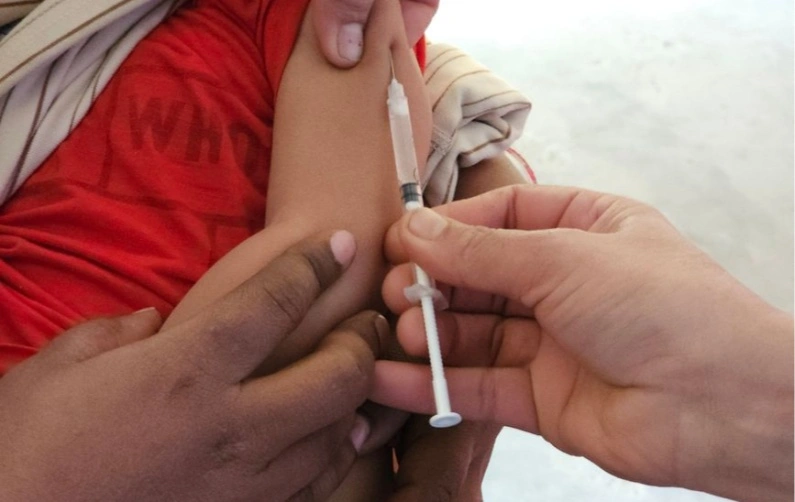
Child Vaccination Rates Decline in Germany Amid Health Concerns
Section: Health
A new research institute in Vienna is pioneering an innovative approach to pandemic preparedness by integrating urban virus surveillance, public participation, and science communication. The Ludwig Boltzmann Institute for Science Communication and Pandemic Preparedness (LBI-SOAP), based at the Medical University of Vienna, aims to enhance Austria's readiness for future health crises through a combination of advanced virological research and direct community involvement.
The institute's central focus is the systematic monitoring of viruses within the urban environment of Vienna. Historically, cities have often been overlooked in disease surveillance, despite frequent contact between humans and animals, which increases the risk of zoonotic transmission. The LBI-SOAP is now actively collecting and analyzing samples from local wildlife, including birds, rodents, and insects such as mosquitoes, to identify pathogens circulating in metropolitan areas. The findings from this surveillance are intended to inform strategies for preventing the spread of infectious diseases, as well as to contribute to the development of new therapies and vaccine candidates.
This urban-scale monitoring initiative is considered unique among global metropolises of Vienna's size and is being positioned as a potential model for other cities. The program is supported by close cooperation with the Ignaz Semmelweis Institute for Infection Research at the same university, reinforcing Vienna's growing expertise in infection science and public health preparedness.
Equally significant is the institute's commitment to involving the general population in scientific activities, a practice known as community or citizen science. By engaging residents directly in research projects, the institute seeks to foster public trust in science and ensure more effective communication of risks and findings. Planned collaborations with educational institutions will enable students and teachers to participate in environmental sampling and data collection. Similar initiatives have already been tested internationally, such as in New York, where school groups collected and analyzed wildlife samples to detect viral presence.
One of the institute's most distinctive outreach strategies targets cat owners. Recognizing that domestic cats often bring home small wildlife such as mice or birds, the institute proposes to collect these animals for scientific examination. After analysis, the participating owners are informed about the pathogens identified, thereby increasing awareness about potential zoonotic risks and involving citizens in ongoing research efforts.
The LBI-SOAP also prioritizes the study of science communication methods, aiming to improve the way research findings and public health information are conveyed. By understanding how to communicate risks without causing undue alarm, the institute hopes to make scientific knowledge accessible and actionable for all segments of the population. The broader goal is to promote a culture in which science is seen as a collaborative and inclusive pursuit, rather than a top-down process.
The institute operates with an annual budget of 1.5 million euros, primarily funded by the Ludwig Boltzmann Society with additional support from partner organizations. The initial mandate covers seven years, with the possibility of extension, underlining a long-term commitment to strengthening Austria's pandemic resilience through both scientific excellence and active public engagement.
Section: Health
Section: Politics

Section: Politics

Section: Business

Section: Business

Section: Arts

Section: Business

Section: News
Section: Business

Section: News
Both private Health Insurance in Germany and public insurance, is often complicated to navigate, not to mention expensive. As an expat, you are required to navigate this landscape within weeks of arriving, so check our FAQ on PKV. For our guide on resources and access to agents who can give you a competitive quote, try our PKV Calculator.
Germany is famous for its medical expertise and extensive number of hospitals and clinics. See this comprehensive directory of hospitals and clinics across the country, complete with links to their websites, addresses, contact info, and specializations/services.
Didn't manage to get a ticket for Linkin Park? Or still not enough after the concert? Join us at CRASH on June 12th for our "IN THE END" Linkin Park Special + CORE NIGHT.All night long, we'll be playing Linkin Park's music, along with Nu Metal, Metalcore, and Alternative Rock from bands such as Limp...



No comments yet. Be the first to comment!