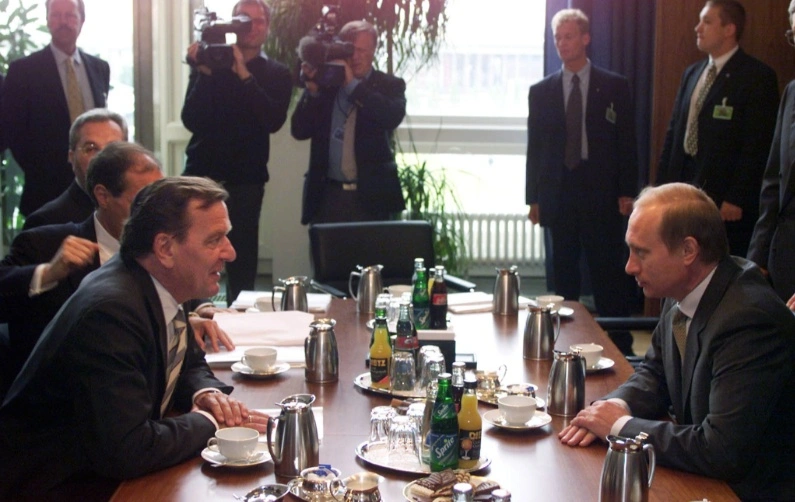
Former German Chancellor Schröder criticised for attending Putin's birthday
Section: News
Vienna's city councillor for social affairs has advocated for a significant revision of the European Union's fiscal policy framework. The official described the EU's long-standing Maastricht criteria, which restrict member states' annual new debt to 3 percent and total public debt to 60 percent of GDP, as outdated and called for these financial rules to be reconsidered.
According to the current guidelines, member states must adhere to strict budgetary limits to maintain fiscal stability within the bloc. However, Austria has reported a budget deficit of 4.7 percent for 2024 and 4.5 percent for the current year, both figures exceeding the EU's established thresholds. This has prompted the European Union to launch formal proceedings regarding Austria's fiscal position. The latest financial data suggests that Austria's deficit could rise further in 2025, primarily due to increased spending at the federal state level.
The debate centers on the scope and flexibility of the Maastricht criteria. Critics argue that the existing rules do not account for the evolving financial needs of EU member states, particularly in areas such as public health and education. Concerns have also been raised about the exclusion of military spending from these criteria, while investments in hospitals and schools are strictly regulated. These discrepancies have sparked discussions about the fairness and logic of the current system, with some policymakers asserting that the restrictions could hinder the public sector's ability to invest in essential infrastructure and services.
Austria is currently engaged in negotiations between the federal government and the provinces to establish a new stability pact. This agreement aims to define borrowing limits for different levels of government and must be submitted to EU authorities by year's end. In response to rising deficits, Vienna and other Austrian provinces have recently implemented broad cost-saving initiatives to address budget imbalances.
The proposal to reform or abolish the EU's fiscal rules has drawn criticism from opposition parties. Representatives from Vienna's conservative party have warned that abandoning European fiscal standards would demonstrate a lack of financial responsibility and could undermine efforts to maintain budgetary discipline. They argue that adherence to these criteria is essential to prevent fiscal mismanagement and ensure long-term economic stability within the city and across Austria.
As discussions continue, stakeholders from various political backgrounds are weighing the costs and benefits of the EU's fiscal framework. The outcome of these debates will have significant implications for Austria's financial policies and its relationship with European institutions, particularly as the country seeks to balance investment needs with fiscal responsibility.
Section: News

Section: Science

Section: Business

Section: Business

Section: Science

Section: News

Section: Politics
Section: News

Section: Fashion

Section: Arts
Both private Health Insurance in Germany and public insurance, is often complicated to navigate, not to mention expensive. As an expat, you are required to navigate this landscape within weeks of arriving, so check our FAQ on PKV. For our guide on resources and access to agents who can give you a competitive quote, try our PKV Calculator.
Germany is famous for its medical expertise and extensive number of hospitals and clinics. See this comprehensive directory of hospitals and clinics across the country, complete with links to their websites, addresses, contact info, and specializations/services.
Didn't manage to get a ticket for Linkin Park? Or still not enough after the concert? Join us at CRASH on June 12th for our "IN THE END" Linkin Park Special + CORE NIGHT.All night long, we'll be playing Linkin Park's music, along with Nu Metal, Metalcore, and Alternative Rock from bands such as Limp...



No comments yet. Be the first to comment!