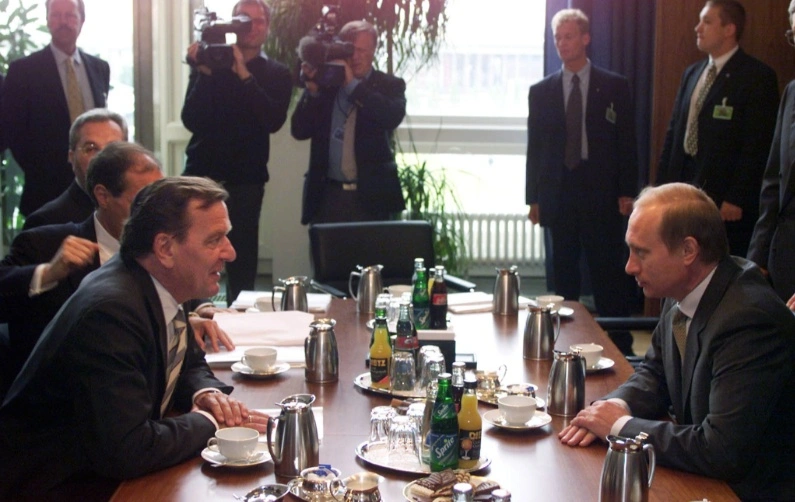
Former German Chancellor Schröder criticised for attending Putin's birthday
Section: News
The education system in Vienna has come under scrutiny following concerns about the effectiveness of current policies in addressing linguistic and educational challenges. Recent data indicates that nearly half of all students in Vienna's compulsory schools require additional support in the German language. This has prompted discussions about the adequacy of existing programs and the need for structural reforms.
Stakeholders have pointed to a significant increase in the number of students entering school with insufficient German language skills, often being classified as 'extraordinary students' from the outset. This classification can affect their academic trajectory and integration into the standard curriculum.
In addition to language barriers, there has been a noted rise in school dropout rates, raising further questions about the long-term impact of current education strategies. Critics argue that the combination of high language support needs and growing dropout rates reflects deeper systemic issues that require urgent attention.
Policy discussions have also focused on the approach to early childhood education. Calls have been made for a comprehensive reevaluation of kindergarten frameworks, with an emphasis on clear and actionable plans. Stakeholders stress that reform proposals must be backed by concrete strategies, particularly regarding language development and assessment from an early age.
Responsibility for the current state of Vienna's education has been debated, with some attributing the challenges to previous and current leadership in the education sector. There is concern that the effectiveness of policy measures at both municipal and federal levels needs to be reassessed to ensure better outcomes for students.
One of the recurring criticisms is that the resources allocated to education have not yielded the intended improvements. Several programs, described as costly yet ineffective, are perceived as insufficient in addressing the core issues faced by schools in Vienna. This has led to calls for more targeted and efficient use of educational funding, prioritizing initiatives that directly support teachers and students.
Among the proposed solutions are earlier German language assessments, beginning as early as age three, and the introduction of comprehensive language support before children enter school. Advocates argue that these measures could help bridge linguistic gaps and provide a stronger foundation for academic success.
Education experts and interest groups also highlight the need for broader school reforms aimed at reducing administrative burdens on teachers. Such reforms could allow educators to dedicate more time to instruction and student support, ultimately improving learning outcomes.
In summary, the debate surrounding Vienna's education policy centers on the effectiveness of current language support mechanisms, the high rate of school dropouts, and the need for actionable reforms. The discussion continues as stakeholders seek solutions to ensure all children in Vienna have equitable access to quality education and future opportunities.
Section: News

Section: Science

Section: Business

Section: Business

Section: Science

Section: News

Section: Politics

Section: News

Section: Fashion
Section: Arts
Both private Health Insurance in Germany and public insurance, is often complicated to navigate, not to mention expensive. As an expat, you are required to navigate this landscape within weeks of arriving, so check our FAQ on PKV. For our guide on resources and access to agents who can give you a competitive quote, try our PKV Calculator.
Germany is famous for its medical expertise and extensive number of hospitals and clinics. See this comprehensive directory of hospitals and clinics across the country, complete with links to their websites, addresses, contact info, and specializations/services.
Didn't manage to get a ticket for Linkin Park? Or still not enough after the concert? Join us at CRASH on June 12th for our "IN THE END" Linkin Park Special + CORE NIGHT.All night long, we'll be playing Linkin Park's music, along with Nu Metal, Metalcore, and Alternative Rock from bands such as Limp...



No comments yet. Be the first to comment!