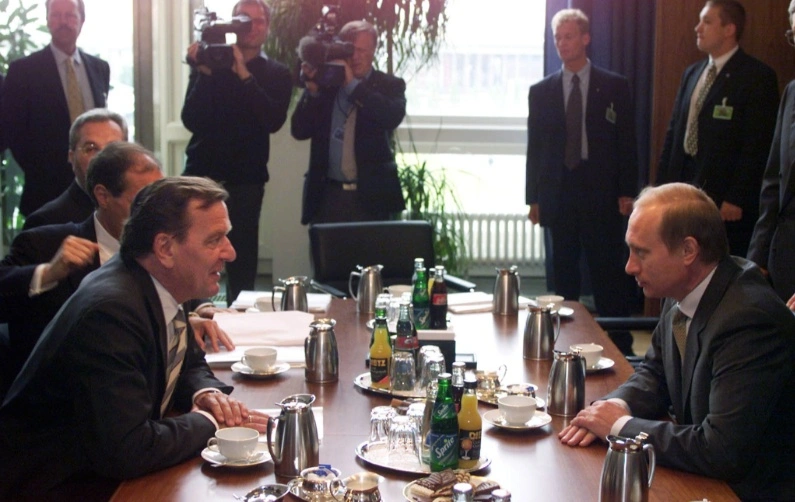
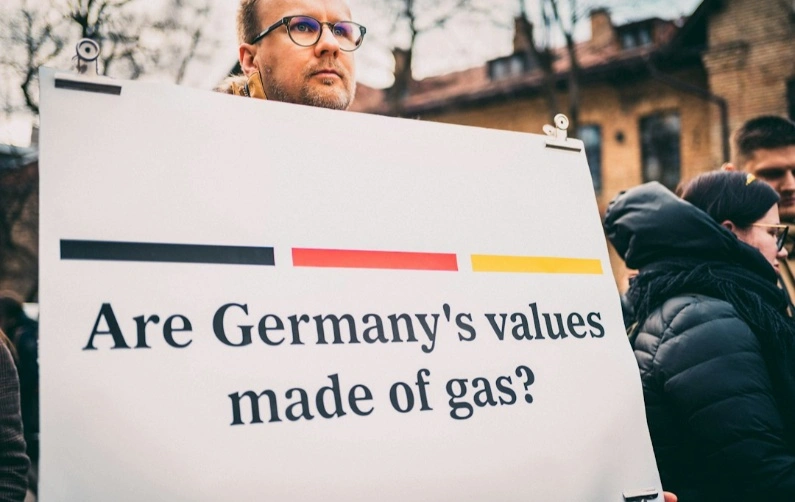
Former German Chancellor Schröder criticised for attending Putin's birthday
Section: News
An 18-year-old supporter of the radical terrorist group Islamic State (IS) has been sentenced to two years in prison, with eight months mandatory, by a Vienna court. This follows his arrest in April over alleged plans to carry out attacks against the Israeli embassy and the Imam Ali Islamic Center in Floridsdorf, Vienna.
The young man, who claims to have reformed, was found guilty of association with a terrorist organization, participation in a criminal organization, making threats, and coercion. However, he was acquitted of charges regarding training for terrorist purposes and guidance in committing a terrorist act. The presiding judge noted that there was no evidence of a specific crime being prepared, indicating a lack of immediate intent to execute a bombing.
As part of his sentencing, the court mandated that the individual participate in a deradicalization program, secure employment following his release, and continue his education, aiming to complete his schooling by the summer semester of 2026. A probationary period of three years with supervision was also imposed. The defendant accepted the ruling after consulting with his legal representative, and the prosecutor concurred, making the decision final.
The prosecutor highlighted the case as a cautionary example of rapid radicalization, labeling the defendant as exhibiting significant danger. The young man had aligned himself with IS ideologies in 2022, describing his involvement as a form of support. Although he appeared to lead an inconspicuous life outwardly, his social interactions primarily took place in online communities.
Through his Internet activities, he was introduced to a local Salafist preacher, Mirsad O., also known as Ebu Tejma, whose teachings he adopted. Initially, he disseminated IS propaganda and threatened individuals in conversations if they behaved improperly towards Muslim women. In the early part of this year, he met several known extremists, including a 20-year-old with previous convictions for terrorism-related offenses.
The young man engaged in shooting practice with an air gun at the home of an older IS supporter, who encouraged his beliefs about IS providing answers to life's crucial questions. By March, he became increasingly active online, posting photos of himself armed and wearing a mock explosives belt.
He also engaged in discussions about potential attack plans with individuals claiming to represent IS. In April, he acquired six PDFs containing bomb-making instructions and began consulting AI, specifically ChatGPT, for assistance with his inquiries. His attorney acknowledged that the AI had become his 'best friend,' as the defendant sought information on homemade explosive ingredients and expressed interest in joining IS factions in West Africa.
Moreover, he aimed to obtain an AK-47 assault rifle. The prosecutor emphasized that his next steps could have led to actual attacks, characterizing him as a potential threat. Fortunately, a foreign intelligence partner alerted the authorities, leading to his timely apprehension. The defense argued that he had no weapons and that there were no concrete attack plans in his mind, stressing the remorse expressed by the defendant, who recognized his mistakes and desired to conclude his association with IS.
The defendant described himself as an 'Internet Rambo,' confessing to excessive engagement on platforms like TikTok and ChatGPT, and expressed regret for his past actions, attributing them to a desire to appear 'cool.' He reiterated his commitment to completing his education and moving forward with his life.
Section: News

Section: Science

Section: Business

Section: Business
Section: Science
Section: News
Section: Politics
Section: News

Section: Fashion
Section: Arts
Both private Health Insurance in Germany and public insurance, is often complicated to navigate, not to mention expensive. As an expat, you are required to navigate this landscape within weeks of arriving, so check our FAQ on PKV. For our guide on resources and access to agents who can give you a competitive quote, try our PKV Calculator.
Germany is famous for its medical expertise and extensive number of hospitals and clinics. See this comprehensive directory of hospitals and clinics across the country, complete with links to their websites, addresses, contact info, and specializations/services.
Didn't manage to get a ticket for Linkin Park? Or still not enough after the concert? Join us at CRASH on June 12th for our "IN THE END" Linkin Park Special + CORE NIGHT.All night long, we'll be playing Linkin Park's music, along with Nu Metal, Metalcore, and Alternative Rock from bands such as Limp...



No comments yet. Be the first to comment!