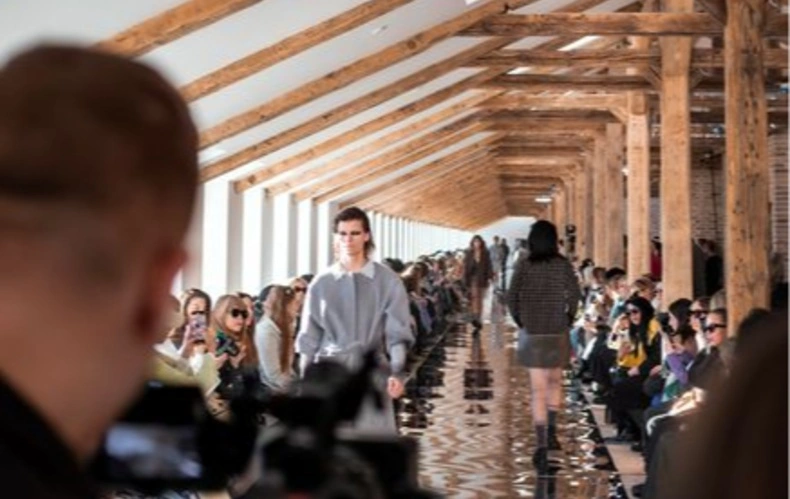
Why Marie Antoinette Showed Up All Over Fashion Week This Year
Section: Fashion
In Germany, coalition negotiations between the Union and the SPD are reportedly nearing a conclusion almost four weeks after their initiation. Despite concluding a lengthy 13-hour discussion just before midnight without a final agreement, sources close to the negotiations indicated that both parties are aiming for a resolution by midday Wednesday. Discussions are set to resume at 9:30 AM at the CDU headquarters.
Inside Union circles, it was reported that CDU leader Friedrich Merz plans to update the party's executive committee on the current status of the negotiations. Throughout Tuesday, the Union and SPD engaged in intense discussions, seeking compromises and employing various formats of dialogue, frequently interrupted by individual consultations within their respective parties. The ongoing international landscape and the US government's tariff policies under President Donald Trump have placed additional pressure on negotiators to reach an agreement. Experts are warning of potential recession risks and challenges for Germany's export-driven economy due to American tariffs. In response, Merz is advocating for lower corporate taxes, reduced bureaucracy, and decreased energy costs.
The Union, having emerged as the election winner, began exploratory talks with the SPD five days after the federal elections, focusing on forming a coalition. Alternatives to a black-red coalition appear limited, as a black-green coalition lacks a majority, and collaboration with the AfD has been firmly rejected by the Union.
Shortly after the discussions commenced on March 4, the CDU, CSU, and SPD reached a historic financial agreement for defense and infrastructure. The previous Bundestag, in collaboration with the Greens, passed necessary amendments to the constitution to adjust the debt brake concerning defense spending and create a special fund worth 500 billion euros for infrastructure and climate protection.
On March 8, the exploratory talks concluded with an eleven-page document recommending the commencement of formal coalition negotiations, which officially began on March 13. Sixteen working groups were established to detail various topics within a short timeframe. The outcome of these working groups revealed both agreements and outstanding differences that the main negotiation team of 19 members was expected to resolve. Merz criticized that some working groups seemed to operate under a "wishful thinking" approach.
While the working group reports were made public, little information emerged from the main negotiation team. Politicians from the 19-member round participated in interviews but disclosed minimal substantive details. Negotiations took place alternately at the SPD and CDU headquarters and at the Bavarian representation in Berlin. Key contentious issues included financial matters related to the tax system and migration policy.
Within the CDU, dissatisfaction has surfaced during the coalition negotiations. For instance, a third of the CDU local chapter in Kühlungsborn (Rostock district) withdrew from the party in response to Merz's shift regarding the debt brake. The Junge Union has threatened to reject a coalition agreement that does not encompass the political changes promised by Merz during the campaign. Additionally, discontent has emerged within the Brandenburg CDU regarding insufficient involvement of the party base in the negotiations. The Potsdam-Mittelmark district association has called for a member referendum similar to that of the SPD.
This unrest is further fueled by declining polling numbers for the Union, which has lost several percentage points since receiving 28.5% in the federal elections. The AfD has been closing the gap, with recent polls indicating it is catching up to the Union.
Should an agreement be reached with the Union regarding a coalition contract, the SPD plans to conduct a digital vote among its members within ten days. On the CDU side, a smaller party convention will decide on the contract, while the CSU will require a board resolution.
Initially, as a likely candidate for Chancellor, Merz aimed to form a government by Easter, a timeline that is no longer feasible. The date for Merz's potential election and swearing-in as Chancellor is now tentatively set for May 7.
Section: Fashion
Section: Health
Section: Politics

Section: Politics
Section: Business
Section: Business
Section: Arts

Section: Business

Section: News
Section: Business
Both private Health Insurance in Germany and public insurance, is often complicated to navigate, not to mention expensive. As an expat, you are required to navigate this landscape within weeks of arriving, so check our FAQ on PKV. For our guide on resources and access to agents who can give you a competitive quote, try our PKV Calculator.
Germany is famous for its medical expertise and extensive number of hospitals and clinics. See this comprehensive directory of hospitals and clinics across the country, complete with links to their websites, addresses, contact info, and specializations/services.
Didn't manage to get a ticket for Linkin Park? Or still not enough after the concert? Join us at CRASH on June 12th for our "IN THE END" Linkin Park Special + CORE NIGHT.All night long, we'll be playing Linkin Park's music, along with Nu Metal, Metalcore, and Alternative Rock from bands such as Limp...



No comments yet. Be the first to comment!